Choose a capacity based on how often you do large loads, rather than on the occasional duvet wash. According to UFC-Que Choisir, 8 to 9 kg is generally enough for a household of three or four people, while 10 to 12 kg is more suitable when loads are frequent. If you often wash smaller loads too, check the consumption figures and load-adjustment features for the exact model. For duvets and throws, also check the limits of the relevant programme.
Who is this type of washing machine for?
Families with laundry baskets that are often full
Towels, sheets and clothes pile up regularly, so the capacity should suit your usual loads without requiring a large drum for the occasional big wash. UFC-Que Choisir says 10 to 12 kg models are worth considering in households where loads are frequent.
Households that alternate between large and small loads
Bedding sometimes fills the drum, but sorting clothes by fabric or colour also means you may run smaller loads. It’s worth looking at both the capacity and how the machine performs with a partial load.
Households that wash duvets and throws at home
If you wash these items regularly, check the fabric, the recommended programme and its load limit in the instruction manual. The washing machine’s stated capacity alone doesn’t confirm that it can wash a thick duvet.
Which features should you prioritise?
Start by estimating the size of your usual loads, then check how the machine handles smaller loads and bulky items. A load-sensing feature can help you choose a capacity, but it doesn’t replace checking the model’s specifications.
8 to 9 kg
Worth considering if: you don’t wash large loads often and rarely wash thick duvets at home. According to UFC-Que Choisir, this capacity is generally enough for three or four people.
Keep in mind: regularly full family laundry baskets may mean you need to run more cycles.
10 to 12 kg
Worth considering if: you regularly wash large loads of clothes and household linen. UFC-Que Choisir considers this capacity more suitable for this kind of use.
Keep in mind: a drum that’s rarely full doesn’t guarantee fewer cycles or lower consumption.
Occasional duvet washing elsewhere
Worth considering if: your everyday laundry fits in a smaller machine, but an occasional duvet exceeds the limit for the programme you’d need.
Keep in mind: using a launderette or professional service means extra travel and planning.
| Priority | What to check | Think about your needs |
|---|
| Usual load size |
Compare the loads you actually wash with 8–9 kg and 10–12 kg capacities. According to UFC-Que Choisir, the stated capacity refers to dry laundry on the cotton or Eco 40-60 programme. |
Are my laundry baskets often full, or only when I change the sheets? I want a capacity that suits the loads I wash most often. |
| Small loads |
Check the kWh/100 cycles and water per cycle on the exact model’s label. According to the European Commission, the weighted energy consumption for the Eco 40-60 programme takes account of a full, half and quarter load. This figure doesn’t show the consumption for each load size separately. |
I also run small, sorted loads, so I don’t want to choose a machine based only on my biggest laundry baskets. |
| Duvets and throws |
Check which programme is suitable, its maximum load and the instructions in the manual. Compare these with the fabric and care instructions for the item: the rated capacity may not apply to this programme. |
I want to wash these items at home regularly. A larger capacity is only useful for this if the model can handle the items in question. |
| Advertised features |
Check what the model’s documentation says about adjusting the wash to the load. Compare regulatory figures on a like-for-like basis rather than assuming a particular feature name guarantees a specific saving. |
I alternate between large and small loads and want to know what load sensing actually changes on the model I’m considering. |
| Maintenance |
Check the manual for instructions on the door seal, filter and installation. Make sure you can access the parts you need to maintain once the machine is installed. |
I want to be able to maintain the machine easily. In a survey of 4,350 newsletter subscribers conducted from 15 to 24 May 2025, UFC-Que Choisir reported that 19% had experienced persistent unpleasant smells. |
What should you look out for?
-
Assuming a bigger drum will always mean fewer cycles
The benefit depends on how often you have loads large enough to make use of the capacity. An oversized machine may often run with only a small amount of laundry.
Keep track of the size of your usual loads for a few weeks, and only choose a large drum if you regularly wash large loads.
-
Assuming the rated capacity applies to every programme
According to UFC-Que Choisir, the stated capacity refers to dry laundry on the cotton or Eco 40-60 programme. A duvet must also be within the limits for the programme you use and comply with the instructions on its care label.
Before choosing a model for a throw or duvet, check the washing machine manual against the fabric and care instructions for the item.
-
Comparing advertised features as if they were equivalent measurements
Load sensing, an AI-controlled cycle and a cold-wash test may involve different settings or load sizes. Their presence alone doesn’t prove that different models offer comparable savings.
To compare consumption, start with the exact model’s energy label and product information sheet, then check the conditions for each advertised feature.
-
Overlooking installation and maintenance
Electrolux warns that incorrect levelling can cause vibration and movement. Bosch lists a blocked pump filter as one possible cause of a drainage problem.
Check the installation surface and the instructions for removing the transit bolts, then keep the manual handy for filter maintenance.
Which brands and ranges should you consider?
These examples show features to compare on specific models; they don’t describe every washing machine from each brand.
Electrolux
The EW6FI4130SA lets you look at a combination of 10 kg capacity, a duvet programme and an advertised load-adjustment feature.
- According to Electrolux France, SensiCare adjusts the programme duration and water and energy consumption to the weight of the load.
- This feature alone doesn’t tell you how much energy this model saves on a half load, or how it compares with another machine.
LG
The F14R78WSTA is an 11 kg model to consider if you regularly wash large loads and duvets.
- LG France lists a 68 L drum, a duvet programme and load sensing for this model.
- These features don’t prove how well it performs on a half load or whether it can accommodate every duvet.
Bosch
The WGB256A2FR is a 10 kg model you can use to compare spin performance and the options available for smaller loads.
- Bosch Electroménager France lists a maximum spin speed of 1 600 tr/min; retailer Boulanger mentions a mini-load option for this model.
- Check the model’s product information for the features of the programme you plan to use: a mini-load option doesn’t tell you how much energy it uses.
Samsung
The WW11BB504DAE offers a useful comparison for an 11 kg capacity if the appliance’s depth matters too.
- Samsung France lists a depth of 60 cm and an 11 kg capacity for this model.
- These dimensions and this capacity aren’t enough to establish the washing limits for a duvet or the results of a small-load programme.
Washing machines for large loads on Joybuy
These 10 or 11 kg models are worth considering if you regularly do large family loads. If you mostly wash smaller loads, compare a capacity that’s closer to your needs too. For each model below, check the limits for the bulky items you plan to wash.
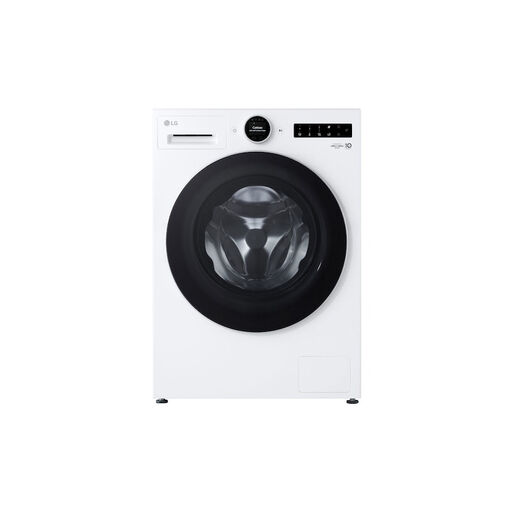 Image unavailable
LG F4WX851Y, 11 kg, Class A
The stated 11 kg capacity is worth considering if you regularly wash large loads. If the Duvet programme is one of the reasons you’re interested, check its load limit and compatibility with your duvet in the manual. For smaller loads, consult the exact model’s energy label.
View on Joybuy
 Image unavailable
Haier X Series 11 HW100-BD14397PGU1, 10 kg
This capacity may suit households with regularly full laundry baskets; the model name indicates a 1 400 tr/min spin speed and Class A. If you alternate with smaller loads, check what load sensing actually changes, and consult the manual before planning to wash a duvet.
View on Joybuy
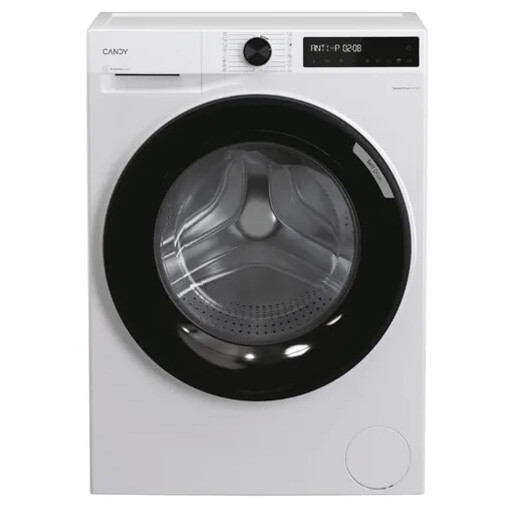 Image unavailable
Candy BR 411BL9-S, 11 kg, Class A
The 11 kg capacity is best suited to households that regularly wash large loads. If you alternate between smaller loads and household linen, compare the model’s energy label and check the manual for the programmes and limits for bulky items.
View on Joybuy
 Image unavailable
Electrolux EWF1410N2, 10 kg
The stated 10 kg capacity may suit households that regularly wash large loads. If you plan to wash throws or duvets, check the programmes and their limits in the manual. Also check the energy label if smaller loads are part of your routine.
View on Joybuy
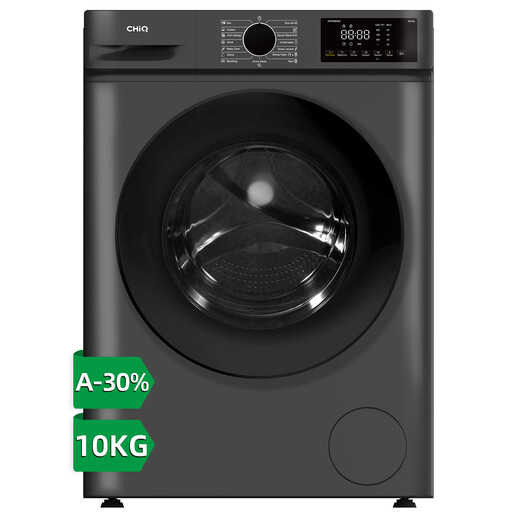 Image unavailable
CHiQ JW105883G, 10 kg, 1 400 tr/min
The stated capacity is suited to regular large loads, and the model name indicates 16 programmes. For a duvet, don’t rely on capacity alone: check the fabric, programme and load limit in the manual. Consult the exact model’s energy label to compare its consumption.
View on Joybuy
Frequently asked questions
Can a 10 or 11 kg washing machine wash any duvet?
No. According to UFC-Que Choisir, the stated capacity refers to the weight of dry laundry on the cotton or Eco 40-60 programme; another programme may have a different limit. Check the duvet’s fabric and care instructions, then check the programme and permitted load in the washing machine manual.
How should I compare two machines if I often wash half loads?
Start with their energy labels and product information sheets. According to the European Commission, the kWh/100 cycles figure for the Eco 40-60 programme is calculated taking full, half and quarter loads into account. This weighted figure doesn’t tell you the consumption for each small load on its own. Check the figures for each load size in the model’s documentation, if available.
How useful is the durability index when choosing a washing machine?
It gives you another factor to consider alongside capacity, programmes and the energy label. ADEME says washing machines sold in France have been covered by this index since April 2025. Check the rating for the model you’re considering.
How can I reduce vibration and drainage problems?
Follow the installation and maintenance instructions for your model. Electrolux recommends placing the machine on a flat, hard floor to reduce vibration and movement. Depending on the problem, Bosch suggests checking for transit bolts left in place and a blocked pump filter.


