For a family pasta meal, choose a large jar only if you expect to use its contents within the stated time after opening. A ready-made tomato sauce cuts down on preparation, while tomato purée lets you choose what to add but needs cooking. In either case, compare carbohydrates, including sugars, and salt per 100 g, then relate these figures to the amount of sauce served, as recommended by Assurance Maladie.
Who is this choice for?
Families keeping an eye on portions and carbohydrates
You’re preparing pasta for several people and want to compare carbohydrates and sugars without confusing the amount in the jar with the amount served to each person. Assurance Maladie recommends relating nutritional information to the quantity actually eaten.
People who want to avoid leftovers
You’re looking for a container that’s large enough for the meal, but also want to use any leftover sauce in line with the product’s storage instructions. These are particularly important to check before choosing a large jar.
People who prefer to make their own sauce
You want to start with tomato purée so you can decide what else to add to your recipe. You’ll need to allow time for preparation and take those extra ingredients into account when assessing the finished dish.
What should you compare?
Ready-made tomato sauce
Choose this if: you’re preparing a meal for several people and want to spend less time making the sauce.
Bear in mind: the recipe and storage time depend on the jar you choose; a large size is only useful if you can use its contents in time.
Tomato purée to cook with
Choose this if: you’d prefer to decide how to season your sauce and what other ingredients to add.
Bear in mind: it needs to be prepared, and any ingredients you add will also count towards the finished dish.
To compare products, start with the figures per 100 g, then consider the portion you plan to serve and how you’ll use the rest of the container.
| Factor | What to check | Who is it for? |
|---|
| Carbohydrates and portion size |
Carbohydrates, including sugars, and salt per 100 g; the amount of sauce planned for each plate. |
If I serve different-sized portions to members of my family, I want to know how much sauce is in each plate. Around 36% of consumers put tracking carbohydrates and portion sizes first. |
| Size and storage |
The container’s weight and its storage instructions after opening. |
A large jar suits me if I can also use what’s left after the meal. Managing the size and leftovers is the top priority for around 29% of consumers. |
| Added ingredients |
The ingredients list and any allergen information; for homemade sauce, the additions you’re planning. |
If I want to season a tomato base myself or need to watch out for certain ingredients, what’s in it matters more than convenience. Around 21% of consumers prioritise this level of control. |
| Preparation time |
Whether the product is a ready-made sauce or a base to cook with, and how to prepare it. |
When I have little time to prepare pasta, I prefer a sauce that’s already cooked. Speed is the top priority for around 14% of consumers. |
Mistakes to avoid
-
Choosing based only on jar size or Nutri-Score
The total weight of the container isn’t the same as the portion you eat. Nutri-Score gives an overall indication, but it doesn’t replace checking the product’s nutritional values and ingredients list.
Compare sauces per 100 g, then take into account the amount you plan to serve, as recommended by Assurance Maladie.
-
Opening a large jar without planning what to do with the leftovers
How long a sauce keeps after opening depends on the product. For its 680 g cooked tomato sauce, Auchan says to refrigerate it at between 0 °C and +4 °C and use it within 48 hours.
Before choosing a size, work out how many portions you’ll need and read the instructions on the jar you buy.
An opened sauce that can’t be used within the stated time may go to waste.
-
Assuming all tomato sauces have the same ingredients
The ingredients in a cooked sauce vary depending on the recipe; its name alone doesn’t tell you what’s been added or which allergens are listed.
Read the full ingredients list and allergen information on the product you choose, especially if you need to avoid a particular ingredient.
-
Confusing tomato purée with ready-made sauce
Tomato purée is a starting point for a recipe: without preparation, it isn’t a substitute for ready-made sauce. Any extra seasoning will also change the finished dish’s nutritional profile.
Choose purée if you want to make the sauce yourself; if you’re short on time, consider a cooked sauce instead and compare its label with others.
Brands to consider in these sizes
Panzani
Panzani offers its Tomates Cuisinées and Tomates Basilic sauces in 210 g, 400 g and 650 g sizes.
- The 650 g jar is worth considering if you’re preparing several portions.
- The size and Nutri-Score A rating stated by Panzani for these products don’t replace comparing their nutritional values and the portion served.
Barilla
Barilla offers its Basilico sauce in 200 g and 400 g jars, among other sizes.
- The 400 g size means you may have less to use after opening.
- If you need more sauce for your meal, check how much you’ll need in total rather than assuming one jar will be enough.
Carrefour Classic'
Carrefour offers a 680 g jar of its Classic' cooked tomato sauce.
- This size may be worth considering if you’re preparing several portions from one jar.
- Carrefour’s ingredients list includes tomatoes, vegetables, sugar and salt, among other ingredients. Compare the label on the jar you choose with those of the other recipes you’re considering.
Auchan
Auchan offers a 680 g jar of cooked tomato sauce, with nutritional information per 100 g.
- For this product, Auchan’s product information lists 6.3 g of carbohydrates, including 5.4 g of sugars, and 0.9 g of salt per 100 g.
- Auchan notes that the ingredients may vary. Check the label on the jar you receive and its storage instructions after opening.
Marque Repère / Turini
E.Leclerc offers 680 g of Turini tomato purée, intended as a base for sauce rather than as a cooked sauce.
- E.Leclerc’s product information lists 99.7% tomato purée, along with 4.0 g of carbohydrates, including 3.5 g of sugars, and 0.3 g of salt per 100 g.
- You’ll need to prepare and season the sauce; any additions and the amount served both count when assessing the finished meal.
Pasta sauces and tomato bases on Joybuy
This selection includes sauces and tomato bases for preparing several portions of pasta, as well as a 500 g purée to cook with. Choose between a ready-made sauce and a base to season, depending on how much time you have, then check the portion size and instructions for the container you choose.
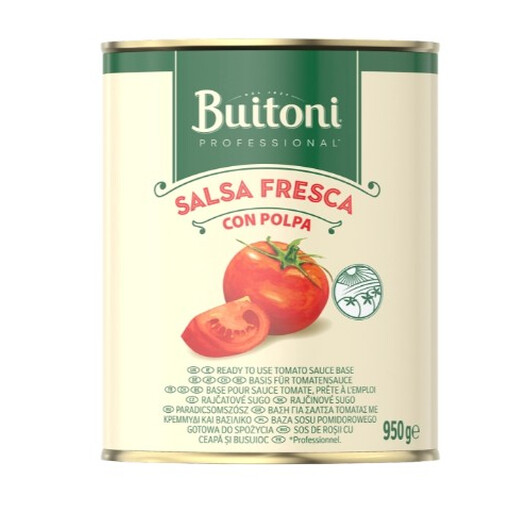 Image unavailable
Buitoni tomato sauce base, 950 g
This 950 g container is worth considering if you’re preparing several portions of pasta using a tomato base. Compare the nutritional values per 100 g with the amount you use, and check the storage instructions for after opening.
View on Joybuy
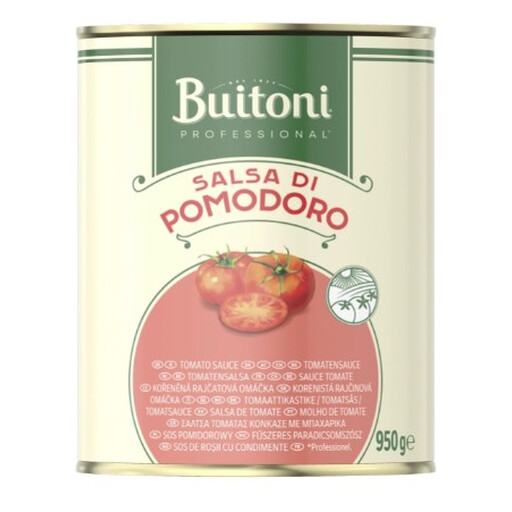 Image unavailable
Buitoni tomato sauce, 950 g
This 950 g size may suit several portions of pasta. The ingredients list for this product includes added sugar: compare the sugars per 100 g and the amount of sauce you serve, then check the storage instructions for after opening.
View on Joybuy
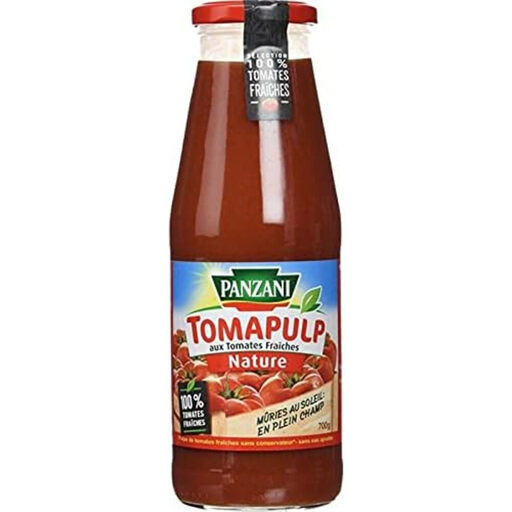 Image unavailable
Panzani Tomacouli Sauce, 700 g
The 700 g size is worth considering if you’re preparing pasta for several people. Compare carbohydrates, including sugars, and salt on the product label, then check how long it keeps after opening.
View on Joybuy
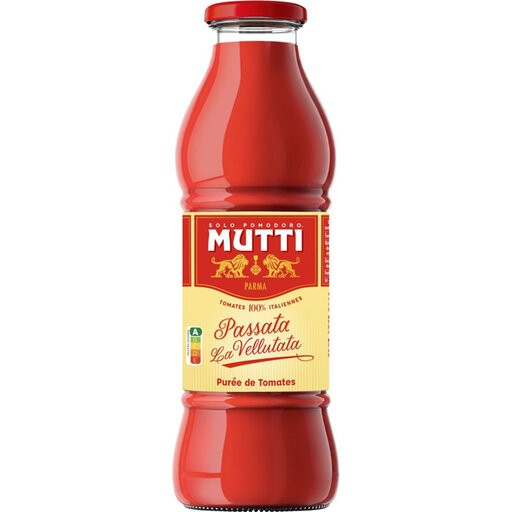 Image unavailable
Mutti Passata la Vellutata, 700 g
This 700 g passata can be used as a base for making several portions of pasta sauce. Take into account any ingredients you add to the recipe, and check the storage instructions for after opening.
View on Joybuy
 Image unavailable
Mutti Tomato Puree Zero Pesticides, 500 g
This 500 g tomato purée is a base to cook with, not ready-made pasta sauce. If you’d like to choose the seasoning yourself, also compare the nutritional values for the portion you serve and check how to store it after opening.
View on Joybuy
Frequently asked questions
Do you have to avoid tomato pasta sauce if you have diabetes?
No. Assurance Maladie says a balanced diet should be varied, with suitable quantities rather than a general list of foods to avoid. When choosing a sauce, take into account the amount you serve and any dietary guidance specific to you.
What should you compare on the labels of two sauces?
Compare carbohydrates, including sugars, and salt per 100 g, then check the ingredients list and the amount you plan to serve. The DGCCRF notes that nutritional information is given per 100 g or 100 ml, providing a consistent basis for comparison.
Is Nutri-Score enough to help you choose a sauce?
No. Nutri-Score is an overall indication and doesn’t tell you how much you’ll eat. Check the nutritional information and ingredients too, then relate the figures to your portion, as recommended by Assurance Maladie.
How long can you keep a large jar after opening?
Follow the storage time and conditions shown on the jar you buy. For its 680 g cooked tomato sauce, Auchan says to refrigerate it at between 0 °C and +4 °C and use it within 48 hours of opening; these instructions don’t automatically apply to other sauces.


