People with large homes and a mix of floor types
If you regularly move between hard floors, rugs and carpets, check how well a vacuum performs on each surface. Reach, manoeuvrability and noise also matter during a longer cleaning session.


To clean the floors, furniture and fabrics in a large home regularly, start by comparing bagged and bagless cylinder vacuum cleaners in terms of the surfaces they can handle, their reach and their accessories. A bagged model means buying replacement bags; a bagless one avoids this cost but needs its dust container emptied. A stick vacuum can make quick clean-ups easier, while a robot can keep floors maintained — but neither automatically replaces the manual cleaner you need for other surfaces.
If you regularly move between hard floors, rugs and carpets, check how well a vacuum performs on each surface. Reach, manoeuvrability and noise also matter during a longer cleaning session.
Sofas, bedding, furniture tops and crevices call for the right attachments. Check which ones are actually included with the model you’re considering, rather than judging it on electrical power alone.
Choosing between a bag and a dust container changes how you maintain your vacuum: you’ll need to replace compatible bags or empty the container and maintain the filters, depending on the model. Think about which routine suits you best.
For a thorough clean, first choose the type of appliance that can handle both floors and other surfaces, then compare models based on your floor coverings and how you plan to use them.
Consider it: as your main vacuum if you regularly clean floors, rugs and other surfaces using the right attachments.
Bear in mind: you’ll need to replace compatible bags, and check the cleaning performance of the model you choose.
Consider it: as your main vacuum if you’d rather use a dust container than bags and don’t mind emptying it.
Bear in mind: the container and filters need maintaining, depending on the model. Bagless doesn’t mean maintenance-free.
Consider it: as a supplementary cleaner for quick jobs and places where getting out a cylinder vacuum would be inconvenient.
Bear in mind: check the run time in the mode you’ll use. UFC-Que Choisir notes that a stick vacuum’s battery life can limit it to quick clean-ups.
Consider it: as a supplementary cleaner for regularly maintaining accessible floors.
Bear in mind: you’ll still need a manual vacuum for furniture, bedding and higher-up areas that a robot can’t clean.
| Priority | What to check | What I need |
|---|---|---|
| Suction | Compare test results on the types of flooring in your home and for the dirt that matters to you, including fibres. Check performance along edges and in corners too: UFC-Que Choisir assesses these separately in its testing. | I have hard floors and rugs; a power rating alone won’t tell me how well the vacuum will clean each one. |
| Moving around | Compare the vacuum’s reach with the layout of your plug sockets. Check its weight, how easy it is to carry up and down stairs, the brush’s manoeuvrability and the noise level of the model. | In a large home, I want to avoid changing sockets too often and be able to move the vacuum from room to room. |
| Accessories | Check for a crevice tool for gaps and a brush for furniture. If you often vacuum fabrics or fibres, check which fabric attachments are included. | Cleaning the floor is only part of the job: I also want to reach the sofa, bedding and awkward corners. |
| Maintenance | For a bagged model, check which bag type it takes; for a bagless one, find out how to empty the container and maintain the filters. Also check which parts are available for the model. | I’d rather make an informed choice between replacing bags and emptying a container regularly. |
The power rating alone doesn’t tell you how well a vacuum will pick up dirt from a rug, a hard floor or along skirting boards.
Compare test results on the floor coverings in your home, and check which brushes are included for furniture and fabrics.
UFC-Que Choisir says cordless stick vacuums are often better suited to quick clean-ups. A robot maintains floors, but not furniture or higher-up surfaces.
If these other surfaces are part of your regular cleaning routine, make sure you choose a manual vacuum with the attachments you need.
Going bagless means emptying the container; the filters also need maintaining, depending on the model.
Check how to empty the container, as well as the instructions for maintaining and replacing the filters.
Emptying and maintenance take time; some models may also need replacement filters.
Parts availability and repair information can matter if you want to keep your vacuum for a long time. For example, Electrolux provides a repair manual for its Pure D8 PD82 range.
Before choosing a model, check the parts, documents and repairability information available for it.
These examples of product ranges offer features to compare; always check the specific model and the accessories included.
The Pure D8 range includes bagged cylinder vacuums designed for a variety of cleaning jobs around the home.
Silence Force Effitech is a range of bagged cylinder vacuums worth considering if reach and accessories are important to you.
The BGS41PET1 is an example of a bagless cylinder vacuum to compare if you’d rather empty a container than replace bags.
Miele’s Complete C3 bagged cylinder vacuums are worth comparing model by model, particularly for reach and filtration.
These options include bagged and bagless cylinder vacuums for manual cleaning, as well as a cordless stick vacuum to consider for quick clean-ups. Compare each model with the surfaces you need to clean and the accessories you need.
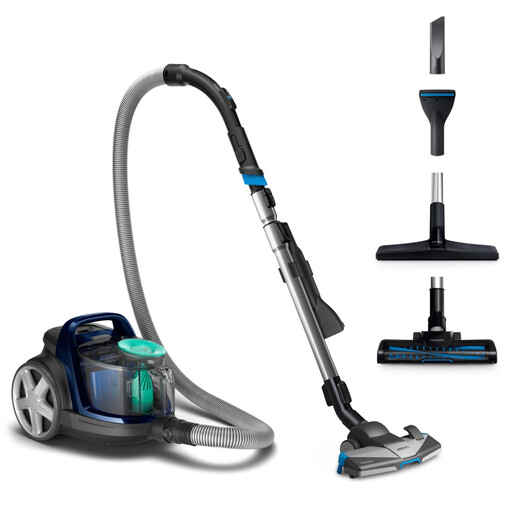 Image unavailable
This bagless cylinder vacuum is worth considering if you’d rather empty a dust container than replace bags. For a home with rugs and fabrics, check which brushes and accessories are included, then compare its cleaning performance on your floor coverings; the stated 900 W rating alone isn’t enough to tell you how well it will clean.
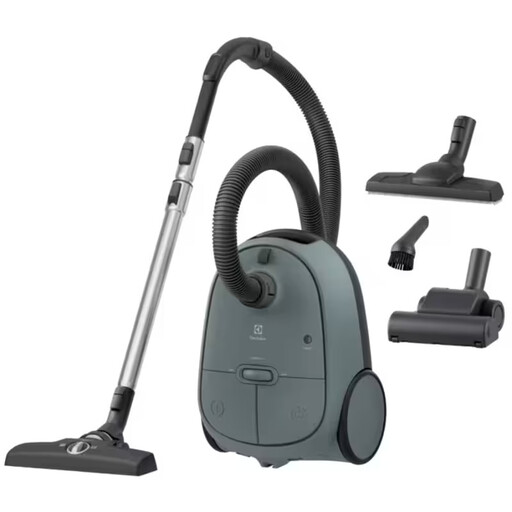 Image unavailable
This bagged cylinder vacuum is worth considering as your main cleaner if you regularly clean several rooms. Check its reach, which brushes are actually included for your floors and fabrics, and the type of compatible bags it takes.
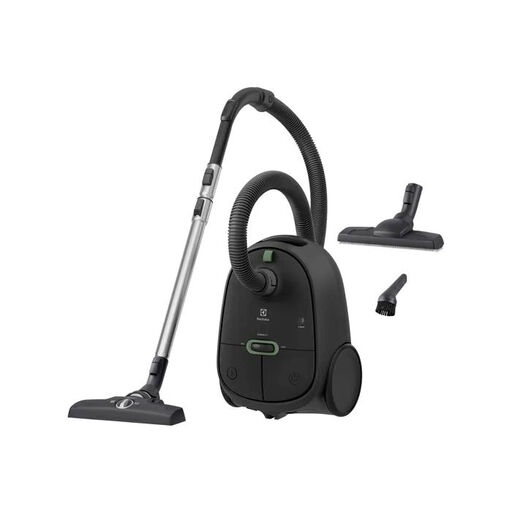 Image unavailable
This bagged cylinder vacuum is worth considering for cleaning the floors of a large home. If you also need to vacuum sofas or bedding, check which accessories are included; compare its performance on your floors instead of assuming the 550 W rating tells you how well it will clean.
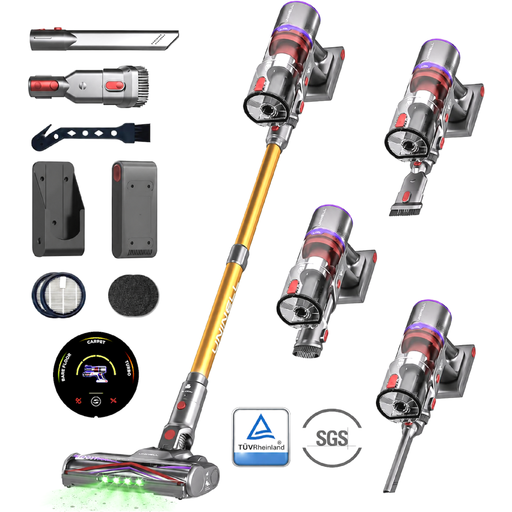 Image unavailable
This cordless stick vacuum is worth considering for quick clean-ups between more thorough cleans. Its product title claims up to 65 minutes of run time: check how long it lasts in the mode you’ll use, and whether it has the attachments you need for other surfaces.
Compare cleaning results on each type of flooring and for the dirt that matters to you, rather than looking at electrical power alone. UFC-Que Choisir also assesses the noise, ease of use and maintenance of cylinder vacuums; its robot vacuum testing separately looks at rugs, tiles, parquet, edges and corners.
A bagged cylinder vacuum needs compatible replacement bags; a bagless one avoids this cost but means you have to empty its container. Bosch also says that the dust container on a bagless model needs to be emptied after use. Check the filter maintenance instructions for the model you choose.
Don’t assume it will be suitable for thorough, regular cleaning. UFC-Que Choisir describes rechargeable stick vacuums as supplementary appliances and highlights common limitations in battery life and suction. If you’re considering one as your main vacuum, compare its run time in the mode you need, its accessories and its performance on your floors and fabrics.
No: a robot vacuums accessible floors, not furniture, bedding or higher-up surfaces. For these jobs, you’ll need a manual vacuum with the right attachments. When comparing robot vacuums for floors, UFC-Que Choisir’s testing recommends looking separately at results on different floor coverings, along edges and in corners.