Families who stock up in bulk
If you store a lot of frozen food at once, a chest freezer could be a good fit if you have the space and can access it from the top. Gifam describes chest freezers as a format that can offer plenty of storage capacity.


For storing large amounts of food, start by comparing chest freezers if you have enough floor space and can access food from the top. An upright freezer with drawers may suit you better if you regularly look for different types of food. An under-counter model is better suited to extra storage, while a fridge freezer can replace a separate appliance only if its freezer compartment is large enough for your stock. In every case, check the dimensions, installation requirements and specifications of the exact model.
If you store a lot of frozen food at once, a chest freezer could be a good fit if you have the space and can access it from the top. Gifam describes chest freezers as a format that can offer plenty of storage capacity.
If you regularly take out different types of food, compare the compartments and drawers to see whether you can organise your supplies and find what you need easily.
If space is limited, weigh up the capacity you really need against the installation dimensions. An under-counter appliance or a fridge freezer may suit a tight space, provided its freezer compartment is large enough for your supplies.
Compare the freezer compartment’s capacity, ease of access, available space and operating features for each model.
| What matters | What to check before buying | Who places the most importance on it |
|---|---|---|
| Freezer capacity | Compare the capacity in litres of the freezer compartment alone with the largest amount you expect to store at once. | If being able to store all my supplies at once matters more than the storage layout, I look first at the usable freezer capacity. Around 33% of consumers prioritise storage capacity. |
| Access and organisation | Check the drawers, baskets or removable shelves, as well as how the door or lid opens. | When I regularly look for different foods, I want to organise them and find them without having to rearrange the whole freezer. Around 27% of consumers prioritise access and food organisation. |
| Dimensions and location | Measure the access route and available space. Check the installation clearances and the appliance’s stated ambient temperature range. | If the appliance needs to fit in a particular room or through a specific access route, I first check that it can be installed and operate in that location. Around 27% of consumers prioritise whether it is suitable for the room. |
| Energy use and food storage | Compare annual energy consumption in kWh, the cooling system and the stated storage time in the event of a power cut for each model. | When I compare day-to-day running, I look at the stated energy consumption, maintenance requirements and claimed storage time. Around 13% of consumers put these operating and food storage criteria first. |
Total capacity includes the fridge section too. For the Bosch KGN39VLCT, Bosch states 260 l for the fridge and 103 l for the freezer. Compare the freezer capacity with the amount you actually need to store.
Check the capacity of the freezer compartment alone against the largest amount you expect to store at once.
If this compartment is too small, you may need to add a second appliance to store your supplies.
Liebherr describes SmartFrost as a technology that reduces frost on the CFe 2500 Pure. Gifam distinguishes this from No Frost, which it describes as eliminating frost. These terms refer to different ways of operating.
Check the cooling system and maintenance instructions for the model you are considering rather than relying on similar-sounding names.
The time needed for maintenance depends on the cooling system and the instructions for the appliance.
External dimensions alone won’t tell you whether an appliance can be delivered, installed and opened. ADEME also recommends comparing the room’s ambient temperature with the appliance’s climate class.
Measure the delivery route and the space available, allow enough room to open the door or lid, and check the manual—especially if you plan to install the appliance in a cellar or garage.
Worth considering when comparing large-capacity chest freezers, including the CFe 2500 Pure.
Its documented models cover upright, under-counter and fridge-freezer formats.
The HCE301E chest freezer offers a mid-sized option for separate frozen food storage.
The LUB3AE88S is worth considering if built-in installation is a key requirement.
The UW8 F2D WHBI N 2 upright freezer is a model to compare if you’re looking for vertical storage.
This selection includes chest freezers and fridge freezers, so you can compare separate storage with a combination appliance.
 Image unavailable
Worth considering if you want to store a large amount of food separately and have a removable basket.
Stated capacity: 291 L; energy rating E; stated annual energy consumption: 226 kWh; 5-level digital control and LED lighting.
The product information requires at least 10 cm of ventilation clearance around the appliance.
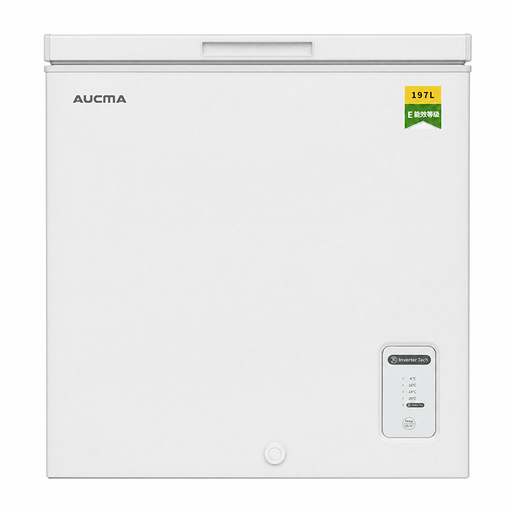 Image unavailable
This chest freezer may suit you if you want separate frozen food storage with a removable basket.
Stated capacity: 197 L; energy rating E; stated annual energy consumption: 197 kWh; 5-level digital control.
The product information requires at least 10 cm of ventilation clearance around the appliance.
 Image unavailable
Its stated capacity of 95 L is worth comparing with the largest amount you expect to store if you’re looking for extra freezer space.
The product information lists a removable basket, energy rating E, stated annual energy consumption of 165 kWh and a 7-level thermostat.
The product information requires at least 10 cm of ventilation clearance around the appliance.
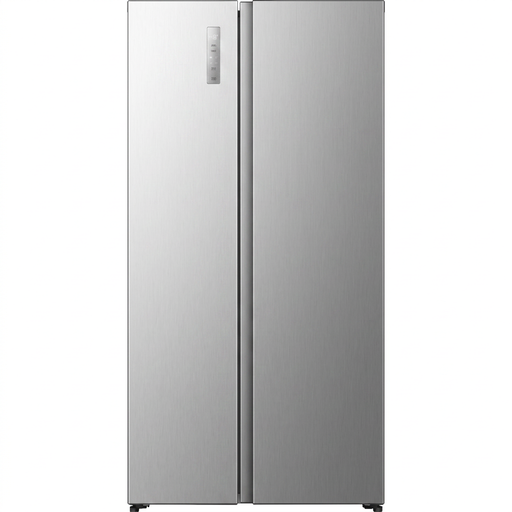 Image unavailable
Worth comparing if you’d prefer a combination appliance to a separate freezer. Check whether the freezer capacity suits the amount you need to store.
Stated total capacity: 544 L; stated freezer compartment capacity: 197 L, with 4 shelves, 2 drawers and 3 door balconies. The product information lists Total No Frost, climate class SN/N/ST/T and stated annual energy consumption of 254 kWh.
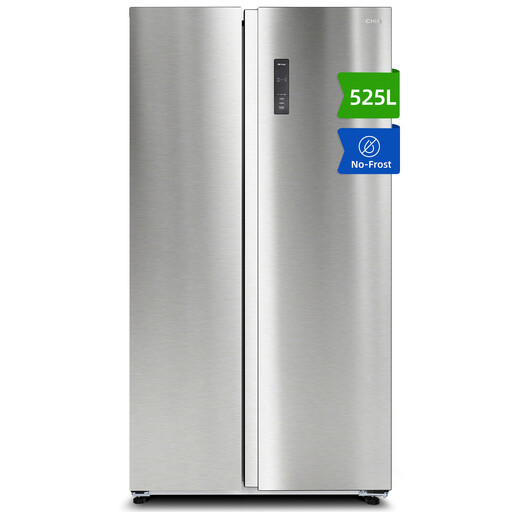 Image unavailable
This combination model is worth considering if its freezer compartment is large enough for the supplies you want to store.
The product information lists a 192 L freezer, No Frost, Multi-Airflow, an inverter compressor and energy rating E. It also mentions separate storage areas, adjustable feet and a reversible door.
No. Compare the freezer compartment capacity separately. Bosch states that the KGN39VLCT has 260 l of fridge space and 103 l of freezer space.
No. Check the room’s ambient temperature against the appliance’s climate class. ADEME recommends taking this compatibility into account. For the CFe 2500, Liebherr states that FrostProtect allows use down to −15 °C; this feature applies to this model only. Also follow the clearance requirements in the manual.
Check the appliance’s star rating and freezing capacity. The Ministry of Agriculture distinguishes between a three-star compartment, designed to store frozen food at −18 °C, and a four-star compartment, which can also freeze fresh food.
No. Gifam distinguishes No Frost, which eliminates frost, from technologies that only reduce frost build-up. Bosch states that the GSN36CWFV has No Frost, but the GTV15NWEB does not. Check the manual for your chosen model to find out about maintenance.
Yes. The DGCCRF states that household refrigerating appliances, including freezers and fridge freezers, are covered by Delegated Regulation (EU) 2019/2016 on energy labelling, which has applied since 1 March 2021. When comparing models, check the stated annual energy consumption and capacities in particular.