
Livraison le jour même ou le lendemain

Qualité garantie

Débloquez vos offres de bienvenue: Livraison GRATUITE | Jusqu'à -80 % | 30 jours d'essai gratuits à JoyPlus
Téléchargez l'application
A large-capacity washing machine can make light work of the laundry, especially when you need to wash sheets, towels, sportswear or a duvet. But a big drum alone doesn't guarantee a good purchase. Some features highlighted in product descriptions can also lead to costs or inconveniences that only become apparent after installation.
A washer-dryer advertised as "10 kg" may not be able to dry 10 kg of laundry. Several combined models, for example, offer 10 or 11 kg for washing, but only 6 kg for drying. This means you have to remove some of the laundry before starting the drying cycle, unless the load stays under the stated limit.
Class A usually refers to the wash cycle. On a combined appliance, the energy consumption of the complete cycle — washing and drying — has its own separate classification. The Samsung WD11DG6B85BEU3, for instance, shows a class A rating for washing, while its wash-dry cycle is rated D according to the information provided for this model.
To compare running costs, look at the kWh per 100 cycles, the water consumption and the duration of the Eco 40-60 programme. An economical cycle can last nearly four hours: this is common in this category.
A large-capacity washing machine can be deeper than a standard model. The Candy BR 411BL9-S, for example, measures approximately 68.1 cm in depth, compared to 61.1 cm for the Haier X Series 11. Check the width of doorways, the door opening and the space needed for hose connections.
The noise level during the spin cycle also deserves your attention. An appliance rated at 68 dB(A) will not be heard in the same way as a model at 80 dB. In a flat or a utility room next to a bedroom, an inverter motor, careful levelling and an anti-vibration system can improve comfort, without completely eliminating the noise.
A larger drum should not, however, encourage you to overload the machine. Respect the maximum weight stated and leave enough room for the laundry to move freely.
A 1,400 rpm washing machine extracts more water than a slower appliance, which can shorten air-drying time. However, spin speed isn't everything: also check the spin efficiency class, the noise level and the programmes designed for delicate fabrics.
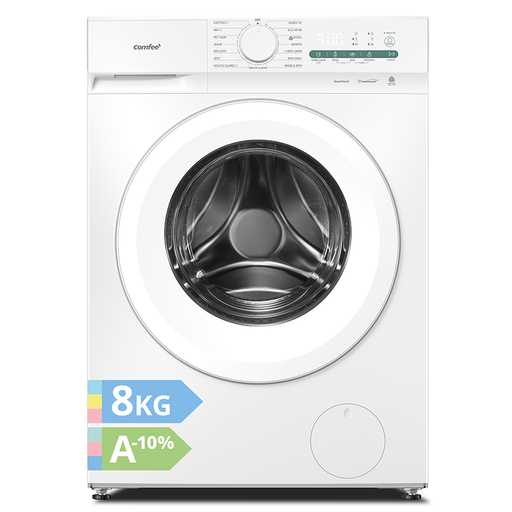
Why this choice suits this profile: With its stated depth of 48 cm, this model can fit into a small utility room or flat, while still offering enough capacity for everyday laundry.
Its 8 kg capacity stops you paying for an oversized drum when your laundry loads remain modest. Still, remember to measure the available space before ordering.
Class A-10% stated, steam function, 16 programmes and BLDC inverter motor according to the product sheet.
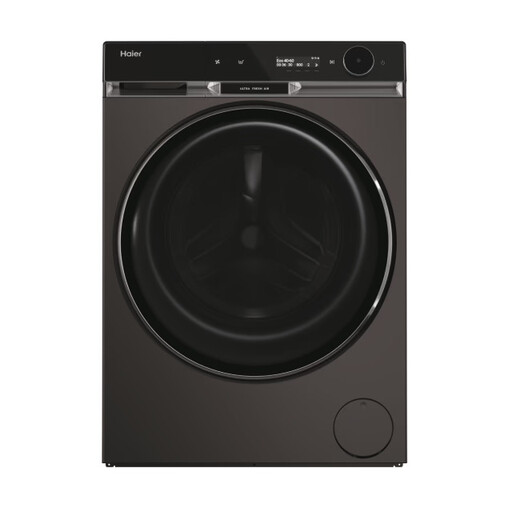
Why this choice suits this profile: It combines a capacity suited to a family, Wi-Fi connectivity, automatic dosing and several tracking functions via the hOn app.
The stated data allows you to compare consumption, the noise level of 68 dB(A), the depth of 61.1 cm and the energy class A in a concrete way.
Spin at 1,400 rpm, direct drive motor, steam, AutoDose and Wi-Fi control are listed in its technical specifications.
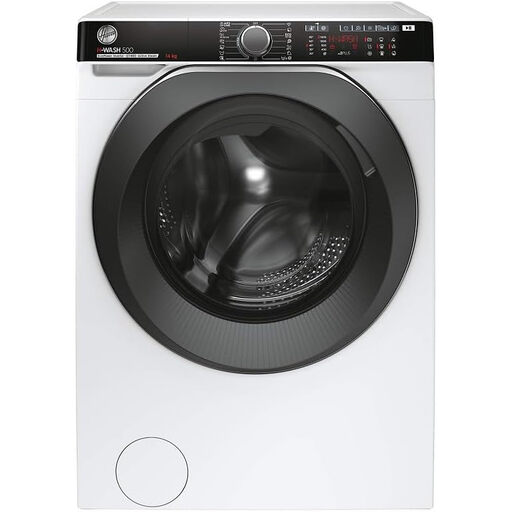
Why this choice suits this profile: With its 14 kg capacity, this model is aimed at households that wash large quantities of laundry, bulky items or even professional textiles at home.
Its large capacity meets a very specific need. However, the stated noise level of 80 dB invites careful thought about its location and when you use it.
Stainless steel drum, 16 programmes, spin at 1,400 rpm and compatibility with a connected environment.
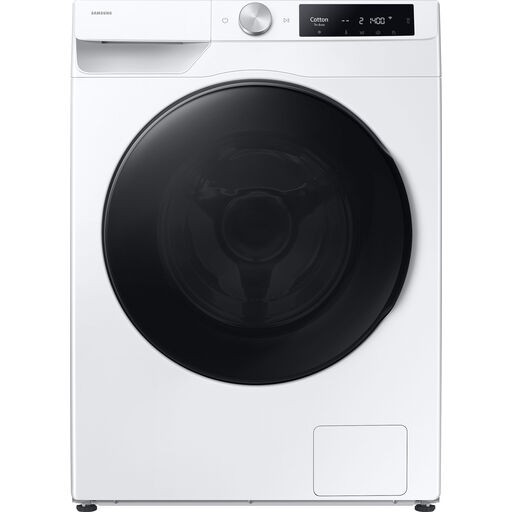
Why this choice suits this profile: This washer-dryer is aimed at households that want two appliances in one and to control certain settings via SmartThings.
The distinction between 11 kg for washing and 6 kg for drying helps you plan your loads better. The combined cycle is stated to last 7 hours 32 minutes: something to factor into your daily routine.
Class A for washing, automatic dosing, steam, Wi-Fi, Digital Inverter motor and spin at 1,400 rpm are stated for this model.
We have compiled a complete list, updated in real time, of products that meet these strict selection criteria and European safety regulations.
Before the first wash, remove the transit bolts, plug the appliance into an earthed socket and check that the floor is stable. A machine that is not level can vibrate heavily during the spin cycle.
To keep it performing well over time:
A 9 kg or 10 kg washing machine is generally suitable for the everyday laundry of a four-person household. If you often wash duvets, thick towels or large amounts of laundry, an 11 kg model will offer more flexibility. How often you do laundry matters just as much as the number of people in the home.
Not necessarily per cycle: some appliances automatically adjust the amount of water and energy to the weight of the laundry. However, a large drum can lead to higher consumption if you regularly use it for small loads. Compare the energy label, the kWh per 100 cycles and the water consumption, rather than relying on capacity alone.
The lifespan depends on how often it is used, the quality of the installation, maintenance and whether the maximum loads are respected. Check the length of the commercial warranty, the availability of spare parts and the after-sales service conditions. These factors can have a greater impact on the total cost than a few extra features.