Which criteria should you check first?
Start with the size of the loads you actually wash, then compare it with the programmes you use and the space available. The capacity in kilograms alone doesn’t tell you how well a machine will keep up with your household’s laundry.
| What matters |
What to check |
Who it matters to |
| Fitting large loads into fewer washes |
Compare the capacity in kg of dry laundry with the size of your usual loads. According to Que Choisir, 10 to 12 kg is more suitable when you regularly wash large loads. |
If my laundry baskets are regularly full, I want to avoid running lots of cycles without choosing a drum that is rarely full. Around 42% of consumers in this group would make this their top priority. |
| Matching programmes to sorted loads |
Check the manual for the load limits of the programmes you use. Que Choisir says that the limits for synthetics, delicates or wool may be lower than the maximum capacity. |
I have lots of laundry, but I often sort it by fabric or colour. A large capacity figure on the label isn’t enough to plan these washes. Around 33% of consumers in this group would prioritise matching the machine to sorted loads. |
| Keeping up with the laundry in the space available |
Measure the space and clearance needed. Also compare cycle duration, noise and spin performance. The European Commission says the label includes information on cycle duration and noise emissions, among other things. |
If the utility room is narrow or cycles need to fit around a particular schedule, I need to be able to install the machine and dry the laundry in time. This would be the top priority for around 25% of consumers in this group. |
Brands to consider
There are no brand profiles to display in this section.
Washing machines to compare on Joybuy
These models include 10 kg washing machines to consider if you regularly wash large loads, as well as 8 or 9 kg models to compare with more moderate or more frequently sorted loads. For each one, check the load limits for the programmes you use and the space needed for installation.
 Image unavailable
Haier X Series 11 HW100-BD14397PGU1, 10 kg
Worth considering if you regularly wash large loads that fill a 10 kg drum.
Stated capacity of 10 kg, maximum spin speed of 1,400 rpm and A energy rating. The model name also mentions AutoDose, steam and Wi-Fi. Check the manual for programme load limits and installation requirements.
View on Joybuy
 Image unavailable
Hisense WF5I8043BWF, 8 kg
A capacity to compare with your usual loads if you have lots of laundry overall, but often split into smaller batches.
Stated capacity of 8 kg and maximum spin speed of 1,400 rpm. Check the load limits for each programme and measure the space before choosing this model.
View on Joybuy
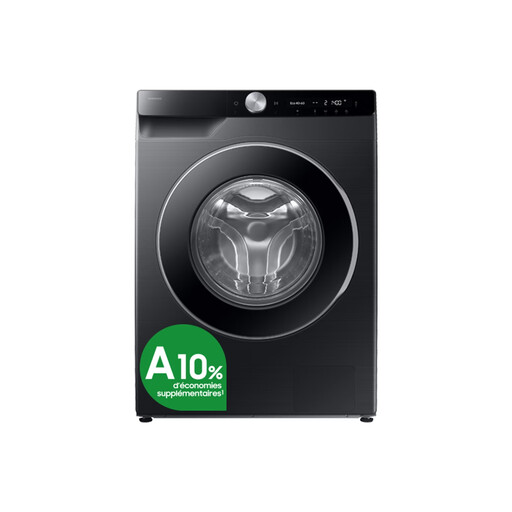 Image unavailable
Samsung WW90DG6U85LBU3 AI Wash 6000 Series, 9 kg
Worth considering if your usual loads fall between the capacities of the 8 and 10 kg models featured here, without assuming that every programme can take 9 kg.
Stated capacity of 9 kg and A energy rating. Check the manual for load limits by fabric type, and allow enough clearance for the door.
View on Joybuy
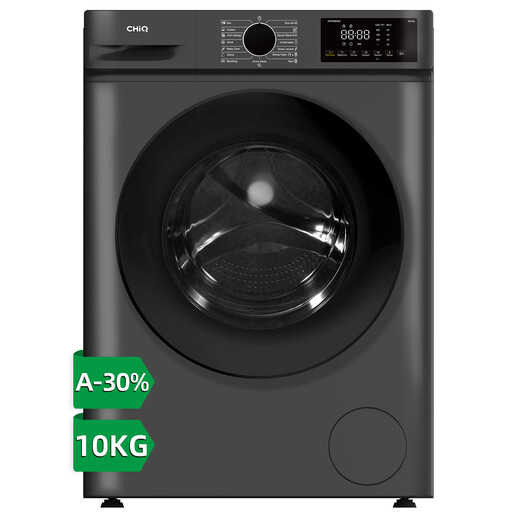 Image unavailable
CHiQ JW105883G, 10 kg
A capacity to consider if you regularly wash large loads, rather than if your loads are usually small.
The product name states a capacity of 10 kg, a maximum spin speed of 1,400 rpm and 16 programmes. Compare the energy label and external dimensions of the exact model, then check the manual for programme load limits.
View on Joybuy
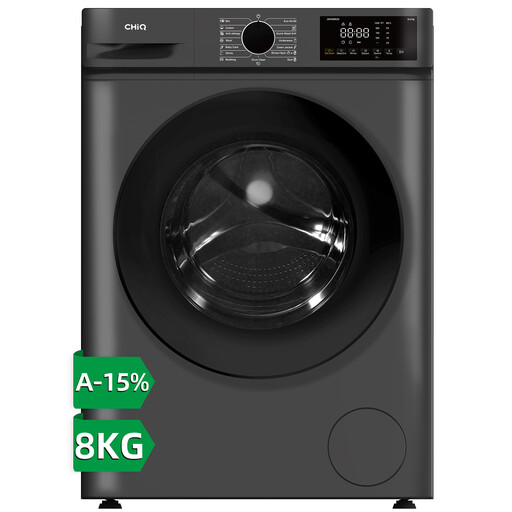 Image unavailable
CHiQ JW85883G, 8 kg
Compare it with your sorted or moderate loads. 8 kg may not be enough to combine frequent large loads.
The product name states a capacity of 8 kg, a maximum spin speed of 1,400 rpm and 16 programmes. Check the external dimensions, energy label details and load limits for the programmes you usually use.
View on Joybuy
Frequently asked questions
What does a washing machine’s capacity in kilograms mean?
It refers to the maximum weight of dry laundry stated for a particular programme and loading conditions. The European Commission defines this rated capacity in kilograms. To find out how much laundry you can load for synthetics, wool or delicates, check the limits for the individual programmes on your model.
What should you compare on the energy label besides the rating?
Also compare energy consumption per 100 cycles, water consumption per cycle, cycle duration and noise levels for washing machines of a similar type and capacity. According to the European Commission, this information is shown on the label and can help you decide whether a model suits your laundry routine.
What is the durability index for a washing machine in France?
It provides an additional way to compare front- or top-loading washing machines, but doesn’t replace checking their capacity and programmes. The French ministry responsible for consumer affairs says these appliances are covered by the index. Check the score out of 10 and the details of its criteria for the models you’re considering.
How can you plan for a possible repair?
Before you buy, check the information on parts and maintenance for the specific model rather than relying on the brand name alone. In France, the details behind the durability index, as presented by the ministry responsible for consumer affairs, can help you make a more informed comparison.


