What should you compare?
Start with the main need you want your milk to meet, then compare the nutritional information per 100 ml and the ingredients of the products you’re considering.
| Criteria |
What to check |
Who it matters to |
| Protein |
Grams of protein per 100 ml, then for the amount you drink. |
If I’m relying on my glass of milk to contribute more to my protein intake, its protein content matters more than the bottle size alone. Around 42% of consumers prioritise the protein they get from milk. |
| Lactose |
The stated lactose content and ingredients; also consider your personal tolerance. |
If I find lactose difficult to digest but want to keep milk in my routine, I first look for a product with a lactose content that suits me. Managing lactose is the top priority for around 33% of consumers. |
| Fat |
Fat per 100 ml, without confusing it with protein content. |
For everyday use, I mainly want to choose between skimmed and semi-skimmed without assuming skimmed milk has more protein. This is the main consideration for around 25% of consumers. |
Brands to know
The differences below apply to the specific products listed, not every milk from each brand.
Candia
Candia+ Protéines is the brand’s lactose-free milk enriched with protein.
- Candia lists 5.0 g of protein and less than 0.1 g of lactose per 100 ml for this product.
- It contains skimmed milk and milk proteins, so it is not suitable for anyone with a milk protein allergy.
Lactel
Matin Léger skimmed milk is a lactose-free option to consider if fat content is an important factor in your choice.
- Lactel lists 0.2 g of fat, 3.3 g of protein and less than 0.1 g of lactose per 100 ml.
- Its protein content per 100 ml is lower than the 5.0 g Candia lists for Candia+ Protéines.
Carrefour Classic'
The product featured is lactose-free semi-skimmed UHT milk with vitamin D, sold in a pack of 6 × 1 L.
- Carrefour lists 1.2% fat and less than 0.1% lactose for this product.
- If protein content is your priority, check the ‘protein’ figure rather than assuming vitamin D means the milk has been enriched with protein.
Auchan
The product featured is lactose-free semi-skimmed UHT milk for everyday use.
- Auchan lists 3.3 g of protein, 1.2 g of fat and less than 0.1 g of lactose per 100 ml.
- If you’re looking for more protein per glass, compare its 3.3 g per 100 ml with the figure for the enriched product you’re considering.
Delisse (E.Leclerc)
E.Leclerc’s lactose-free milk is available in a pack of six 50 cl bottles.
- The smaller size may suit you if you don’t get through a 1 L bottle before it needs to be used up.
- E.Leclerc recommends checking availability with your local store.
Joybuy products related to this choice
If you’re after a lactose-free milk drink to take with you, this flavoured milkshake is a different choice from the plain milk you might use in coffee, cereal or a recipe. Check its size and ingredients against how you plan to use it before buying.
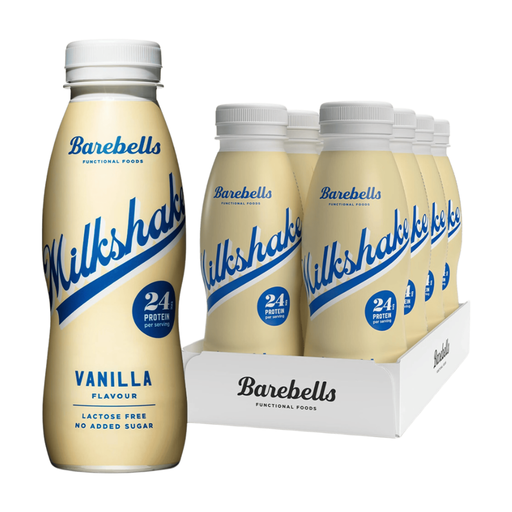 Image unavailable
Barebells High Protein Milkshake Vanilla Flavour, 330 ml, pack of 8
A flavoured milk drink in individual bottles, ideal as a ready-to-drink option rather than a substitute for plain milk.
The product name says ‘lactose-free’, but the drink does contain milk. If the amount of residual lactose matters to you, check the label on the product you buy.
View on Joybuy
Frequently asked questions
Does lactose-free milk still contain milk proteins?
Yes, it can. ‘Lactose-free’ refers to milk sugar, not milk proteins: Candia, for example, lists skimmed milk and milk proteins in Candia+ Protéines. If you have a milk allergy, check the ingredients and allergen information for every product.
Are lactose intolerance and a milk allergy the same thing?
No. Assurance Maladie describes lactose intolerance as difficulty digesting milk sugar and distinguishes it from food allergy. Lactose-free milk can therefore still contain milk and, on its own, is not suitable if you need to avoid milk proteins.
How do you compare the protein content of two lactose-free milks?
Compare their protein content per 100 ml, then consider how much you actually drink. Candia lists 5.0 g per 100 ml for Candia+ Protéines; Lactel and Auchan each list 3.3 g per 100 ml for the products featured here. Bottle size doesn’t replace this comparison.
How long can you keep lactose-free milk once opened?
Follow the storage instructions on the packaging of the product you buy. The recommended time may vary from one product to another, so check it before choosing a larger pack if you only drink a little milk at a time.


