People looking to reduce lactose
You want to keep cow’s milk in your Christmas biscuits, custards or creams, while choosing a lactose level that suits your personal tolerance. Ameli distinguishes lactose intolerance from food allergy.


If you want to reduce lactose while still using cow’s milk in your Christmas baking, choose lactose-free milk. If your recipe needs to be dairy-free, opt for a plant-based drink after checking its ingredients and allergens: lactose-free milk still contains milk proteins. Then compare the product’s composition and the form called for in the recipe, as a plant-based drink or sweetened condensed milk will not automatically work as a substitute for liquid milk.
You want to keep cow’s milk in your Christmas biscuits, custards or creams, while choosing a lactose level that suits your personal tolerance. Ameli distinguishes lactose intolerance from food allergy.
Your priority is to leave milk out of the ingredients, whether you’re making a plant-based recipe or need to avoid milk. As Allergies Québec points out, lactose-free milk still contains cow’s milk proteins.
You can choose between whole milk, semi-skimmed milk and a plant-based drink according to the composition and flavour you’re after. The products featured by Lactel, Candia and Bjorg have different fat and protein contents.
Choose this if: you want to reduce lactose without removing cow’s milk from the recipe.
Keep in mind: it still contains milk, so it isn’t suitable when the recipe needs to be dairy-free.
Choose this if: the bake needs to be dairy-free, after checking the ingredients in your chosen product.
Keep in mind: its composition and flavour may differ from cow’s milk, and the result will also depend on the recipe.
| Criteria | What to check | Who is it for? |
|---|---|---|
| Lactose content | Check the lactose content shown for your chosen milk, then take your personal tolerance into account. | For my Christmas custards, I want to keep a cow’s milk base while reducing lactose. Around 42% of consumers concerned put this need first. |
| Free from milk | Check the ingredients and allergens in your chosen plant-based drink; “lactose-free” does not mean “milk-free”. | If I’m making a dairy-free cake, I first need to make sure that the ingredient I choose doesn’t contain milk. Around 33% of consumers prioritise this requirement. |
| Recipe composition | Compare the product category, fat content and nutritional information, using the units shown on each pack. | For a cream or pastry where flavour and consistency matter especially, I want to choose the right composition before changing ingredients. Around 25% of consumers share this priority. |
Lactose-free milk is still a dairy product. Allergies Québec explains that it contains cow’s milk proteins and isn’t suitable for anyone with a milk allergy.
For a dairy-free recipe, check the ingredients and allergens in a plant-based alternative. If you have a diagnosed allergy, follow the advice of your healthcare professional.
The Matin Léger whole milk featured by Lactel contains 3.6 g of fat per 100 ml; the semi-skimmed products described by Candia and Carrefour contain 1.0 g and 1.2 g per 100 ml respectively. These products don’t have the same composition.
If the recipe calls for whole milk, look for that category on the pack. For a bake where consistency matters, try the substitution in a small quantity before making the whole batch.
The oat drink described by Bjorg contains 0.5 g of protein per 100 g, while the lactose-free milks described by Lactel and Candia contain 3.3 g per 100 ml. These figures use different units, so they aren’t enough to predict how a bake will turn out.
First choose according to whether milk needs to be included or avoided, then read the ingredients and nutritional information for the product you’ll be using.
A multipack of bottles can be useful for several recipes, but each opened bottle must be stored according to the instructions on its packaging.
Choose a pack size that suits the dishes you plan to make, and check the product you buy for how long it keeps once opened.
The Matin Léger range includes a lactose-free whole cow’s milk.
Candia+ includes lactose-free cow’s milk with 1.0% fat, which the brand recommends for cooking.
The brand offers semi-skimmed UHT lactose-free milk.
The brand offers semi-skimmed UHT lactose-free milk in packs of 6 × 1 L and 6 × 50 cl.
Délisse offers lactose-free cow’s milk, including a product listed in packs of 6 × 50 cl.
The 1 L oat drink featured by Bjorg is an option for a dairy-free recipe.
These two products are suited to different uses: a soya drink for a dairy-free bake, and sweetened condensed lactose-free milk for a recipe that calls for this dairy ingredient. Check which form your recipe requires before replacing liquid milk.
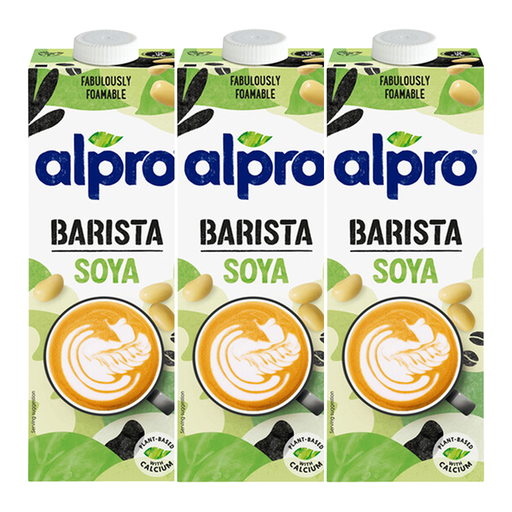 Image unavailable
A soya drink to consider if your bake needs to be dairy-free. The pack contains three 1 L bottles; check the ingredients and allergens on the packaging, especially if soya needs to be avoided.
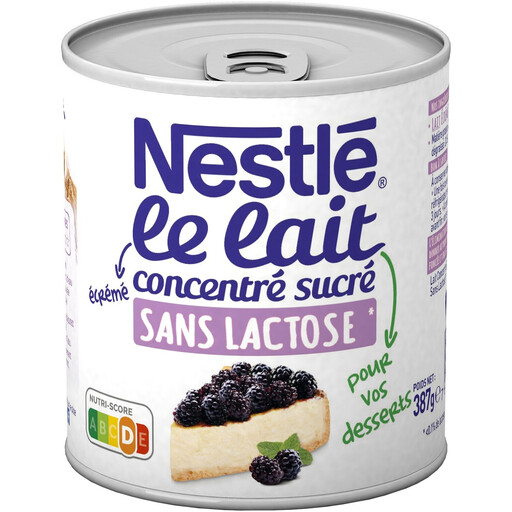 Image unavailable
Worth considering for a dessert that calls for sweetened lactose-free condensed milk. This 387 g product contains milk, so it isn’t suitable for a dairy-free recipe; its concentrated, sweetened form is not a direct substitute for liquid milk. Check the lactose content shown on the packaging against your personal tolerance.
No. Lactose-free milk is still a dairy product and contains cow’s milk proteins, as Allergies Québec points out. For a dairy-free recipe, check the ingredients and allergens in your chosen plant-based drink.
Start with the product name, ingredients list and allergens, then check the nutritional information and the quantity shown. The DGCCRF explains that food labels must highlight allergenic ingredients.
Look for a product explicitly labelled as whole milk rather than semi-skimmed. Lactel states that its Matin Léger whole milk contains 3.6 g of fat per 100 ml; always check the category and nutritional values on the bottle you buy.
Follow the instructions on the specific bottle, as they vary by product. For the products described here, Lactel recommends using Matin Léger whole milk within three days of opening, Candia recommends four days for Candia+, and Auchan says up to five days for its pack of 6 × 1 L. Each product has its own chilled storage instructions.