People checking for dairy ingredients
If you avoid lactose, check the ingredients for the specific product you’re buying. Don’t assume that sardines in water or an entire brand’s range will meet your needs.


For budget-friendly lactose-free shopping, first check the ingredients and allergen information on the tin you’re considering, then compare the price per kilo and drained net weight. Sardines in water may be easier to check, while tomato, marinades and oil affect the seasoning and ingredients. Whatever the label says, always read the packaging for the product you’re buying.
If you avoid lactose, check the ingredients for the specific product you’re buying. Don’t assume that sardines in water or an entire brand’s range will meet your needs.
When comparing tins and multipacks of different sizes, look at the amount of drained fish and the price per kilo, not just the price shown for the pack.
Your choice also depends on whether you prefer sardines in water or a seasoned recipe, whether they contain oil, and whether you want whole sardines or fillets.
When choosing tinned sardines as part of a lactose-free shop, check the ingredients of the exact product before comparing its format and recipe.
Worth considering: if you’d like to season the sardines yourself. Some Auchan and Pêche Océan products list sardines, water and salt as their ingredients.
Things to weigh up: whole sardines and fillets may not have the same drained weight.
Worth considering: if you prefer a ready-seasoned recipe, such as the tomato or red pepper and onion options described by Connétable and E.Leclerc.
Things to weigh up: these recipes contain additional ingredients, which vary from one product to another.
Worth considering: if you’re looking for a recipe with added oil rather than sardines in water.
Things to weigh up: the presence of oil doesn’t tell you whether a product contains lactose. Check the ingredients and nutritional information separately.
| What to compare | What to check | Who is it for? |
|---|---|---|
| Dairy ingredients | Read the ingredients and allergen information on the specific tin, even for sardines in water. | If I need to avoid lactose, the recipe name alone isn’t enough to help me choose. Around 36% of consumers would make this their priority. |
| Quantity and budget | Compare drained net weight and price per kilo for similar recipes, and check the price at your chosen shop. | When pack sizes vary, I want to know how much fish I’m getting for my money. This would be the top priority for around 29% of consumers. |
| Ingredients and nutrition | Compare the recipe, then check the fat and salt per 100 g on the labels. | I prefer to choose how I season my food, with the ingredients in each tin in mind. Around 21% of consumers would put this comparison first. |
| Format and taste | Check whether the sardines are whole or filleted, what the packaging says about bones, and the instructions for after opening. | For an easy meal, I choose a format and seasoning that suit me. This would be the priority for around 14% of consumers. |
The ingredients in one product of sardines in water don’t tell you what’s in tomato or marinated recipes, or other products from the same brand.
Check the ingredients and allergen information on the tin you’re buying, rather than relying on the recipe name alone.
Two tins may contain different amounts of fish once drained. Prices can also vary depending on the shop or collection option.
To compare similar recipes, consider the price per kilo alongside the drained net weight and number of tins.
Not containing oil tells you nothing about the other ingredients. It also isn’t enough to tell you about the nutritional values of the tin.
Check separately for dairy ingredients and, if these matter to you, compare the fat and salt per 100 g.
A tin that’s larger than your portion may leave you with leftovers to store. The Auchan sardine fillets product page we checked says to refrigerate them in an airtight container and eat them within two days.
Choose a format that suits how you’ll use it and follow the instructions on the tin you buy.
The range includes fillets in water and seasoned recipes, including lemon and basil, and olive oil.
The range lets you compare plain, tomato, marinated and oil-based sardine recipes.
Carrefour products include sardines in oil and fillets in water, which you can compare by recipe and format.
The products listed by E.Leclerc include sardines in water, in tomato sauce and marinated.
The Auchan products reviewed include sardines and fillets in water, as well as an organic recipe in olive oil.
These tins let you compare sardines in water with recipes in oil. To choose between them as part of a lactose-free shop, check the labels on the products you’re considering, then compare their formats and drained weights.
 Image unavailable
Worth considering if you’re looking for a recipe in olive oil rather than water. The stated pack size is 140 g. Check the drained weight, ingredients and allergen information on the tin before comparing.
 Image unavailable
Worth considering if you prefer sardines in water and a pack labelled boneless. The 98 g refers to the product size and may not be the drained weight. Check this, along with the ingredients and allergen information, on the packaging.
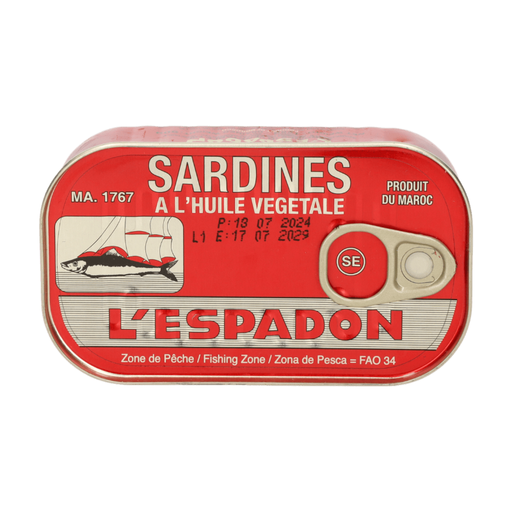 Image unavailable
Worth considering if a tin in oil suits your preferences. The stated pack size is 125 g. Check the type of oil, ingredients, allergen information and drained weight on the tin.
Read the ingredients and allergen information for the product you’re buying, rather than relying on the words ‘in water’ alone. The DGCCRF notes that prepacked foods have an ingredients list; the ingredients in one recipe don’t necessarily apply to other products in the range.
No. The recipe name alone doesn’t guarantee that a product meets your needs. Auchan and Pêche Océan product pages describe some products as containing sardines, water and salt, but check the label on the specific tin you choose.
Check the drained net weight if you want to compare how much fish you’ll have after draining. The total weight may include water or oil, so compare the drained weight with the price per kilo when looking at similar recipes.
Follow the instructions on the tin you buy. The Auchan product page for fillets in water that we checked says to use an airtight container, keep them refrigerated and eat them within two days of opening. Don’t assume the same time limit applies to another product.