Parents who need to avoid milk completely
If you’re baking for a child who needs to avoid milk, ‘lactose-free’ isn’t enough. Check the ingredients of the product you choose and follow the dietary restrictions specific to your child.


Choose lactose-free cow’s milk if you want to reduce lactose while keeping milk in the recipe: it still contains milk proteins. If your baking really needs to be dairy-free, consider a plant-based drink instead, checking its ingredients and your child’s specific dietary requirements, particularly if they have an allergy.
If you’re baking for a child who needs to avoid milk, ‘lactose-free’ isn’t enough. Check the ingredients of the product you choose and follow the dietary restrictions specific to your child.
For pancakes, cakes or dough that would usually contain milk, lactose-free milk lets you keep this ingredient in the recipe if avoiding milk proteins isn’t necessary.
Soya and oat drinks have different ingredients. Check the plant-based ingredients, other components and allergens before using one in a sweet recipe.
Consider it: if someone has difficulty digesting lactose and milk is still allowed in the recipe.
Limitation: this is still a dairy product, so it isn’t suitable if milk needs to be avoided.
Consider it: if the recipe needs to be dairy-free and the chosen drink meets your child’s dietary requirements.
Limitation: ingredients vary between products, and they won’t necessarily behave in the same way in every recipe.
| Criteria | What to check | Who is this for? |
|---|---|---|
| Avoiding milk | Read the ingredients and allergens on the carton you buy, and follow the exclusions specified for your child. | If a recipe needs to be completely milk-free, I can’t rely on the words ‘lactose-free’ alone. This need comes first for around 42% of consumers concerned. |
| Reducing lactose | Check the lactose information and confirm that milk is still allowed under the dietary requirements. | If milk is allowed but lactose is a problem, I want to keep a dairy ingredient in my baking. Around 33% of consumers concerned make reducing lactose their priority. |
| Use in baking | Check the drink’s base and ingredients, then consider how it is intended to be used in the recipe. | Once dietary restrictions have been taken into account, I’m mainly looking for a convenient ingredient for my cakes or pancakes. Ease of use is the priority for around 25% of consumers concerned. |
Lactose-free milk still contains milk proteins. According to Allergies Québec, it isn’t suitable for someone with a cow’s milk allergy.
If your child needs to avoid milk, don’t choose a carton based on the words ‘lactose-free’ alone: check the ingredients and follow their dietary requirements.
Plant-based drinks can be made from soya or oats, both of which need to be considered in light of individual dietary restrictions.
Read the ingredients and allergens listed on the product you’re actually buying before adding it to the recipe.
A retailer’s product page or an out-of-date offer doesn’t guarantee that the drink you want will be available for your baking activity.
Check availability with the relevant shop or collection service before planning to use a specific product.
Matin Léger is a range of lactose-free cow’s milk, which is different from a dairy-free drink.
Candia+ Lactose-Free Milk is still cow’s milk; the brand offers it in 1 L and 50 cl formats, among others.
Carrefour Bio’s plain soya drink is an option to consider for a dairy-free recipe.
Auchan offers a plant-based oat drink in a 1 L carton.
Bio Village offers an organic oat drink in a 1 L carton.
Vemondo is the brand of an organic oat drink sold by Lidl in packs of 8 × 1 L.
These products cover two different baking needs: plant-based drinks to consider when milk needs to be avoided, and lactose-free sweetened condensed milk for recipes where milk is still allowed. First consider your child’s dietary restrictions, then the recipe you have in mind.
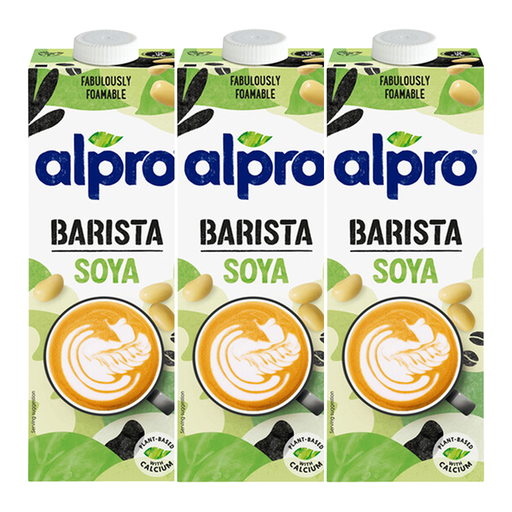 Image unavailable
Consider this for a recipe using a soya drink instead of milk, but only if soya is suitable for your child’s dietary requirements. The pack contains three 1 L cartons; also check the packaging for information about any other potential restrictions.
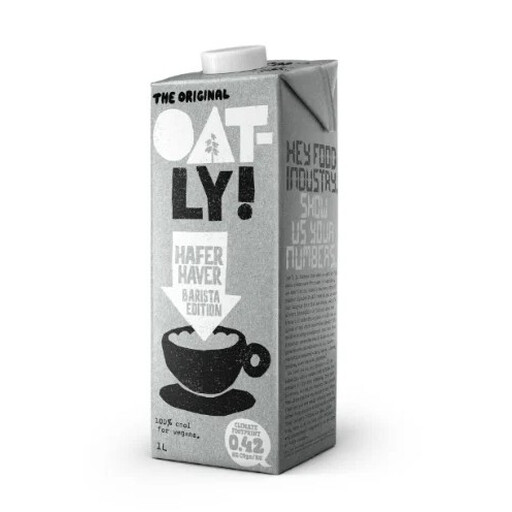 Image unavailable
Compare this if you’re looking for an oat drink rather than cow’s milk. Check that oats and gluten are suitable for your child; the Barista name doesn’t guarantee the same results in baking.
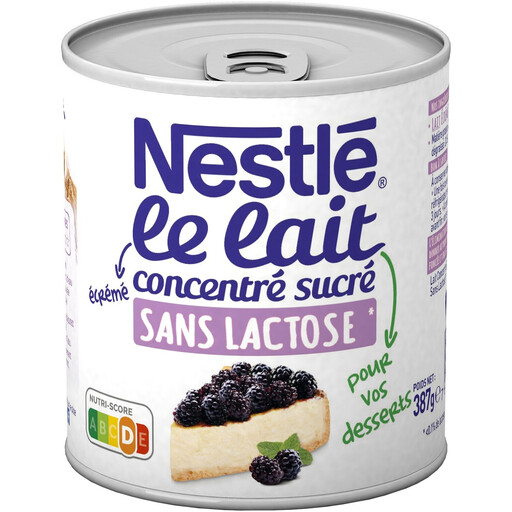 Image unavailable
Consider this for a dessert recipe that calls for sweetened condensed milk, if milk is still allowed but lactose needs to be reduced. This product contains milk, so it isn’t suitable for a milk allergy or a dairy-free recipe, and it isn’t a substitute for plain liquid milk.
 Image unavailable
Consider this oat drink for a recipe that avoids milk. Possible traces of soya or nuts are listed; check the packaging for your child’s dietary restrictions, including any relating to milk, before using it.
No. Lactose is a sugar found in milk, while lactose-free milk still contains milk proteins. According to Allergies Québec, it’s therefore unsuitable for someone with a cow’s milk allergy.
Read the ingredients and allergens on the carton you buy, then check them against your child’s dietary requirements. In France, the Directorate-General for Competition, Consumer Affairs and Fraud Control (DGCCRF) states that allergenic ingredients must be highlighted on pre-packed foods. The words ‘plant-based’ or ‘lactose-free’ alone aren’t a substitute for checking the label.
Yes, some are marketed for this purpose: Auchan’s product listing for Alpro oat drink mentions sweet recipes. However, it won’t necessarily give the same results as cow’s milk in every cake. If you’re trying a new recipe, start with a small batch, provided the ingredients are suitable for everyone who’ll be eating it.
Ask a medical professional for advice rather than assuming an allergy based on difficulty digesting milk. French Health Insurance states that diagnosing a food allergy involves an allergy assessment. Follow the guidance provided for your child before choosing ingredients for the recipe.
Candia recommends storing this product between +1 and +6 °C and using it within four days of opening. Check the storage instructions on the format you buy.