What should you look for?
First, check that the product category suits your dietary needs. Then compare the size, storage instructions and nutritional information for the specific product you’re planning to buy.
| Criteria |
What to check |
Who is it for? |
| Lactose or milk allergy |
Check the ‘lactose-free’ label, any stated residual lactose content and the ingredients list. If you need to avoid milk because of an allergy, rule out any product containing MILK. |
I want to limit lactose without confusing this need with a milk allergy. Around 39% of consumers are said to make this distinction their first priority. |
| Size and storage |
Compare bottle sizes and the storage instructions before and after opening, including how soon the milk should be used. |
At home, we need to be able to finish an opened bottle within the stated time. Getting the size right is said to be a priority for around 23% of consumers. |
| Type of milk and ingredients |
Check the product description and nutritional values per 100 ml, particularly the fat content. |
I want to choose the type of milk that suits my preferences for breakfast. Around 23% of consumers are said to put this at the top of their list. |
| Product available locally |
Check the size and availability with your chosen shop or collection service, then read the ingredients for the product you’ve selected. |
I plan my shopping around a product I can actually find at my local shop. This is said to be the main concern for around 15% of consumers. |
A plant-based drink on Joybuy
If you’re looking for a soya drink rather than lactose-free milk to go with breakfast, this Joybuy product is in a different category. If you have a milk allergy, check the full product labelling before buying.
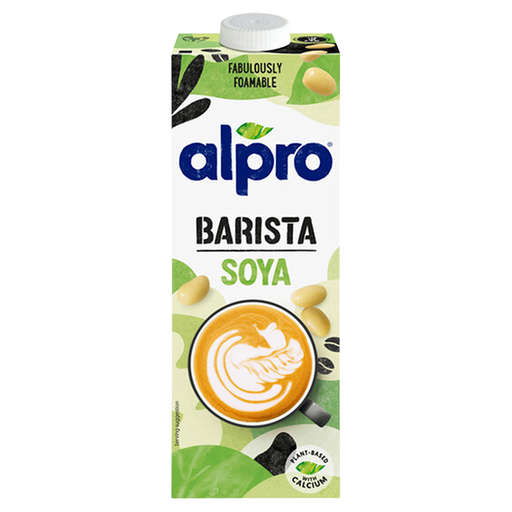 Image unavailable
Alpro Soya Barista, 1 L
This 1 L soya drink could be an option if you’d like to replace milk at breakfast. It contains soya, so if you need to avoid milk or soya because of an allergy, check the full labelling, including any warnings about traces. Also check the packaging for specific instructions on storage after opening.
View on Joybuy
Frequently asked questions
Is lactose-free milk dairy-free?
No. The Lactel, Candia and Auchan products featured here are still dairy products. France’s national health insurance service distinguishes lactose intolerance from a food allergy. If you need to avoid milk because of an allergy, check the ingredients rather than relying on the ‘lactose-free’ label alone.
Do I need to cut out all dairy products if lactose affects me?
Not necessarily. France’s national health insurance service says that what you eat can be adjusted to suit your individual tolerance. If your symptoms are new, severe or persistent, ask a healthcare professional for advice rather than trying to work out the cause yourself.
How long can you keep lactose-free milk once it’s open?
Follow the guidance on the product you buy and keep it chilled as instructed. Lactel says to use Matin Léger 1,2 % within 3 days, Candia says 4 days for Candia+, and Auchan says 5 days for its 1 L lactose-free milk. There isn’t one time limit that applies to all these bottles.
What should I check on the label if I have a milk allergy?
Read the full ingredients list and any allergen warnings. France’s Directorate General for Competition Policy, Consumer Affairs and Fraud Control states that allergenic ingredients must be emphasised in the list. In particular, check for MILK, even if the front of the pack says ‘lactose-free’.
UHT or fresh milk for breakfast?
Choose the option that suits the storage conditions you can manage. The UHT products mentioned can be kept in a cupboard before opening, while Auchan’s product information for fresh Alsace Lait lactose-free milk says to store it between +2 °C and +6 °C. Once opened, always follow the instructions on the bottle you’ve chosen.


