For lactose-free shopping, check the ingredients and allergens for the specific product first, rather than looking for the words ‘reduced sugar’ – they tell you nothing about whether it contains milk. Then choose a tin to store in the cupboard, or frozen green beans if you want to control your portions and have a freezer. ‘No added sugars’ does not mean ‘sugar-free’.
Who is this suitable for?
People checking for dairy ingredients
If you’re shopping for lactose-free products, read the ingredients for each product, especially if it’s a mixed dish or ready meal. The DGCCRF advises that allergenic ingredients must be highlighted on the labels of pre-packed foods. However, you should still check that the product meets your specific needs.
People avoiding added sugars
If you want to distinguish between sugars naturally present in a product and sugar added to the recipe, check both the ingredients list and the ‘of which sugars’ line per 100 g. The Notre Jardin tin featured by E.Leclerc is labelled ‘no added sugars’ but still declares 0.8 g of sugars per 100 g.
People choosing based on how they store food
If you cook varying quantities, a bag of frozen green beans could be a good choice if you have a freezer. If you’d rather keep green beans in the cupboard before opening, compare tins and jars, as well as their preparation instructions.
What should you check?
For lactose-free shopping, start by checking the ingredients of the product you’re considering, then compare the declared sugars and choose a format that suits the way you cook.
| Criteria |
What to check |
Who is this for? |
| Ingredients and allergens |
Read the full ingredients list and check for highlighted allergens, particularly if the product contains a sauce or seasoning. |
When shopping for lactose-free products, I want to be able to spot dairy ingredients before choosing a product. Around 44% of consumers say this is their top priority. |
| Sugars |
Compare the ‘of which sugars’ value per 100 g, and separately check whether sugar has been added to the recipe. |
I want to avoid added sugar without assuming that a product labelled ‘no added sugars’ contains no sugars at all. This distinction is the top priority for around 33% of consumers. |
| Format and preparation |
Choose according to the space you have in your freezer or cupboard. For green beans in liquid, also check the drained net weight. |
I mainly need a format that suits my portions and the time I have to prepare food. Format is the top priority for around 23% of consumers. |
Mistakes to avoid
-
Confusing ‘reduced sugar’ with sugar-free
Sugar content and added sugar are two different things. For example, E.Leclerc declares 0.8 g of sugars per 100 g for its Notre Jardin tin, which is labelled ‘no added sugars’.
Compare the ‘of which sugars’ value per 100 g, then read the ingredients list for the recipe you’re thinking of buying.
-
Assuming all green bean products are lactose-free
A product made with a mix of ingredients may contain more than just green beans. The fact that one plain product doesn’t list milk doesn’t mean that all green bean products are the same or guarantee a ‘lactose-free’ claim.
Read the label of the product you choose, including the ingredients and any highlighted allergens.
-
Comparing jars by their total weight alone
The covering liquid contributes to the total weight, but it doesn’t count towards the amount of drained green beans. According to the DGCCRF, the drained net weight must be shown when a product is sold in a covering liquid.
Use this weight to compare the quantity of green beans, then check the ingredients, including whether salt has been added.
-
Assuming a product is available in every shop
E.Leclerc says that its stores manage their own local stock, so a product listing doesn’t guarantee that the item will be available at your local store.
Check availability with the store or collection service you plan to use.
Green bean brands to consider
These examples show different ingredients and formats. The details given apply to the specific products named, not to every product from each brand.
Bonduelle
The brand offers green beans in both tinned and frozen formats.
- Bonduelle says its 750 g extra-fine frozen green beans contain green beans as the only ingredient and declare 1.7 g of sugars per 100 g.
- This product may also contain celery. Check the information on the pack you buy.
Carrefour Bio
Its jar of organic extra-fine green beans is an option for anyone who prefers to store their beans in the cupboard before opening.
- Carrefour lists organic green beans, water and salt as the ingredients for this product.
- The organic label alone doesn’t tell you whether a product contains allergens or what’s in another product from the range.
Auchan
Its 1 kg pack of extra-fine frozen green beans is a convenient option to keep in the freezer.
- Auchan lists green beans as the only ingredient and declares 1 g of sugars per 100 g for this product.
- The product information says to store at −18 °C and not to refreeze after defrosting.
Notre Jardin / Marque Repère E.Leclerc
The tin of cut extra-fine green beans featured by E.Leclerc is labelled ‘no added sugars or salt’.
- The ingredients list includes green beans and water. The declared values are 0.8 g of sugars and 0.0 g of salt per 100 g.
- ‘No added sugars’ doesn’t mean ‘sugar-free’. Check availability at your local E.Leclerc store too.
Fleurs des Champs / ALDI
ALDI offers Fleurs des Champs green beans in tins.
- This format may suit you if you want to store green beans in the cupboard before opening.
- To choose a product that meets your needs regarding lactose or sugars, check the ingredients, allergens and nutritional information on the packaging.
Green beans available on Joybuy
These products let you compare a tin with several frozen options. If you’re looking for plain green beans, distinguish between bags containing a single ingredient and the product that also contains tomatoes. In every case, check the label of the product you choose to make sure it meets your lactose-free needs.
 Image unavailable
Bonduelle extra-fine green beans, 440 g
This tin may suit you if you want to keep green beans in the cupboard before opening. The recipe contains salt, so check the ingredients and allergen information on the pack to make sure it meets your lactose-free needs.
View on Joybuy
 Image unavailable
Bonduelle extra-fine green beans, 750 g
This bag of plain frozen green beans is a good option if you have a freezer and want to prepare portions as you need them. Follow the cooking instructions and don’t refreeze after defrosting. Also check for a statement about possible traces of celery if this is relevant to you.
View on Joybuy
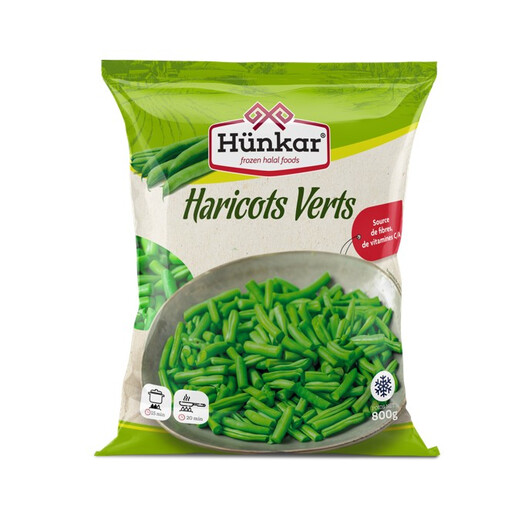 Image unavailable
HÜNKAR green beans, 800 g
This plain frozen option may suit you if you have space in your freezer and want to prepare green beans as needed. Check the ingredients and allergen information on the packaging before choosing it for lactose-free shopping.
View on Joybuy
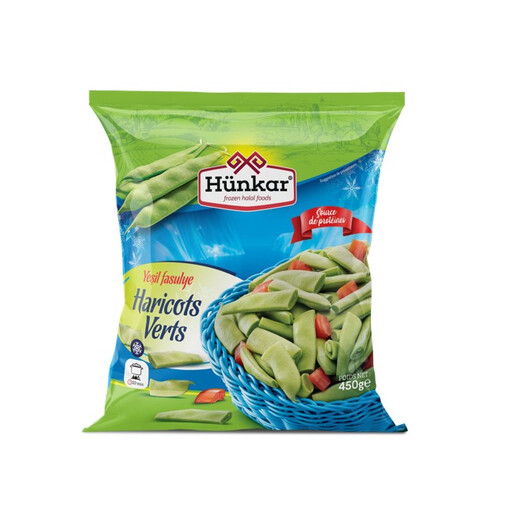 Image unavailable
HÜNKAR green beans, 450 g
This frozen dish combines green beans and tomatoes, so choose it for this particular recipe rather than as plain green beans with a single ingredient. Check the full ingredients list and allergen information on the pack before buying.
View on Joybuy
Frequently asked questions
Are plain green beans always lactose-free?
No. You can’t assume that every green bean product has the same ingredients. Auchan lists only green beans for its extra-fine frozen product, while E.Leclerc lists green beans and water for its Notre Jardin tin. Even so, check the ingredients and allergen information on the pack you buy, especially for a mixed recipe.
Does ‘no added sugars’ mean ‘sugar-free’?
No. E.Leclerc declares 0.8 g of sugars per 100 g for its Notre Jardin tin, which is labelled ‘no added sugars’. Read the ingredients list to check the recipe and the ‘of which sugars’ line to see the declared amount.
What should I look for if a product says ‘reduced sugar’?
Don’t take this wording to mean that the product contains no sugars or milk. Compare the ‘of which sugars’ values per 100 g and the ingredients of the products you’re considering. For lactose-free shopping, you’ll also need to check the ingredients and allergens separately.
How can I compare the amount of green beans in two tins?
For tins containing a covering liquid, compare the drained net weight rather than the total weight alone. The DGCCRF says the drained weight must be shown on the label. Check the ingredients too if the recipes differ.


