Households keeping an eye on their electricity bills
If you’re looking to keep this expense under control, start with the appliances you actually use. Replacing one is just one option, alongside changing how you use it or getting it repaired.


Before replacing a kitchen appliance to reduce your bills, consider its condition, how you use it and comparable energy-consumption figures: buying new isn’t always necessary. For refrigeration appliances, compare annual kWh figures for appliances of a similar type and capacity. For a dishwasher, look at kWh per 100 Eco cycles and capacity. Ovens and hobs can’t be compared using the same energy label.
If you’re looking to keep this expense under control, start with the appliances you actually use. Replacing one is just one option, alongside changing how you use it or getting it repaired.
A fridge or freezer runs continuously. If you’re thinking of replacing yours, compare annual kWh figures with your storage needs. The European Commission says the label also provides information on capacity and noise.
For a dishwasher, how often you run it and its capacity are just as important as the Eco programme figures when making your choice. For cooking appliances, check the information specific to the oven or hob rather than applying the same comparison method to both.
Start with the appliance in question and how you use it, then compare only figures measured on the same basis.
| Priority | What to check | What I need |
|---|---|---|
| Bills and usage | Identify the appliance, how often you use it and its condition. Don’t assume a new model will lower your bill based on its energy class alone. | I want to reduce my bills without replacing an appliance unnecessarily. In the 2025 Energy-Info Barometer by the French National Energy Ombudsman, conducted in September 2025 among 2,000 households in mainland France, 85% of those surveyed considered their bills a significant part of their budget; this figure does not measure purchase intentions. |
| Fridge and freezer | Compare annual kWh figures for appliances of the same type and a suitable capacity. Check the compartments, dimensions and noise level: according to the European Commission, these details appear on the labels of refrigeration appliances. | If I’m replacing an appliance that runs day and night, I want a capacity that suits my needs, not simply a different energy-class letter. |
| Dishwasher | Compare kWh per 100 Eco cycles, litres of water per cycle, capacity and programme duration. ADEME and the European Commission state that the figures shown relate to this reference programme. | I run cycles often and want to choose a capacity I can fill, without assuming that the Eco programme’s consumption figure applies to every programme. |
| Oven and hob | For an oven covered by the rules, check the energy label and compare like-for-like models. The DGCCRF says ovens are among the appliances that require energy labelling; the European Commission states that hobs are not subject to energy labelling requirements. | When choosing a hob, I need to check that it’s compatible with my installation and cookware, rather than looking for an energy class it hasn’t been assigned. |
| Usage and repairs | If your dishwasher is working, check how full it is and which programme you use. If it breaks down, ask for a diagnosis; the French Ministry for Ecological Transition describes a repair bonus, provided as a deduction by an approved repairer, subject to eligibility conditions. | Before buying, I’d rather see whether I can change how I use the appliance or have it repaired. In the same 2025 Energy-Info Barometer, 87% of households who said they adapted their behaviour to reduce energy use said they did so to lower their bills; this result is not specific to household appliances. |
A larger refrigeration appliance may not meet the same needs as a compact model. For a dishwasher, the figure shown is for 100 Eco programme cycles, not every possible use.
Compare annual kWh figures and capacities for similar refrigeration appliances. For dishwashers, compare kWh per 100 Eco cycles with capacity, water use per cycle and programme duration.
The DGCCRF lists ovens among appliances covered by energy labelling, while the European Commission says this requirement does not apply to hobs. So you can’t compare these two types of appliance in the same way using an energy class.
Use the label to compare like-for-like ovens. For a hob, first check the installation and cookware needed for the model you’re considering.
How full you load a dishwasher and which programme you choose affect how you use it. If it breaks down, it’s also worth getting a diagnosis before deciding whether to replace it.
The French Ministry for Ecological Transition recommends using the Eco programme with a full load. If the appliance is faulty, ask for a diagnosis and check the repair-bonus conditions before counting on a deduction.
These fridge-freezers are options to consider if you’re thinking about replacing a refrigeration appliance. Their capacity and layout should suit your household; check the label for the exact model before comparing its energy use with your current appliance.
 Image unavailable
Consider whether its 360 L capacity meets your household’s needs. The product title lists an E energy class, Total No Frost, Wi-Fi and My Zone. Check the annual kWh figure on the label for the exact model before deciding whether replacing your appliance makes sense.
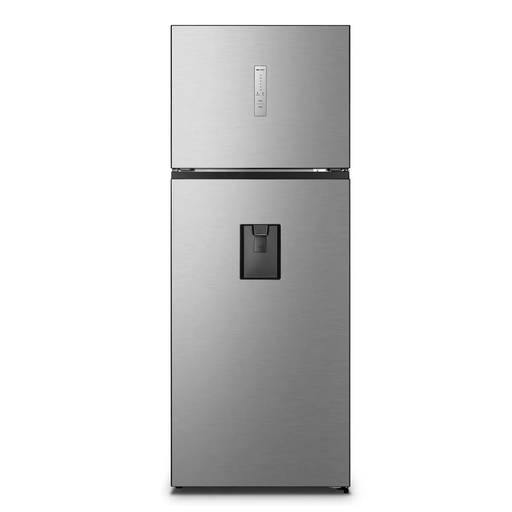 Image unavailable
With a 467 L capacity, check that you have enough space and would make good use of the storage. The product title mentions Total No Frost and an E energy class; check the annual kWh figure on the label for the exact model to compare its energy use.
 Image unavailable
Its stated 495 L capacity is worth considering if you need plenty of storage space. The product title lists an E energy class; check the door configuration and dimensions, then look at the annual kWh figure on the label.
 Image unavailable
The stated total capacity is 444 L, and the product title lists a frost-free design and an E energy class. Check the dimensions, compartment layout and annual kWh figure for the exact model before comparing it with your current appliance.
Yes, for the categories covered by the rules. The DGCCRF says energy labelling requirements apply to appliances including fridges, dishwashers and ovens, whether they’re sold in a shop or online.
No: the figures cover different periods and types of use. Compare annual kWh figures for refrigeration appliances of a similar type and capacity. For dishwashers, ADEME and the European Commission give consumption figures per 100 Eco cycles.
No. The European Commission says hobs are not subject to energy labelling requirements, so you can’t compare them using an energy-class letter as you would with ovens covered by the rules.
No. According to the European Commission, the kWh per 100 cycles shown on the label refers to the Eco programme. Check the programme duration too, and choose a capacity that suits how you load your dishwasher.
Not necessarily: ask for a diagnosis first so you can compare the cost of repair with replacement. The French Ministry for Ecological Transition says a repair bonus may be deducted from the bill by an approved repairer; check whether the repair is eligible before factoring in a deduction.