What should you check before replacing an appliance?
First, compare what your current appliance does with what a potential replacement would offer: the same appliance type, a suitable capacity and energy use measured on a like-for-like basis.
Keep your appliance
When: If the appliance meets your needs and the difference in energy use compared with a similar model is small, adjusting how you use it may be enough for now.
Bear in mind: You’ll also keep its current energy use, particularly if it runs continuously.
Choose a new appliance
When: If a model with a suitable capacity uses less energy on a like-for-like basis that reflects how you use it.
Bear in mind: A better energy rating alone doesn’t justify choosing a larger model or features you’ll rarely use.
| What matters |
What to check |
Who it matters to |
| Difference in energy use |
Compare the kWh figures for your current appliance and the model you’re considering over the same period, taking your actual usage into account. |
If I’m replacing an appliance that still works, I want to know whether the difference in energy use is large enough to make it worthwhile. Around 33% of consumers prioritise this difference. |
| Fridge or freezer capacity |
For a fridge or freezer, compare the appliance type, the capacity you need, the dimensions and the stated kWh/year. |
My fridge or freezer runs continuously, but I don’t want to increase its capacity unnecessarily. The right capacity and energy use come first for around 27% of consumers. |
| How often you run cycles |
For a dishwasher, check the kWh per 100 eco cycles; for an oven, compare the kWh per cycle using the same cooking mode. |
If I run the dishwasher often or use the oven regularly, I want to compare the stated energy use with the number of cycles I actually run. Around 20% of consumers prioritise how often they use an appliance. |
| Unnecessary features or capacity |
Check the capacity you need, the space available and whether extra features or appliances would be useful. |
I’d rather avoid capacity I won’t use or features that don’t make a difference to my daily life. Around 20% of consumers prioritise avoiding unnecessary extras. |
Appliances to consider on Joybuy
These models suit two different needs: replacing a dishwasher, or choosing a fridge or freezer whose capacity genuinely suits your household. Before deciding, compare the specifications for each exact model with those of your current appliance.
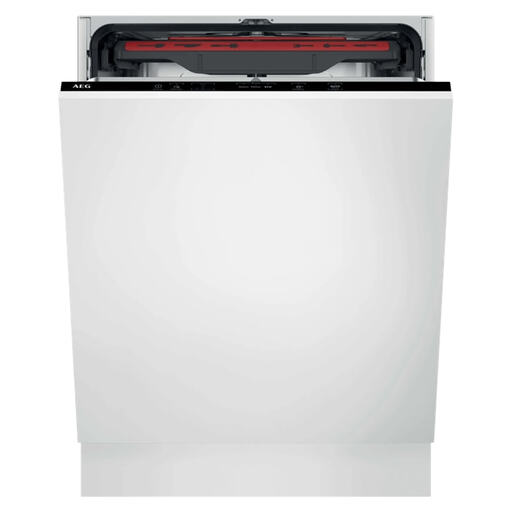 Image unavailable
AEG FSB34707Z, fully integrated dishwasher, 14 place settings
Worth considering if you’re looking for a fully integrated dishwasher with room for 14 place settings.
The product title states an energy rating of C; check the label for the exact model to confirm. Also check the dimensions of the appliance and the housing unit, as the stated width for this model varies between listings.
View on Joybuy
 Image unavailable
Candy CFQQ5T817EPS, 467 L fridge freezer
Consider this if you genuinely need a large amount of fridge and freezer space.
The product title describes a 467 L, four-door Total No Frost model with a stated energy rating of E. Check that the capacity and dimensions suit your needs, then check the kWh/year on the label for the exact model.
View on Joybuy
 Image unavailable
Sonlu CC-520WE, 444 L fridge freezer
Worth considering if 444 L meets your storage needs without being more capacity than you require.
The product title states an energy rating of E and a noise level of 40 dB. Before comparing it with your current appliance, check the dimensions and annual energy use on the label for the exact model.
View on Joybuy
 Image unavailable
Samsung RF50C530EB1, 495 L multi-door fridge freezer
Consider this only if your household uses around 495 L of storage space.
The product title states an energy rating of E. Check the layout and dimensions for the exact model, along with its kWh/year on the energy label. A larger model alone won’t solve high energy use.
View on Joybuy
Frequently asked questions
How can I compare energy use before replacing my appliance?
Compare energy use on the same basis and take your usage into account. For fridges and freezers with similar capacities, compare kWh/year; for dishwashers, compare kWh per 100 eco cycles; and for ovens, compare kWh per cycle using the same cooking mode. These units appear in the product information described by the European Commission.
Is a better energy rating enough to justify replacing an appliance?
No. Also check the stated energy use, capacity and what each appliance can do. ADEME points out that size and usage affect actual energy consumption, so a larger model could change the comparison. For models with energy labels in the European Union, you can check their main specifications in the EPREL database.
Can I compare electric hobs by their energy rating?
Don’t base your choice on an energy rating that hobs aren’t required to have: the European Commission says electric hobs don’t need an energy label. Instead, check that the hob suits your cookware and planned installation, and has the number of cooking zones you need.
Should you always replace an appliance that uses a lot of energy but still works?
No. It depends on the difference in energy use compared with a similar appliance, how often you use it and the capacity you need. As ADEME points out, size and usage affect actual energy consumption. Keeping an appliance that suits your needs may still make sense if its replacement would be too large.


