
Livraison le jour même ou le lendemain

Qualité garantie

Débloquez vos offres de bienvenue: Livraison GRATUITE | Jusqu'à -80 % | 30 jours d'essai gratuits à JoyPlus
Téléchargez l'application
Kraft paper products cover a wide range of uses: takeaways, parcel shipping, postal mail, arts and crafts, or food storage. Their brown hue often suggests a more responsible approach, but appearance alone isn't enough to judge their environmental impact or practicality.
Three mistakes crop up time and again when buying:
So before comparing prices, it's best to take a close look at the composition, dimensions and conditions of use.
Recyclable kraft paper is generally made from paper fibres. However, its recyclability can be compromised by a plastic film, coating or certain adhesives. For packaging, look for a product sheet that specifies:
PEFC certification relates to responsible forest management and traceability of the material within the certified area. It does not replace information about how the product should be treated after use.
For kraft paper plates, also check that they are intended for food contact and can withstand hot or moist foods. An uncoated plate may be easier to direct towards certain recycling streams, but it may also struggle with sauces and liquids.
Expressed in g/m², grammage gives an indication of paper density. However, it isn't enough to guarantee strength: structure, folds and exposure to moisture also matter.
A few useful benchmarks:
Kraft paper supplies are not interchangeable. Paper intended for arts and crafts is not automatically suitable for food contact. Similarly, a kraft adhesive tape marketed as eco-friendly may be very practical for sealing a cardboard box, but its performance depends on dust, moisture and the nature of the surface.
Take the time to read the warnings: some plates must not be used in the oven, microwave, dishwasher or with very hot liquids. For food products, always follow the storage conditions stated on the packaging. For example, organic sugar in a kraft sachet must be kept sealed and stored in a dry place, in line with the manufacturer's recommendations.
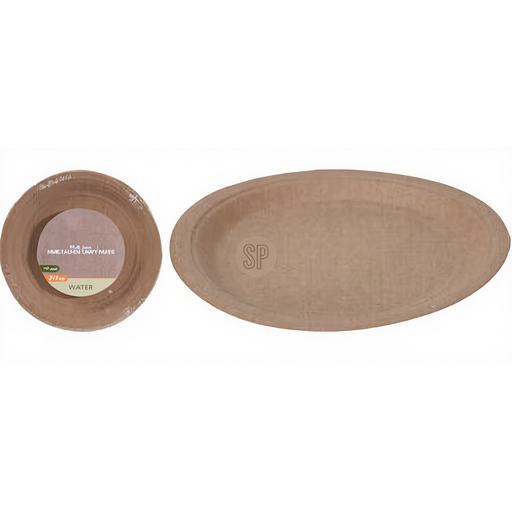
Why this choice suits this profile: The pack of ten is ideal for occasional meals, picnics, birthdays and small family gatherings. With a stated diameter of approximately 22.5 cm, these plates come in a standard size.
The diameter and quantity are clearly stated, reducing the risk of choosing the wrong size or volume. These plates are described as disposable; the warnings specifically exclude use in the oven, microwave and with very hot liquids.
Brown paper from responsibly managed forests according to the description, approximately 22.5 cm diameter and pack of 10 pieces.
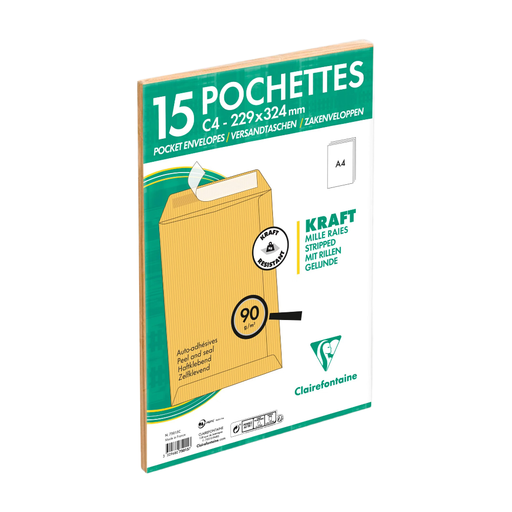
Why this choice suits this profile: This format is ideal for individuals and businesses sending A4 documents, graphic designs or folders without wanting to fold them.
The C4 size of 229 × 324 mm is specified, along with the 90 g/m² grammage and self-seal closure. This helps you avoid choosing an envelope that's too narrow or having to fold your documents.
Pack of 15 envelopes, 90 g/m² Milleraies kraft paper, self-seal closure and PEFC certification mentioned by the manufacturer.
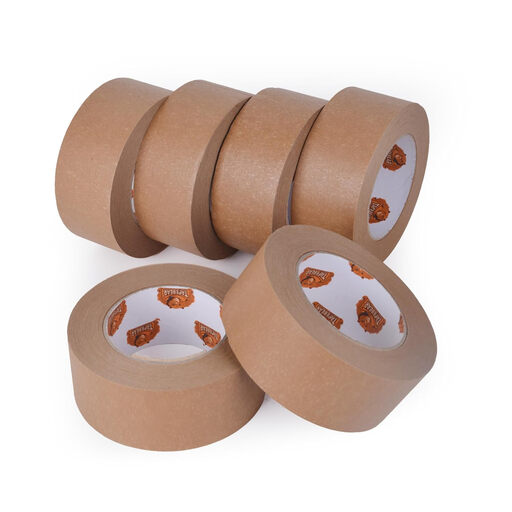
Why this choice suits this profile: With six rolls of 50 mm × 55 m, this pack is ideal for repeated shipping, house moves, professional stock and creative projects.
The product sheet specifies the width, length, the fact that it can be written on, and that the tape tears by hand. However, it's still essential to check its adhesion on a clean, dry cardboard surface.
Kraft paper tape described as free from plastic components, writable surface, tears by hand and stated to be compatible with recycling.
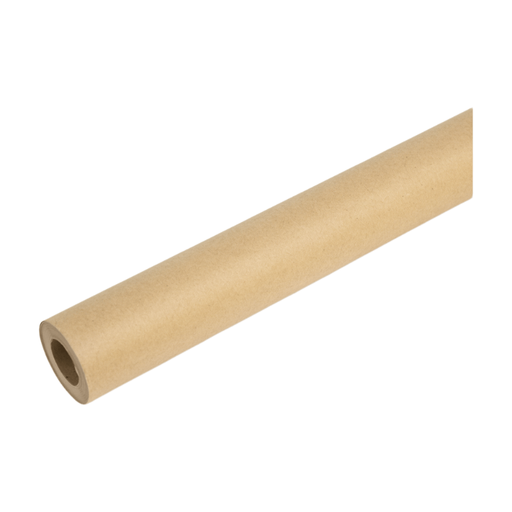
Why this choice suits this profile: This roll measuring 3 × 0.70 m is ideal for gift wrapping, drawing, collage and craft projects that need a natural-looking surface.
The dimensions and grammage are stated: you can estimate how much you need before ordering. The roll should be stored in a dry place and kept away from naked flames.
Paper made in France, 70 g/m² grammage and PEFC certification mentioned on the product sheet.
We've curated a comprehensive, real-time updated list of products that meet these exacting criteria and European safety standards.
Packaging marketed as eco-friendly doesn't automatically reduce waste if you buy more than you need. To manage your purchases better:
The unit price is often more informative than the pack price. For tape, compare the total length in metres; for envelopes, the number of pieces and the grammage; for a roll, the actual surface area available.
Some product sheets describe them as biodegradable or compostable, but it all depends on their composition and treatment conditions. Check that they don't have an incompatible coating and consult local guidelines before putting them in a food waste bin.
A grammage of 70 g/m² is suitable for many gift wraps and craft projects. To protect heavy items or those subject to friction, also look at the stated strength and, if necessary, plan for additional cushioning material.
The tape's product sheet should detail its properties. The model featured here states it is water-resistant, but adhesion can vary depending on the surface, temperature and storage conditions. Apply it to a clean, dry cardboard surface and press down firmly.