
Livraison le jour même ou le lendemain

Qualité garantie

Débloquez vos offres de bienvenue: Livraison GRATUITE | Jusqu'à -80 % | 30 jours d'essai gratuits à JoyPlus
Téléchargez l'application
K-beauty, or Korean skincare, tempts us with the promise of perfect skin—the famous "glass skin". At the heart of this quest: the serum. But with thousands of products and aggressive marketing, it's hard to navigate it all without making a mistake.
As the editorial team's beauty expert, my mission is to help you demystify this world. Let's forget the jargon and fleeting trends and get back to basics: how to choose THE right serum for YOUR skin. Here are the pitfalls to avoid and the criteria that truly matter.
The 2 pitfalls to avoid before buying a Korean serum:
To make the right choice, you need to learn to read between the lines... and on the label. Here are two essential habits to adopt.
Every skin has its own challenges. The goal is to find a formula whose key ingredients precisely target your needs.
Korean dark spot serum): Look for ingredients like niacinamide, alpha-arbutin, rice water, or vitamin C. Niacinamide is particularly versatile, as it also helps regulate sebum and smooth skin texture.Korean hydrating serum): Formulas based on hyaluronic acid of different molecular weights, panthenol (provitamin B5), snail mucin, or ginseng are excellent allies for plumping the skin and strengthening its skin barrier.A serum's texture (or formulation) is as crucial as its composition. The terms "essence", "serum", and "ampoule" often refer to different textures and concentrations:
The key is to choose a pleasant texture that absorbs quickly without leaving a greasy or sticky film and fits easily into your routine.
To guide you, we've matched skin profiles with serums whose formulations address specific needs, based on their ingredients and design.
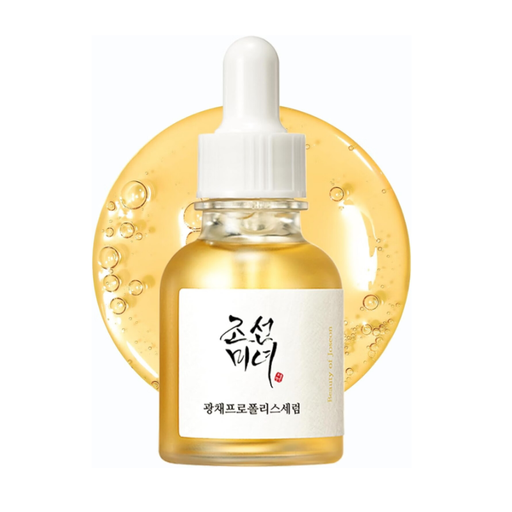
The Editor's Verdict: An excellent choice for those looking to restore a radiant complexion and refined skin texture. Its strength? It simultaneously targets both dullness and the appearance of pores, a very common duo of concerns.
Rather than relying on a single active, it combines propolis (hydrating, soothing) with niacinamide (regulating, brightening). This synergy offers a much more comprehensive action than a single-ingredient product.
Its rich, honey-like texture absorbs without feeling sticky. It hydrates while helping to regulate sebum, making it an excellent ally for many skin types, including combination to oily.
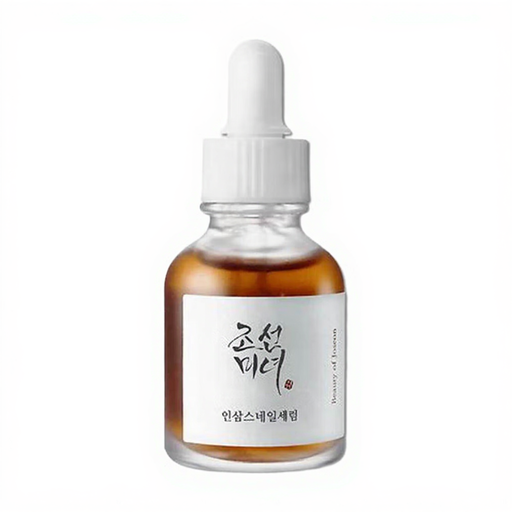
The Editor's Verdict: Perfect for dry, normal, or mature skin showing signs of fatigue. It draws its strength from ancestral ingredients from Korean traditional medicine (Hanbang) to revitalise the skin.
It doesn't follow a trend; it's rooted in a time-tested approach. The combination of 63% ginseng root water and 3% snail mucin provides a dual nourishing and regenerating action.
Its silky formula nourishes deeply without a heavy feel, helping to improve elasticity and visibly diminish the appearance of fine lines.
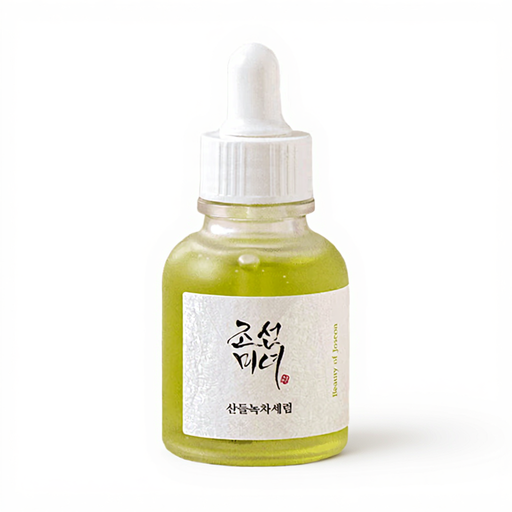
The Editor's Verdict: The ultimate 'comfort' serum for skin that feels tight, looks red, or has a weakened barrier. It focuses entirely on a cocktail of soothing actives to restore comfort and balance.
Instead of piling on potentially irritating actives, it focuses on a formula highly concentrated in calming ingredients: 50.9% green tea water and 5% panthenol.
Its watery and refreshing texture is a true bath of hydration. It helps to visibly reduce redness and strengthen the skin barrier day after day.
Discover our complete selection of Korean serums, all rigorously chosen for their effectiveness and compliance with European regulations.
Yes, "layering" is a cornerstone of K-beauty. The golden rule: always apply products from the thinnest to the thickest texture. Allow each product a minute to absorb before applying the next. However, be careful not to combine too many potent actives at once (like multiple acids, or vitamin C with retinol) to avoid irritating your skin.
Most serums (hydrating, soothing, niacinamide) can be used morning and night without issue. For formulas with potent actives like acids (AHA, BHA) or retinol, start gradually: one evening out of three, then every other evening, depending on your skin's tolerance. In this case, applying sunscreen every morning is non-negotiable.
No. A serum infuses the skin with active ingredients and hydration, but it isn't formulated to "seal" that moisture in. That's the job of your moisturiser, which should always be applied on top. It creates a protective film that prevents water from evaporating and locks in the serum's benefits deep within the skin.