
Same-day & Next-day Delivery

Quality Guaranteed

Unlock Your Welcome Offers: FREE Delivery | Up to 80% OFF | Free 30-day JoyPlus trial
Download the APP
The Hallyu wave has taken the world by storm, bringing with it a passion for Korean cuisine. At the forefront: Korean ramen, or ramyun. But when faced with the colourful and overwhelming aisle of Korean instant noodles, navigating the options can be a real puzzle. Drawn in by tempting packaging, many fall into two classic traps:
This guide is here to help you decode the labels and finally find the pack of ramyun that's right for you.
Before you fill your cart with Korean noodles online, take a minute to check these three points. They will make all the difference.
This is undoubtedly the most subjective criterion, but also the most important. Brands like Samyang Buldak are famous for their formidable heat (the word Buldak literally means "fire chicken"). Conversely, many products from Nongshim, like the classic Shin Ramyun, offer a much more accessible spicy ramen.
Not all ramyun are meant to be eaten as a soup in a broth. This is a detail that changes everything, from the preparation to the final result.
The quality of the noodles makes all the difference. Ramyun noodles are known for their texture, which is both firm and elastic (what's known as chewy). The secret often lies in adding potato starch to the wheat flour. This helps them hold up perfectly during cooking without becoming mushy, ensuring an ideal bite.
To guide you, here are a few top picks, each suited to a different profile.
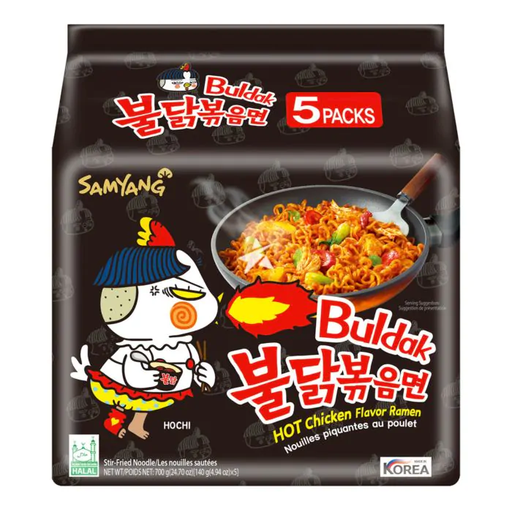
Why we chose it: This is THE product that launched the "Spicy Noodle Challenge" worldwide. A must-try for those seeking an authentic, no-compromise spicy experience—a true culinary challenge.
This ramyun delivers on its promise. The heat is as intense as advertised, fulfilling its pledge to thrill-seekers. No unpleasant surprises here.
An instantly recognizable "fire chicken" flavour and thick noodles that perfectly soak up the sauce for maximum flavour concentration.
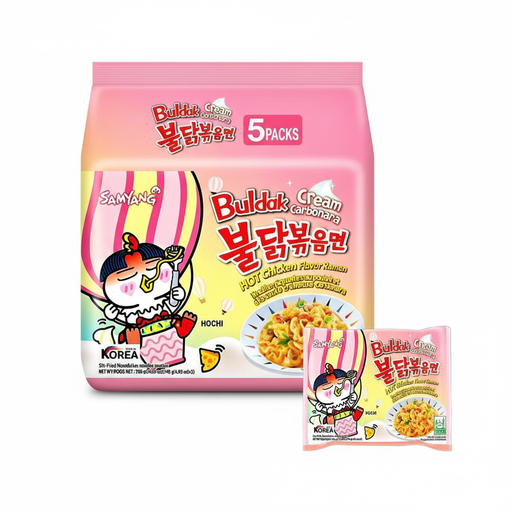
Why we chose it: Ideal for those tempted by **spicy ramen** but with a touch of creaminess. The fusion of Buldak's heat and a creamy **cheese** carbonara sauce is a social media phenomenon.
It avoids the "cheese powder" disappointment with a real liquid sauce and a cheese powder that, when mixed, create an authentic creaminess, not just an artificial flavour.
A perfect balance between the fire of the chilli and the smoothness of the cream. It's more approachable while retaining the unique character of the Buldak line.
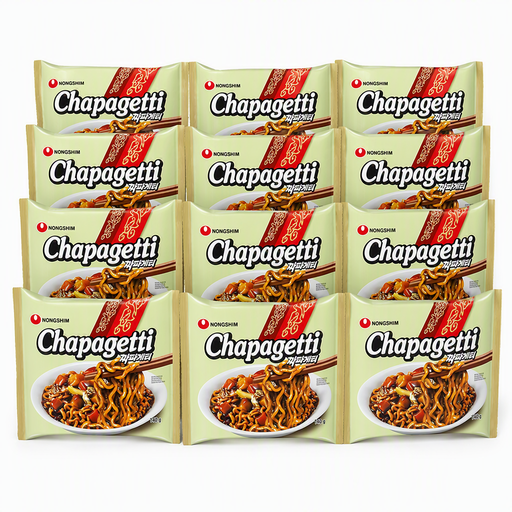
Why we chose it: For those who want to discover a pillar of everyday Korean cuisine, far from the spice. **Chapagetti** is the instant version of *jjajangmyeon*, a comforting noodle dish with black bean sauce.
Proof that **Korean ramyun** isn't just about spice. It offers a savoury, umami-rich, and slightly sweet alternative that will appeal to a wide audience.
A unique and authentic black bean paste flavour with no heat at all. It's an excellent gateway to other facets of Korean cuisine.
Discover our full selection of products that meet our quality criteria and current standards.
Is your dish burning your mouth off? Don't throw it away! It's easy to tame the heat:
Absolutely! Korean instant noodles are a fantastic base for customization. Here are a few simple ideas to elevate your dish:
Although the names are similar, they are two very different dishes. Japanese ramen is all about its broth, which can simmer for hours to develop complex flavours (like pork-bone tonkotsu or miso). Korean ramyun, especially the instant version, is distinguished by its often bolder spice and more direct, punchy flavours. As for the noodles, ramyun noodles are almost exclusively instant, with that characteristically wavy and elastic texture.