
Livraison le jour même ou le lendemain

Qualité garantie

Débloquez vos offres de bienvenue: Livraison GRATUITE | Jusqu'à -80 % | 30 jours d'essai gratuits à JoyPlus
Téléchargez l'application
The konjac snack has, in just a few years, established itself as a premier choice for snacking, appealing to both lovers of Asian flavours and those seeking a low-calorie treat. But with an ever-expanding market, disappointments are common: rubbery textures, bland flavours, or, conversely, nutritional profiles that are far less virtuous than advertised.
As a Product Manager and Head of Curation at Joybuy, I'm here to guide you. Here are the essential criteria and pitfalls to avoid to finally enjoy an excellent, healthy konjac snack.
To avoid being misled, here are the points to scrutinise. They make all the difference between a mediocre snack and an excellent discovery.
Konjac flour is a true chameleon. To know what to expect, look for these keywords in the product description:
Chinese cuisine, particularly from the Sichuan province, is a universe of nuances. Here is a small glossary to help you decipher the labels:
A true diet-friendly snack must be impeccable across the board. Make it a habit to check two key figures (per 100g of product):
To help you make your choice, here are three products that tick all the boxes, each catering to a different consumer profile.
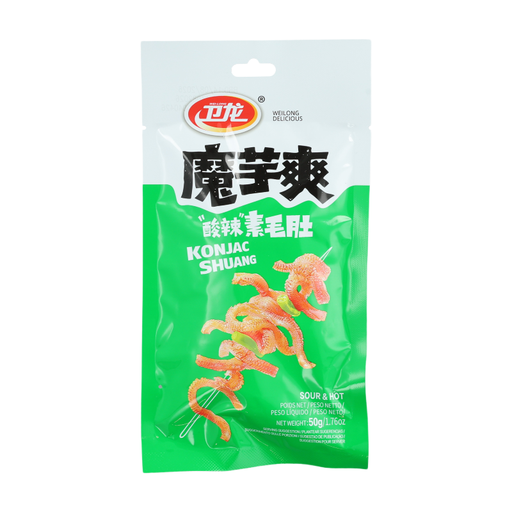
Why we love it: Perfect for a gentle introduction to the spicy flavours of Sichuan. The hot and sour profile is an excellent entry point, without the sometimes overwhelming power of `mala` pepper.
The flavour is clearly advertised as "hot and sour," avoiding the vagueness of a simple "spicy" label. The texture, which mimics that of tendons, promises a firm and satisfying chew.
Offered by Wei Long, a star brand in Asia renowned for the consistency of its recipes. The individual sachet format is perfect for an on-the-go snack.
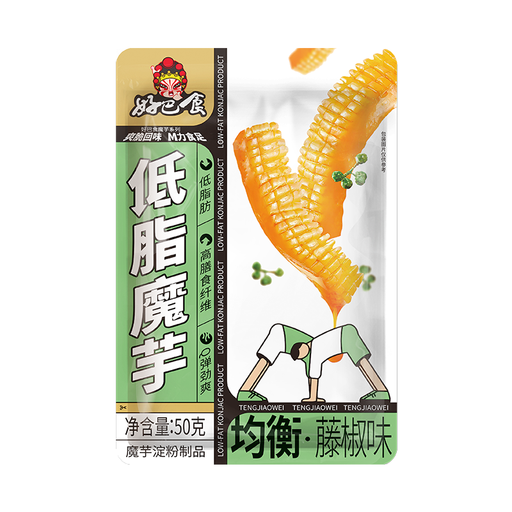
Why we love it: With only 68 kcal and 6.1g of fibre per 100g, it's the champion of flavourful, guilt-free snacking. Its Sichuan pepper flavour is unique and very refreshing.
It sidesteps the "deceptively healthy" trap by displaying exemplary and transparent nutritional values. The calorie count is minimal, while the high fibre content ensures a genuine satiating effect.
One of the lowest calorie counts on the market, without sacrificing taste. Its complex and aromatic flavour is a pleasant change from traditional heat.
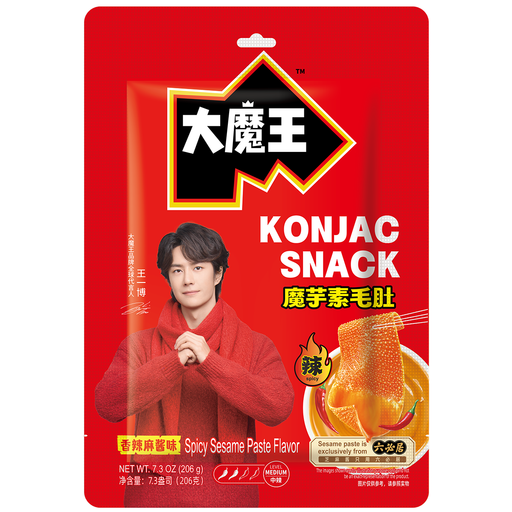
Why we love it: For purists seeking the characteristic laminar and chewy texture of "vegan tripe." The combination of spice and the creaminess of sesame paste makes it a truly gourmet option.
The promise is clear: the product "imitates the authentic texture and chew of tripe." There's no room for ambiguity; fans of this mouthfeel will not be disappointed.
A rich flavour that combines spice, saltiness, and the roundness of sesame paste. The texture is perfectly mastered for a most satisfying chew.
We have curated a complete selection of products that meet our quality criteria and European regulations.
There isn't just one texture, but several! Konjac can be very chewy and firm (like vegan tripe) or, conversely, crunchy and light. The secret is to read the product description carefully, which often uses terms like "soft," "crunchy," or "chewy" to guide you.
Their base ingredient, konjac, is indeed very low in calories and fat, making it an excellent starting point for a diet-friendly snack. The point of caution remains the seasoning: always check the salt (sodium) and sugar content on the label to ensure the final product aligns with your health goals.
Trust the product names. A mention like "Sichuan flavour" or "mala" indicates intense heat, with the famous numbing sensation of Sichuan pepper. A "hot and sour" flavour will be spicy but more accessible. When in doubt, flavours like "barbecue" or "sesame" are safe bets, as they are typically mild or not spicy at all.