
Livraison le jour même ou le lendemain

Qualité garantie

Débloquez vos offres de bienvenue: Livraison GRATUITE | Jusqu'à -80 % | 30 jours d'essai gratuits à JoyPlus
Téléchargez l'application
A konjac jelly can come in many forms: a Korean drinkable dessert, a fruity cup, an Asian snack to pop in your bag, or jelly sweets to share. The trouble is, the packaging often highlights "sugar-free" or "low-calorie" claims without detailing the texture, the sweeteners used, or the safety precautions to take.
Before you buy a Korean konjac jelly, keep three pitfalls in mind:
Konjac is usually available as a powder or gum. It's what gives a drinkable jelly its soft, thick texture. However, the recipe may also include other gelling agents, such as carrageenan, locust bean gum or xanthan gum.
If you're looking for a vegan jelly, check that there's no animal gelatine, milk or, more broadly, any animal-derived ingredients. The Jelly.B and Delief recipes featured here state they contain no declared allergens and are made from plant-based ingredients. On the other hand, some jelly sweets contain pork gelatine – that's the case with the MEASTY sour blueberry jelly.
The "sugar-free" claim also deserves a closer look. Manufacturers may use erythritol, sucralose, acesulfame-K or other sweeteners. Compare the nutritional values per 100 ml or 100 g, and don't forget to relate them to the amount you'll actually consume.
A fruity jelly that shows 2 to 5 kcal per 100 ml is a far cry from a standard sugary jelly. The Jelly.B Konjac Jelly Blueberry Flavour, for example, states 2 kcal per 100 ml and 0 g of sugar. Meanwhile, the Delief mango jelly shows 5 kcal and 0 g of sugar per 100 g.
These figures don't allow for a direct comparison without considering the packaging: a 150 ml pouch, a 120 g cup or a 180 g pot all contain different amounts. To choose a low-calorie dessert, look at the value per pack, not just the number highlighted on the front.
Resealable pouches are particularly handy at the office, in a bag or on the go. Cups are better suited to immediate enjoyment. After opening, several products need to be kept in the fridge and consumed within 24 to 48 hours.
Before choosing a drinkable jelly, also check:
A family-size pack or large bag of fruit jelly can be great for sharing. However, it does make it easier to eat several portions without thinking.
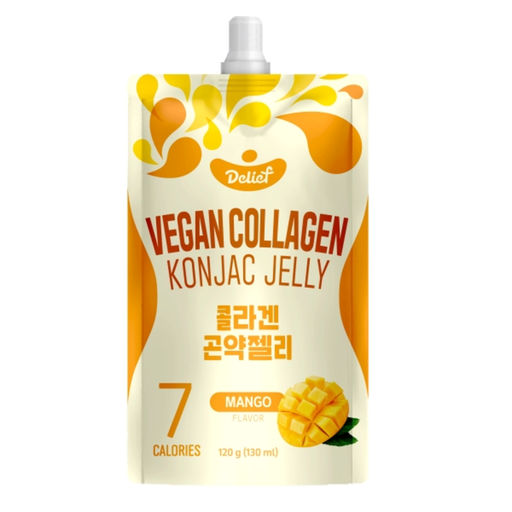
Why this suits this profile: At 120 g, this format lets you try konjac and mango jelly without committing to a larger assortment.
The listing states 5 kcal and 0 g of sugar per 100 g, plus a vegan recipe with no declared allergens.
A mango flavour, konjac powder and an individual 120 g pack.
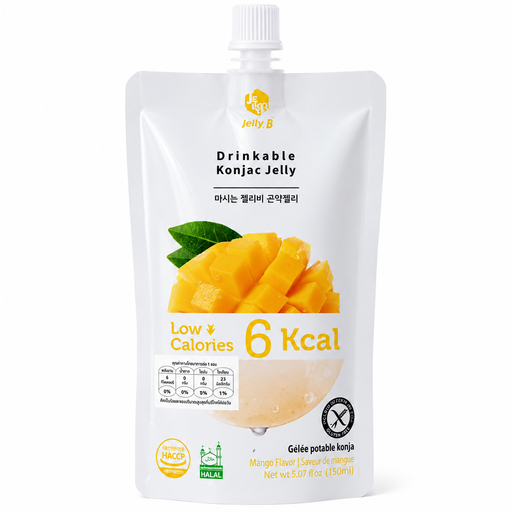
Why this suits this profile: Its pouch with a screw cap and Korean recipe will appeal to those who value a polished presentation and on-the-go enjoyment.
The listing specifies the 150 ml volume, 0 g of sugar per 100 ml and the need to chew before swallowing.
A resealable pouch, mango flavour and room-temperature storage before opening.
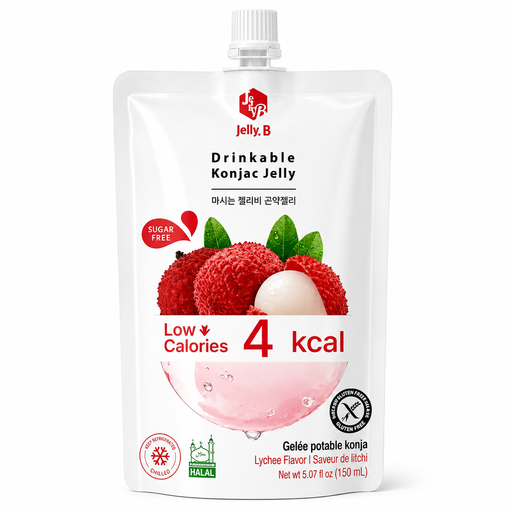
Why this suits this profile: Its individual format and easy-to-carry pouch are ideal for frequent breaks at work, while travelling or after exercise.
The listing states 4 kcal per 150 ml serving and 0 g of sugar, while also reminding you of the texture-related precautions.
A lychee flavour, vitamin C and calcium listed per serving, plus a resealable cap.
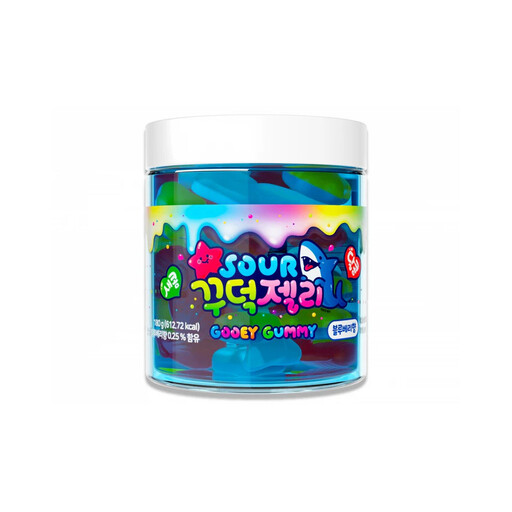
Why this suits this profile: Its resealable pot and individually wrapped portions are perfect for sharing, whether during a break or at a gathering.
The listing clearly states 340 kcal and 41.1 g of sugar per 100 g, as well as the presence of pork gelatine.
A chewy, tangy texture, blueberry flavour and a resealable 180 g pot.
No. Some products use sweeteners and show 0 g of sugar, while others contain sugar, syrup or sweet concentrates. Check the "of which sugars" line and the full ingredients list.
Follow the manufacturer's instructions. Several Jelly.B pouches need to be refrigerated after opening and consumed within 24 to 48 hours. An unopened jelly is generally best kept in a cool, dry place away from light.
Konjac jelly contains konjac powder or gum and often has a thick texture. A classic fruit jelly may be mainly made from juice, sugar and another gelling agent. Jelly sweets are usually sweeter and may contain animal gelatine. The right choice depends on your dietary preferences, the format you're after and the nutritional values.