
Livraison le jour même ou le lendemain

Qualité garantie

Débloquez vos offres de bienvenue: Livraison GRATUITE | Jusqu'à -80 % | 30 jours d'essai gratuits à JoyPlus
Téléchargez l'application
The click of the shutter, the unique grain of the image, the eager anticipation of developing your film… Analogue photography is making a major comeback, driven by a generation searching for authenticity and a more tangible photo experience. But faced with a jungle of options, choosing your first camera can be intimidating. This guide is here to help you navigate the range of Kodak film cameras: simple, accessible models perfect for rediscovering the joy of film without breaking the bank.
As a product expert at Joybuy, my role is to demystify the gear for you and provide the insights you need to find the camera that truly matches your creative vision and shooting style.
Before diving into our selection, let's review the key criteria that will help you make the right choice. While all these cameras shine for their simplicity, a few key differences can tip the scales.
The first major difference within the Kodak range is the image format.
The Kodak M35 and H35 are the archetypal analogue point-and-shoot cameras. This term refers to ultra-simple cameras with a fixed focus and no complex settings. The philosophy is clear: you frame, you shoot. It's the perfect approach for a beginner's film camera, allowing you to focus on the essentials: composition and the present moment, not the technical details.
Unlike disposable cameras, a reusable film camera is a much more sustainable and cost-effective investment in the long run. Once you finish a roll, you simply rewind it, get it developed, and then load a new one to start your next adventure. It's a more eco-friendly approach that also opens the door to experimenting with an endless variety of different films.
Here are three iconic models, designed for different types of users: from the complete beginner to the enthusiast looking to spice up their creativity.
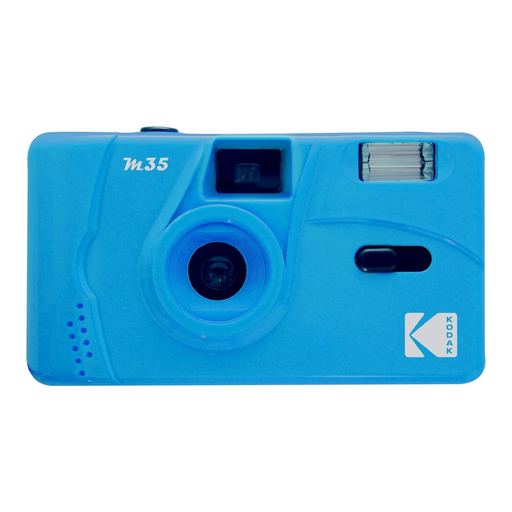
Why it stands out?: The Kodak M35 is simplicity in its purest form. A retro-style film camera that gets straight to the point. Its fully manual operation (film advance and rewind) ensures a 100% authentic and fun experience. Lightweight and compact, it slips into any pocket to capture everyday moments.
Advantages?:
Who is it for?? For complete beginners, teens, or anyone looking for a hassle-free camera for parties, holidays, or outings with friends. It's the ideal entry point into the world of film.
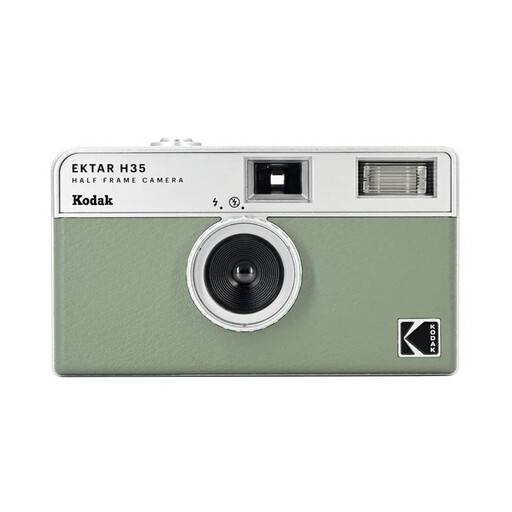
Why it stands out?: The Kodak Ektar H35 takes a clever approach with its half-frame format. By doubling the number of shots per roll (up to 72!), it significantly reduces your film budget. Its polished retro design and trendy colours make it a beautiful object, without sacrificing point-and-shoot simplicity.
Advantages?:
Who is it for?? Ideal for budget-conscious photographers, travellers who want to maximise every roll, and all creatives drawn to the unique aesthetic of the half-frame format (and its famous diptychs!).
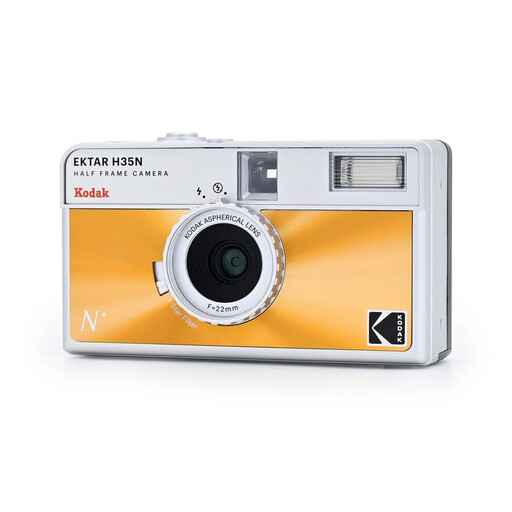
Why it stands out?: The H35N is the supercharged version of the H35, designed for those who want to push their creativity further. It uses the same cost-effective half-frame format but enhances it with thoughtful new features: a coated glass lens for sharper images, a built-in star filter for sparkling effects, and a long exposure (Bulb) mode to try your hand at night photography (with a tripod).
Advantages?:
Who is it for?? For the enthusiast who already has some experience or the curious beginner looking for a camera that can keep up with their creative ambitions, especially for night photography or artistic renderings.
Our selection highlights the most popular and accessible models. To discover other cameras, explore different brands, or find cameras with more advanced features, feel free to browse our complete collection.
? Discover all our film cameras
These cameras are compatible with all 35mm film (135 format), both in colour and black and white. To start, choose a 200 or 400 ISO film. This is the most versatile sensitivity, suitable for most lighting conditions, whether outdoors or indoors with a flash.
Not at all! Models like the Kodak M35 and the Ektar H35 are specifically designed for beginners. Their point-and-shoot philosophy eliminates all complexity. You load the film, wind it on, aim, and shoot. It's the best way to get started, without any technical barriers.
The H35N is an upgraded version of the H35. Here are the three main differences:
To put it simply: the H35 is the choice for simplicity and budget; the H35N is for those who want more creative possibilities.