
Livraison le jour même ou le lendemain

Qualité garantie

Débloquez vos offres de bienvenue: Livraison GRATUITE | Jusqu'à -80 % | 30 jours d'essai gratuits à JoyPlus
Téléchargez l'application
By the Editors, July 14, 2026
Modern smartphones take superb photos, but their zoom capabilities quickly reach their limits. When trying to capture an architectural detail, a wild animal, or a distant sporting achievement, the result is often disappointing. On the other hand, DSLR cameras promise superior image quality, but their complexity and the cost of lenses can be daunting.
This is where the bridge camera comes in—the ultimate versatile and accessible solution. It combines the simplicity of a point-and-shoot with the power of a zoom worthy of a telephoto lens. A benchmark in the category, the Kodak Pixpro Astro Zoom range offers models for every need. This guide is here to help you make sense of it all and find the model that's right for you.
Before diving into the spec sheets, it's important to understand the features that truly make a difference. Here are three essential criteria for making the right choice.
For a bridge camera, zoom isn't just an option: it's its core purpose. It is therefore crucial to distinguish between optical zoom and digital zoom. Optical zoom uses the lens elements to mechanically magnify the image, thus preserving all the details. Digital zoom, however, simply crops the image before stretching it, which causes a loss of quality that is often a deal-breaker. For sharp shots of distant subjects, always aim for a model with a powerful optical zoom.
The more powerful the zoom, the more every slight hand movement is amplified, almost guaranteeing motion blur. A bridge camera with optical image stabilisation (OIS) is therefore not a luxury, but a necessity. This system compensates for micro-movements by shifting elements within the lens or the sensor itself. The result? Perfectly stable images and videos, even when shooting handheld at full zoom.
A good travel camera does more than just take pictures. Most recent models shoot in high definition, and a Full HD (1080p) video camera is now the standard for capturing high-quality moving memories. Wi-Fi connectivity, built into some cameras, completes the package by making it easy to transfer photos to your smartphone for immediate sharing on social media.
We've sifted through the Kodak Pixpro range to present three models that cater to very different uses, from the beginner photographer to the extreme zoom enthusiast.
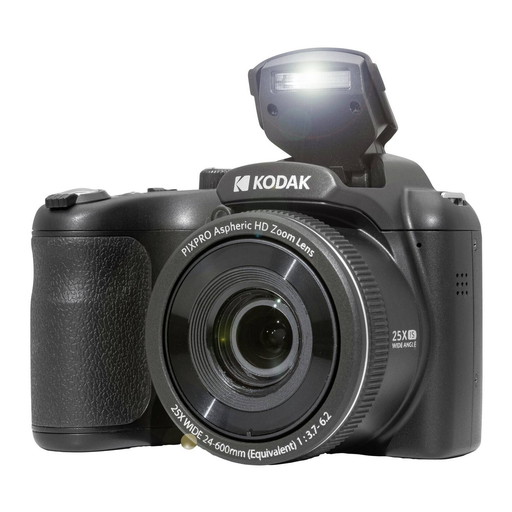
Why it stands out: The AZ255 is an excellent entry point into the world of high-zoom cameras. It offers the right balance between ease of use and features sufficient to go far beyond what a smartphone can do.
Advantages:
Who is it for? Ideal for families and casual photographers who want a versatile and easy-to-use camera for their holiday memories, without the hassle of carrying a charger.
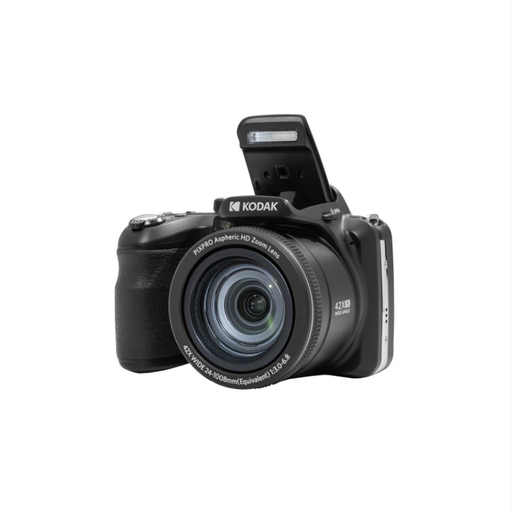
Why it stands out: With its much more powerful zoom and 20-megapixel sensor, the Kodak AZ425 is a true Swiss Army knife. The many reviews for the Kodak AZ425 confirm it: its performance-to-price ratio is excellent for nature and travel lovers.
Advantages:
Who is it for? It's aimed at travellers and outdoor photographers who need a powerful high-zoom digital camera to capture distant subjects with precision, without sacrificing image quality.
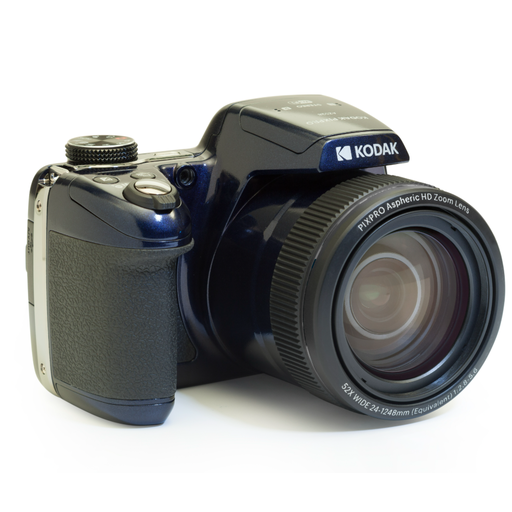
Why it stands out: The AZ528 pushes zoom power to its peak (52x!) and adds Wi-Fi connectivity for instant sharing. This is the model for those who want to make no compromises on reach.
Advantages:
Who is it for? This model is tailored for enthusiasts seeking the longest possible reach who also appreciate the simplicity of instant sharing. Perfect for wildlife photography, bird watching (digiscoping), or capturing a sporting event from the stands.
Does the Kodak range not quite meet your needs? The world of photography is vast! Expert compacts, mirrorless, DSLRs... If you want to explore other options, feel free to browse our complete selection.
? Explore our entire photography category to find the camera that's made for you.
A bridge camera has a fixed, non-interchangeable lens, but one that covers an extremely wide focal range (from wide-angle to super-telephoto). A DSLR (or mirrorless camera) allows you to change lenses, offering more flexibility and often superior image quality, but at the cost of a much larger budget and bulk. The bridge camera is the ultimate all-in-one solution.
Absolutely. It's an excellent travel camera. Its versatility means you don't have to juggle multiple lenses: you can frame a wide landscape and then, a moment later, zoom in on a distant detail. Its form factor, which is lighter than a DSLR equipped with an equivalent telephoto lens, is also a significant advantage on the road.
For distant shots, there's no contest: the quality of a bridge camera is infinitely superior. Its optical zoom preserves details where a smartphone produces only a pixelated mess. However, for wide-angle photos in good light, the best smartphones offer very competitive results thanks to their powerful software processing. It all depends on your priority: if zoom is your number one criterion, the bridge is the clear winner.