
Livraison le jour même ou le lendemain

Qualité garantie

Débloquez vos offres de bienvenue: Livraison GRATUITE | Jusqu'à -80 % | 30 jours d'essai gratuits à JoyPlus
Téléchargez l'application
Navigating the jungle of digital cameras can be a real challenge. Between endless spec sheets and marketing jargon, it's easy to feel overwhelmed. Your smartphone is showing its limits for capturing your travels, family parties, or the beauty of nature, but the thought of investing in a heavy, intimidating DSLR is holding you back. The bridge camera seems like the ideal compromise, but how do you make the right choice and avoid disappointment?
Before you take the plunge, let's review the common pitfalls that can turn a promising purchase into a costly regret:
To make the right choice, focus on the features that will make a real difference in your day-to-day use. Here are three essential ones.
For a bridge camera, versatility isn't an option: it's its very purpose. Its main selling point is a super-powerful zoom capable of covering a huge focal range. The Kodak PIXPRO AstroZoom AZ405, for example, packs a 40x optical zoom. In simple terms, this means you can go from a very wide shot (24?mm equivalent), perfect for landscapes, to an extreme close-up (960?mm equivalent) to capture architectural details, wildlife, or an athlete in action—all without moving an inch and with no loss of quality. It's this extreme versatility that makes it an excellent Kodak travel camera.
With a high-zoom digital camera, stabilisation is no longer an option—it's an absolute necessity. When zooming, the slightest handshake is amplified, resulting in unacceptable motion blur. Optical Image Stabilisation (OIS) is a mechanical system built into the lens that compensates for these micro-movements. It is infinitely more effective than digital stabilisation (EIS), which relies on after-the-fact software processing. The AZ405 is equipped with optical stabilisation, a true guarantee of sharpness for your handheld shots, even at full zoom.
The AZ405 relies on a 20-megapixel BSI CMOS sensor. This resolution is more than enough for large-format prints and gives you plenty of leeway for cropping your images without a visible loss of detail. The BSI CMOS sensor type is also known for its superior light handling compared to older CCD sensors, resulting in higher-quality shots when light is scarce.
Because every budding photographer has unique needs, here are our recommendations to help you find the camera that's right for you.
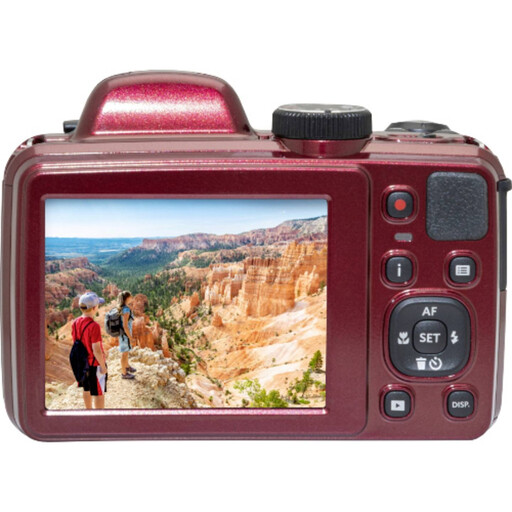
Why it's the right choice: Ideal for the traveller or nature enthusiast who wants a powerful zoom without being weighed down by heavy gear. Its versatility, from wide-angle to super-telephoto, makes it a travel companion ready for anything, from landscapes to distant wildlife shots.
It focuses on a true 40x optical zoom and optical stabilisation, saving you from the disappointment of a gimmicky digital zoom. Its AA battery power is a real asset on the go, far from any power outlets.
XXL zoom range (24-960 mm); Optical Image Stabilisation (OIS); 20 MP sensor for detailed images.
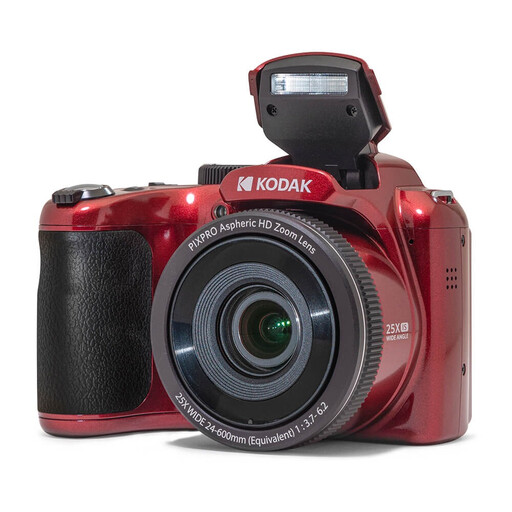
Why it's the right choice: Perfect as a first *bridge camera for beginners*. It offers a great first experience with powerful zoom and creative features (22 scene modes) without the complexity or cost of a more advanced model. Ideal for family photos and holidays.
It offers a very respectable 25x optical zoom, sufficient for most uses, and includes essential optical stabilisation. It doesn't overwhelm the user with a flood of features that are superfluous for their skill level.
Excellent value for money; Simple to use with numerous automatic modes; Optical stabilisation included.
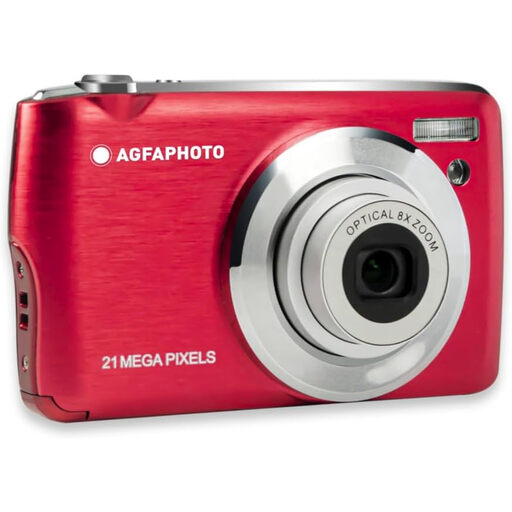
Why it's the right choice: For those who prioritise portability above all else. If a bridge camera is still too bulky, this compact model offers a real advantage over a smartphone, especially with its optical zoom, while still fitting in your pocket.
It doesn't promise an outrageous zoom. It focuses on a useful and honest 8x optical zoom in an ultra-portable form factor. It meets a need for simplicity and compactness without sacrificing the quality of a true zoom.
Extremely compact and lightweight; Rechargeable lithium-ion battery; Offers a true optical zoom where smartphones fall short.
Discover our full selection of editor-tested and approved products that meet our high quality standards.
Optical zoom uses the movement of lenses within the objective to magnify the subject, much like a pair of binoculars. The image quality is perfectly preserved. Digital zoom, on the other hand, simply crops the image captured by the sensor and artificially enlarges it, which causes a blatant loss of sharpness and detail. For a review of a Kodak bridge camera or any other brand, always rely on the optical zoom value.
Yes, the Kodak AZ405 is an excellent bridge camera for beginners. It has automatic modes and scene modes that simplify shooting in any situation (portrait, landscape, sports, etc.). This allows the user to focus on framing and their subject, while enjoying a powerful zoom and image quality far superior to that of a smartphone. It also offers manual modes for those who want to advance their skills and take full control of their settings.
Powering a camera with AA batteries, as with the Kodak AZ405, offers a major advantage when travelling: universal availability. If your proprietary lithium-ion battery is dead and you don't have an outlet nearby, your camera is useless. With AA batteries, you can find and buy them absolutely anywhere in the world, in any small convenience store or kiosk. It's invaluable peace of mind, ensuring you never miss THE shot of your trip.