
Livraison le jour même ou le lendemain

Qualité garantie

Débloquez vos offres de bienvenue: Livraison GRATUITE | Jusqu'à -80 % | 30 jours d'essai gratuits à JoyPlus
Téléchargez l'application
A kitchen paper towel may seem straightforward to choose. Yet between sheet count, thickness, maxi formats and absorption claims, price differences do not always reflect the amount of paper you can actually use. Whether you live alone, with family or cook frequently, a few criteria can help you avoid impractical purchases.
A six-roll pack is not necessarily better value than a three-roll pack. Depending on the product, a roll may contain 48, 65, 140 sheets or more, in different formats. Compare the total number of sheets, the dimensions of each sheet and, when the price is provided, the cost per sheet.
Terms such as “maxi roll”, “extra-long” or “twice as long” are primarily marketing labels. They do not replace the specific information provided on the packaging.
Manufacturers may claim that their product absorbs more than standard kitchen paper towels. However, you should check the basis of comparison in the product specifications. A thicker sheet is not automatically more economical: if it tears poorly or is too large for a small spill, it may even lead to more waste.
When absorbing liquids, the paper structure, embossing and wet strength matter just as much as the number of layers.
An FSC kitchen paper towel is based on a responsible forestry management certification, depending on the exact designation used, such as FSC Mix. This certification concerns the origin of the fibres, not how the product should be disposed of after use.
A compostable kitchen paper towel must be disposed of in accordance with local guidelines. Products presented as compostable should never be flushed down the toilet. Sheets used with chemicals, grease or certain food residues may also be unsuitable for home composting.
A 2-ply kitchen paper towel is generally suitable for splashes, hand drying and everyday cleaning. As a lighter option, it may also offer an attractive cost per sheet.
A 3-ply kitchen paper towel has a thicker structure. It can be useful for absorbing a substantial amount of liquid or cleaning a particularly dirty surface. In return, it takes up more space and may cost more to buy. Ply count alone is therefore not enough to predict strength: also check the information on wet use and sheet size.
When choosing an absorbent kitchen paper towel, look for verifiable information: ply count, cellulose composition, stated wet strength and any embossing. Products designed to absorb water and oil may be suitable for worktops, a cool hob or the table.
Do not use kitchen paper towels on a hot surface unless the manufacturer explicitly says they are suitable. For hot oil, open flames or appliances in operation, follow the safety instructions specific to the equipment.
A half-sheet format allows you to tear off only a small portion to absorb a drop or wipe away a mark. This can help reduce waste compared with using a full sheet. A maxi-roll kitchen paper towel means fewer roll changes, but it requires enough storage space.
Compact rolls containing several hundred sheets can also be suitable for smaller homes, provided you check their dimensions and the available space in the dispenser.
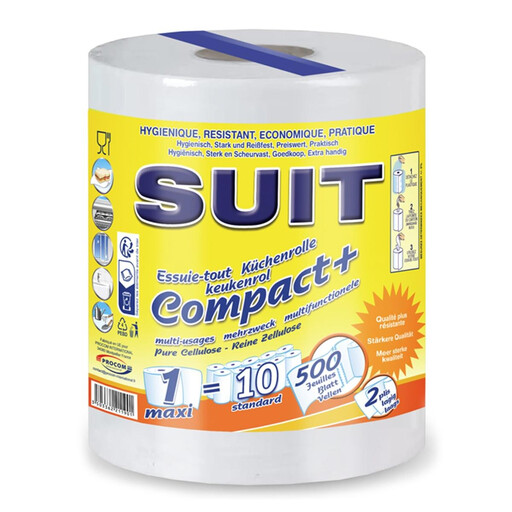
Why it suits them: This compact 500-sheet roll may be a practical choice for a student or small household looking to reduce the need for frequent restocking while keeping an eye on the budget.
The 500-sheet count makes it easier to compare the actual quantity instead of relying on a vague “large format” claim.
2-ply paper, 500 sheets and a compact format for everyday cleaning.
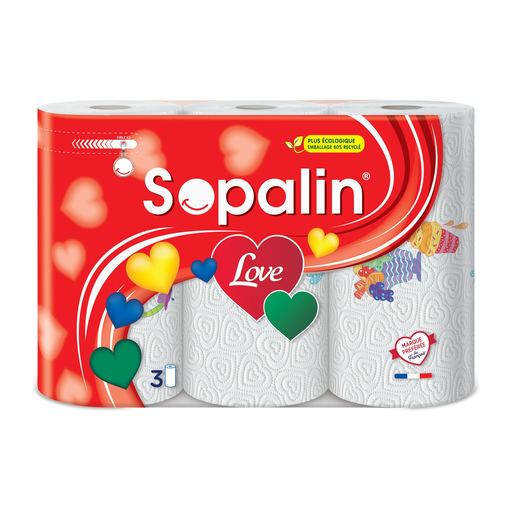
Why it suits them: This pack is designed for households looking for thicker paper, a decorative pattern and the FSC Mix certification stated by the manufacturer.
The specifications clearly state the ply count, number of rolls and certification instead of relying solely on a claim of greater thickness.
3-ply structure, heart-shaped pattern, stated French manufacturing and FSC Mix certification.
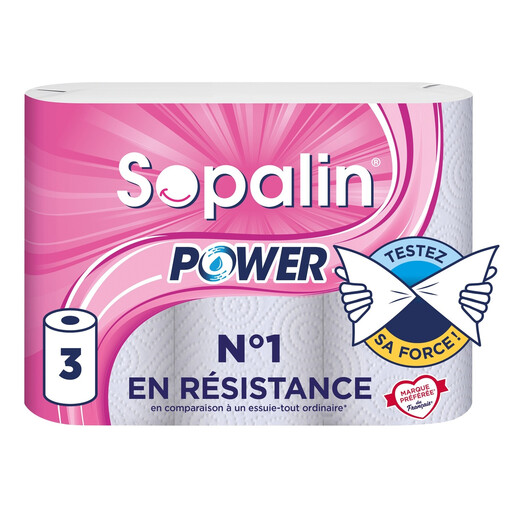
Why it suits them: Its stated wet strength and suitability for both dry and wet use make it well suited to busy kitchens and repeated cleaning.
The 45 sheets per roll are clearly specified, allowing you to compare the quantity without assuming that a thicker roll will necessarily last longer.
3 rolls, 135 sheets in total, 2-ply paper and stated suitability for dry or wet use.
To reduce paper consumption, you can supplement a standard roll with reusable kitchen paper towels or washable kitchen cloths. They are suitable for crumbs, dust and lightly greasy surfaces, but require regular washing and drying.
Compostable paper can be convenient for food residue or liquid spills, subject to the facilities available in your local area. An FSC-certified product follows a different approach: this certification concerns the management of the forests from which the fibres are sourced.
If your household regularly uses kitchen absorbent paper, also remember to check the packaging, sheet count and whether you have enough dry storage space for several rolls. Larger formats reduce the frequency of roll changes, while half-sheets let you adjust the amount you use.
We have brought together an updated selection of products so you can compare formats and uses in one place.
2-ply paper is generally sufficient for everyday tasks. 3-ply paper provides greater thickness for absorbing liquids or tackling heavier dirt. However, check the sheet count and wet strength before comparing prices.
No. Kitchen paper towels, whether compostable or not, can cause blockages. Dispose of them in accordance with local guidelines: in compost when the product, its use and local collection arrangements allow it, or with household waste in other cases.
Calculate the cost per sheet and compare the total number of sheets rather than simply counting the rolls. An economical pack with 48 or 65 sheets per roll may suit moderate use, while a compact 500-sheet roll can reduce the need for frequent restocking. The right choice depends above all on your actual consumption and the storage space available.