
Livraison le jour même ou le lendemain

Qualité garantie

Débloquez vos offres de bienvenue: Livraison GRATUITE | Jusqu'à -80 % | 30 jours d'essai gratuits à JoyPlus
Téléchargez l'application
Grating zest without bitterness, creating evenly sized slices or finely cutting cured meats requires more than a blade simply described as “razor-sharp”. For home cooks, families and fans of homemade food, choosing between kitchen grating and slicing utensils can quickly become a headache.
Some products combine several functions, but may be awkward to clean. Others promise impressive precision on paper yet lack stability in use. Before buying a kitchen grater, mandoline or slicer, it is worth knowing the main pitfalls to avoid.
A four-sided grater, vegetable cutter or multifunction peeler can replace several accessories. However, not every surface is suitable for the same ingredients. A fine grating surface is better suited to zest, garlic or Parmesan, while an extra-coarse surface is more effective with firm vegetables.
For regular use, start by deciding which function you actually need: fine grating, coarse grating, julienne, slicing or peeling. A more specialised utensil may be more enjoyable to use, as well as easier to store.
An extremely sharp blade is no use if the utensil moves at the slightest touch. A non-slip base, an ergonomic handle and, in the case of a mandoline, a protective food holder all help to prevent unwanted movement. Safety also depends on the work surface: it should be flat, dry and stable.
Be wary of models without a holding system or with a grip that becomes slippery when your hands are wet. Blades must always be handled carefully, particularly when cleaning them.
Food can easily become trapped in perforations and beneath adjustable mechanisms. Even when a product is advertised as dishwasher-safe, a quick rinse after use is often still essential. Wood, meanwhile, should be washed by hand and must not be left to soak.
Before buying, check which parts can be removed, which cleaning method is recommended and whether every component can be dried properly.
For a cheese grater or citrus zester, a fine surface produces light, even shavings. A medium grating surface is suitable for chocolate, ginger, vegetables and semi-hard cheeses. An extra-coarse surface allows you to grate cabbage, potatoes or carrots more quickly.
For a kitchen mandoline, the adjustment range is crucial. The Mastrad model featured here lets you adjust the thickness from 1 to 9 mm and has six stainless-steel blades. This range covers thin slices, thicker cuts and julienne, provided you use the supplied finger guard.
Electric slicers generally specify a maximum cutting thickness, blade diameter and power rating. These figures give you an initial idea of the appliance’s capabilities, but remember to check the continuous operating time and the motor cooling instructions too.
Stainless steel is commonly used for blades and grating surfaces. When properly maintained, it resists corrosion and is easy to clean. Plastic helps to keep the structure lightweight, while a metal body generally provides greater weight and stability.
Wooden components add a warm look, as on a manual cured-meat slicer, but require specific care: hand washing, immediate drying and, depending on the manufacturer’s recommendations, occasional application of a food-safe mineral oil.
A soft or curved handle makes the utensil easier to hold. A non-slip base is particularly useful when grating over a mixing bowl or chopping board. Also remember to measure the space available in your drawers and on your worktop.
An electric food slicer needs clear space all around the appliance. The KitchenCook SLICE I model, for example, recommends leaving at least 150 mm on each side and limits continuous operation to 10 minutes, followed by a cooling period.
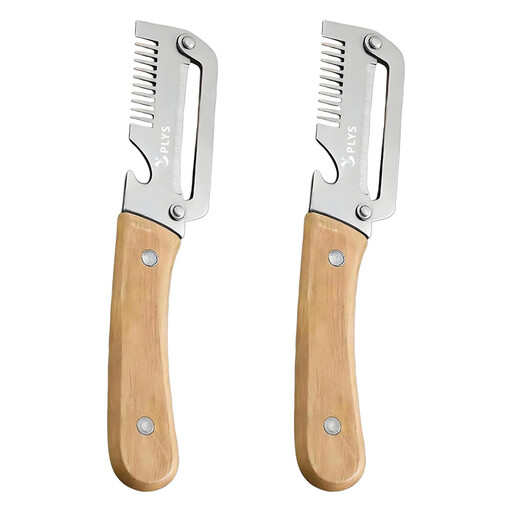
Why this choice suits this profile: This compact set is ideal for everyday preparation and helps prevent drawers from becoming cluttered with accessories. It can be used to peel, cut ginger or spring onions into strips and open bottles.
Its three functions are clearly separated on the tool, so you do not need to choose a complex appliance for simple tasks. Wash it with water, then dry it before putting it away.
Stainless-steel blades, curved wooden handle, two-piece set and a size of approximately 19 cm.

Why this choice suits this profile: This slicer is designed for households that regularly slice bread, roasts, cheese or cured meats and want precise adjustment.
Its all-metal construction and removable carriage address problems with a lack of stability and laborious cleaning. However, the safety instructions must be followed every time you use it.
Electronic speed adjustment, cuts up to 23 mm, smooth and serrated blades included, 24 cm cutting width.
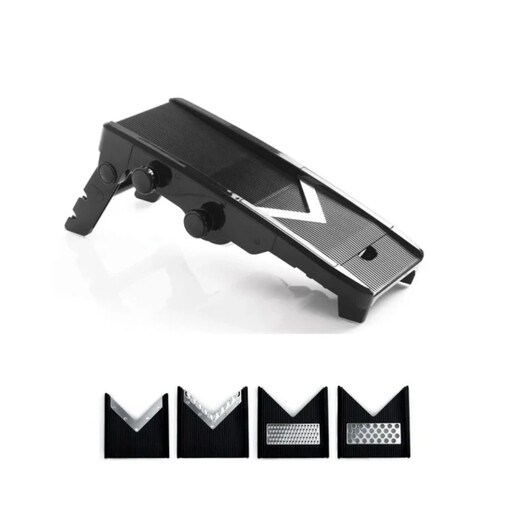
Why this choice suits this profile: It is ideal for people who regularly prepare vegetables, fruit or garnishes and want to switch between slicing, grating and julienne with a single appliance.
The 1 to 9 mm adjustment range means you are not restricted to a single thickness. The finger guard is essential: the V-blade remains extremely sharp both during use and washing.
Six stainless-steel blades, V-blade, adjustable thickness and dimensions of 34 × 15 × 11 cm.
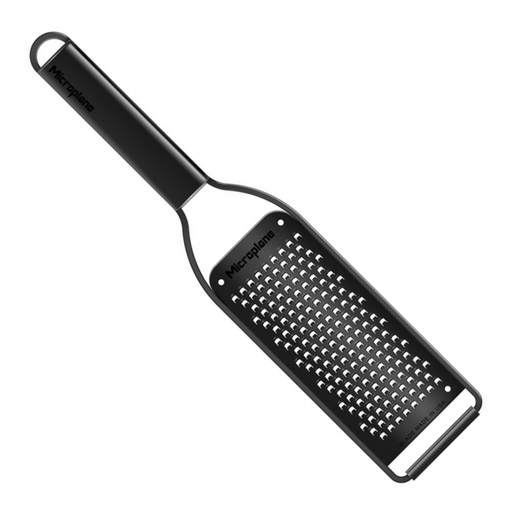
Why this choice suits this profile: This Microplane fine grater is ideal for zest, nutmeg, cinnamon, garlic, ginger, chocolate and hard cheeses.
Its specialised surface prevents the uneven results you can get from a grating surface that is too coarse. The non-slip foot and soft handle make each movement easier, while dishwasher compatibility simplifies cleaning.
Stainless-steel blades, non-slip base, ergonomic handle and stated dishwasher compatibility.
A fine stainless-steel grater, such as a Microplane grater, is suitable for zest, Parmesan, garlic and spices. Only grate the coloured part of the peel to minimise the bitterness of the white pith.
Yes, provided you use it on a stable surface and with the finger guard. Also check the thickness adjustment range and how the blades are stored. Children must not handle this utensil.
Consumption depends on the appliance’s power rating and how long it is used. A 150 W model used occasionally will consume little electricity during a short session. However, you must follow the maximum continuous operating time and the breaks specified in the instructions.