What should guide your choice?
Start with the meal you make most often, then check whether the appliance will fit and can be used in line with its instructions. An appliance with several modes will not necessarily replace the one that meets your main need.
| Need |
What to check |
Who it suits |
| Reheating and defrosting |
Reheat and defrost functions; space needed to open the microwave door and allow ventilation. |
When leftovers and frozen portions make up a regular part of my meals, I mainly want to reheat them easily. Around 28% of consumers prioritise this need. |
| Cooking in a frying pan or saucepan |
Number of cooking zones needed; cookware compatibility if the portable hob uses induction. |
Without a fixed hob, I want to be able to regularly cook a stir-fry, pasta or soup. Cooking on a hob is the main priority for around 27% of consumers. |
| Roasting and baking |
Mini oven dimensions and internal capacity; cooking modes that are useful for the meals you usually make. |
If I make gratins or tarts and don’t have a usable oven, oven-style cooking takes priority over simply reheating food. Around 18% of consumers prioritise this use. |
| Making crispy portions |
Air fryer capacity for your portions; space needed when the drawer is open. |
For small roasted or crispy portions, I’m looking for an appliance I’ll use often enough to justify making room for it. This is the top priority for around 9% of consumers. |
| Cooking in a single pot |
Usable capacity of the multicooker or electric cooking pot; programmes suited to your recipes. |
When I mainly cook rice, soups or slow-cooked meals, I want to prepare everything in one pot. Around 18% of consumers prioritise this need. |
Brands to know for these uses
There are no brands to feature in this section.
Appliances for your kitchenette
These appliances cover four of the uses discussed here: cooking on a portable hob, making small portions in an air fryer, reheating in a microwave or cooking small meals in an electric cooking pot. Start by choosing the appliance that fills a gap in your kitchenette.
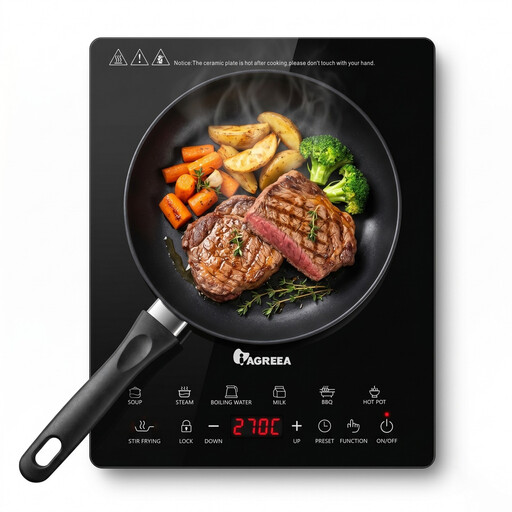 Image unavailable
IAGREEA DF200-14V10 portable induction hob, 2000 W
Worth considering if you regularly cook in a frying pan or saucepan but don’t have a fixed hob. The title lists eight power levels, a temperature range of 60 to 270 °C and compatibility with cookware measuring 12 to 26 cm. Also check that your cookware is compatible, along with the power supply and the clearances required for installation.
View on Joybuy
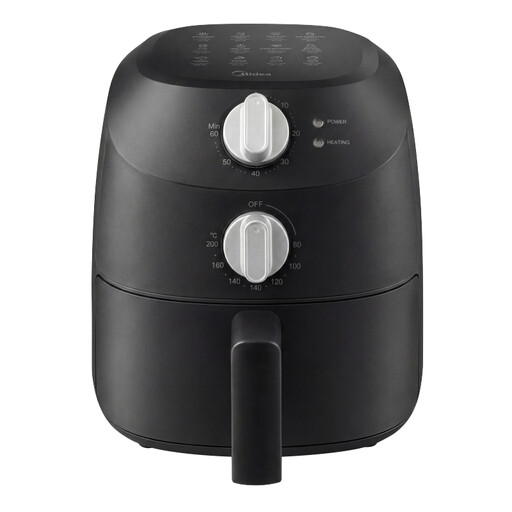 Image unavailable
Midea air fryer, 2 L, 1150 W
Worth considering if you often make small roasted or crispy portions. The title lists a non-stick basket, dishwasher-safe parts and a 60-minute timer. Check that the capacity suits your portions and that there’s enough room to open the drawer where you plan to use it.
View on Joybuy
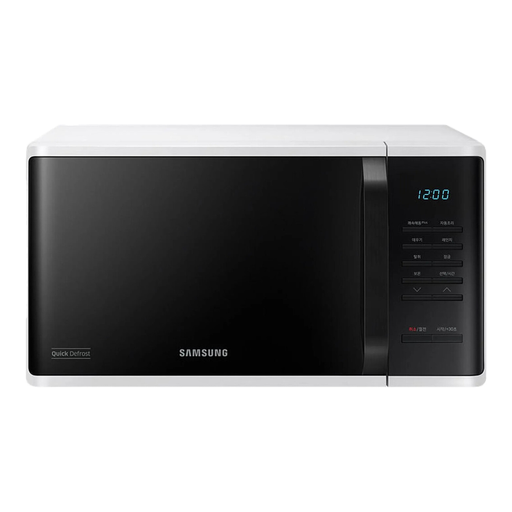 Image unavailable
Samsung MS23K3513 solo microwave, 23 L
For reheating meals and defrosting food, this model has a quick defrost function. The title mentions 1150 W without specifying that this is the microwave cooking power, so don’t confuse this figure with the output power. Check the model’s instructions for the space needed to open the door and allow ventilation.
View on Joybuy
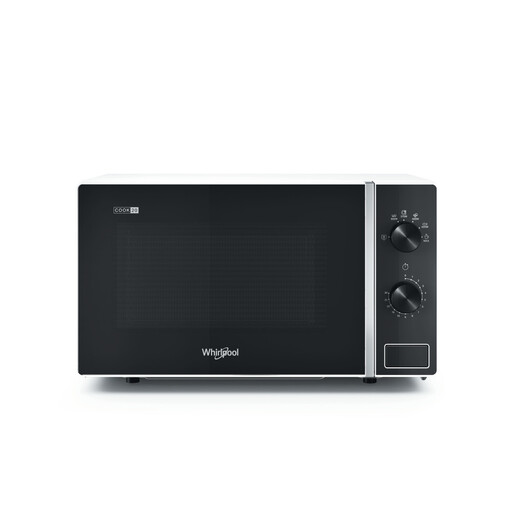 Image unavailable
Whirlpool MWP 101 W microwave, 20 L, 700 W
This solo microwave suits a need focused on reheating. If you mainly use a microwave to defrost food, check the model’s functions before choosing. Also allow space to open the door and leave the clearances specified in the instructions.
View on Joybuy
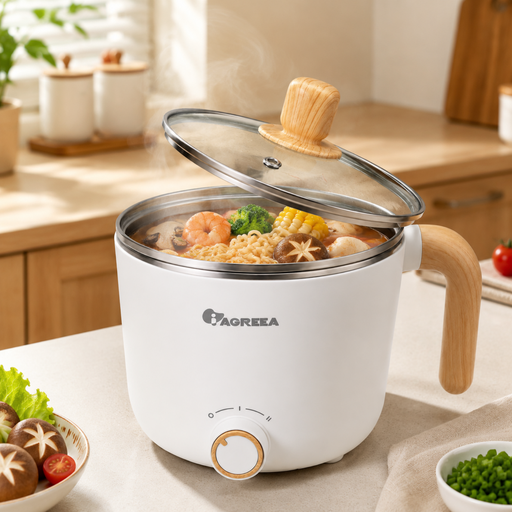 Image unavailable
IAGREEA MS‑AFX004 electric cooking pot, 1 L
Worth considering for small one-pot meals such as soup, rice or pasta, rather than as a replacement for an oven. The title lists a stainless steel inner pot and two power settings, 300 W and 600 W. Check that 1 L is enough for your portions, and make sure you have the space and power supply it needs.
View on Joybuy
Frequently asked questions
Should a furnished rental already have a hob or oven?
For a furnished rental in France used as your main home, Decree No. 2015-981 of 31 July 2015 lists a hob and an oven or microwave among the minimum required equipment. Check your tenancy agreement and inventory before buying. For an unfurnished property, Decree No. 2002-120 of 30 January 2002 requires, among other things, a fitted kitchen area suitable for installing a cooking appliance. This does not mean that a specific appliance is provided.
Can you plug a cooking appliance into an extension lead?
Don’t rely on an extension lead to increase the available power. Promotelec advises against plugging appliances into one, and the French National Consumer Institute reminds users to observe the stated maximum power rating. Use a suitable wall socket and avoid plugging extension leads into one another.
Do you need to buy separate appliances for reheating and cooking?
Not necessarily: it depends on the meals you prepare and the appliances you already have. A microwave is useful for reheating and defrosting, while a hob lets you cook in a frying pan or saucepan, as described by UFC-Que Choisir. Only add a second appliance if you regularly need that other function.
Can an air fryer always replace a mini oven?
No. Compare the dishes you plan to make, usable capacity and available space before choosing between the two. UFC-Que Choisir notes that air fryer results vary between models and that these appliances can take up a lot of space. For gratins, tarts or larger batches, check which appliance can actually fit your dishes.
How can you check the ventilation requirements before buying?
Read the instructions for the exact model, then measure the space, allowing for the door or drawer to open and the specified clearances. The instructions for a microwave don’t automatically apply to a mini oven or air fryer. Whirlpool, for example, states that the ventilation grilles on its microwaves must not be blocked.


