
Same-day & Next-day Delivery

Quality Guaranteed

Unlock Your Welcome Offers: FREE Delivery | Up to 80% OFF | Free 30-day JoyPlus trial
Download the APP
Buying kitchen equipment is about more than comparing power ratings or prices. In a small kitchen, an appliance that is too bulky will soon end up at the back of a cupboard. For a family, a capacity that is too limited means cooking batch after batch. And functions presented as revolutionary will not make up for a basket that is awkward to clean or excessive energy consumption.
Here are the main pitfalls to avoid, the criteria to consider and a selection of appliances suited to everyday use.
A volume of 9 or 12 litres may seem generous. In practice, the shape of the basket, the presence of a divider and the space needed for air circulation often reduce the amount of food that can be cooked at once. When choosing a family air fryer, look at the external dimensions and the capacity of each compartment, rather than the total volume alone.
Conversely, a 2-litre oil-free fryer may be perfectly suitable for one person or a couple, while taking up far less space on the worktop.
Automatic programmes, a touchscreen, viewing window, keep-warm function or delayed start can be useful in certain situations. However, they do not replace the essentials: an adjustable temperature, an easy-to-read timer and an appliance that is simple to clean. A multifunction appliance should also remain easy to use every day.
A non-removable basket, a hard-to-reach rack or a delicate coating can turn every meal into a chore. Before placing your order, check which parts are dishwasher-safe, whether accessories are available and what maintenance instructions apply. With an air fryer, avoid overfilling the basket and allow the components to cool before washing them.
Measure the available space in terms of height, width and depth. A 60 cm kitchen extractor hood, for example, must match the width of the hob, as well as the extraction system configuration. The COMFEE’ model shown below measures 600 × 80 × 440 mm and can work with either external extraction or recirculation, provided you use the appropriate filter.
In a studio flat or student accommodation, a compact appliance may be more practical than a large set. A multifunction portable kitchen unit still deserves careful consideration, however: its weight, connections and access to sockets can quickly become restrictive.
Power affects heating speed, but it is not enough to predict cooking quality. Air circulation, the capacity of the cooking chamber and even heat distribution are just as important.
The models selected here include:
These figures make it possible to compare the appliances on a consistent basis. Actual energy consumption nevertheless depends on cooking time, the selected temperature and how often the appliance is used.
For a cookware set, check compatibility with induction, gas, electric hobs and ceramic hobs. Induction-compatible cookware must have a suitable magnetic base. Simply displaying a commercial compatibility marking is therefore no substitute for consulting the technical specifications.
304 stainless steel is commonly used for saucepans and steam cookers. The three-tier MAXCOOK model states that it is made from 304 stainless steel, with heat-resistant silicone handles, and is compatible with induction, gas, electric hobs and ceramic hobs. Its product information recommends hand washing.
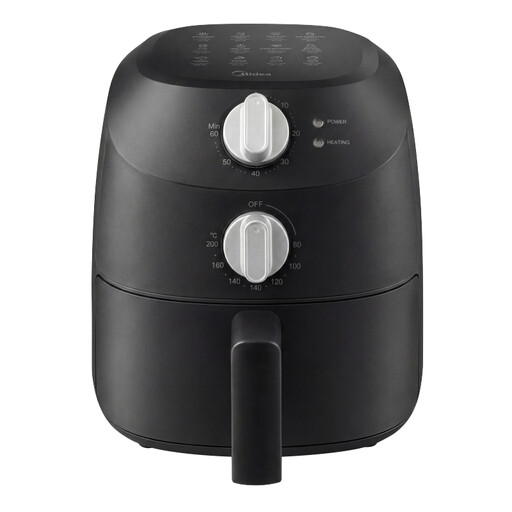
Why it suits this profile: Its compact design is ideal for studios, student rooms and kitchens with limited storage. With a 2-litre capacity, it is intended for portions for one or two people.
Its small capacity reduces the appliance’s footprint and avoids paying for a large chamber that would often remain half empty.
Removable non-stick basket, 60-minute timer and parts stated to be dishwasher-safe.

Why it suits this profile: Its large cooking chamber and metal interior are aimed at households that regularly cook for several people.
The viewing window and interior light let you monitor cooking without repeatedly opening the door.
Uncoated 304 stainless steel basket, temperature control from 80 to 200 °C and dial controls.
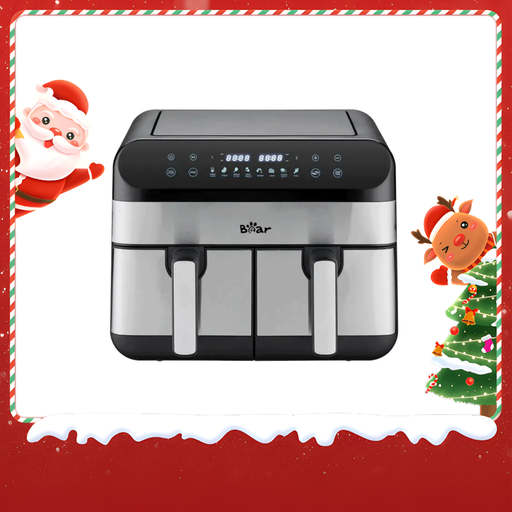
Why it suits this profile: Its two 4.5-litre baskets allow you to cook two foods simultaneously using different settings.
The synchronisation function allows two dishes to finish at the same time, without needing multiple appliances.
Two independent temperature settings, eight preset programmes and a stated power rating of 2 400 W.
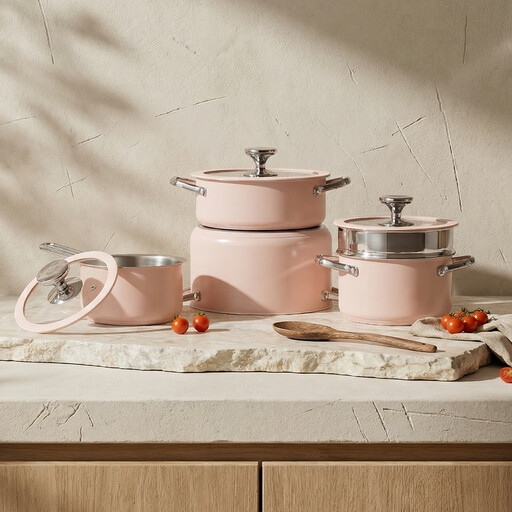
Why it suits this profile: This set combines several sizes for family meals, steaming and everyday cooking.
The four sizes save you from buying separate saucepans that might duplicate one another or see little use.
304 stainless steel, stated compatibility with all hob types and a steam insert included.
We have brought together a complete, real-time updated selection of products that meet these demanding criteria while complying with European safety regulations.
A 4-litre rice cooker may be suitable for a household of three or four people. It can also be used to prepare porridge, soup or certain desserts. Check whether it has a steaming basket, a removable cooking pot and a keep-warm function.
For hot drinks, a 4-litre stainless steel kettle such as the Maxcook model is more suitable for families or preparing large quantities. Before installing it, confirm its compatibility with induction and gas in the product information.
A tiered steamer allows you to prepare several foods at the same time, but you will need enough space to store it upright. Multifunction cooking appliances and integrated kitchen units can also be useful in compact accommodation, provided you check the voltage, available power and the dimensions of the access points.
For one person or a couple, 2 to 5 litres may be sufficient, depending on the portions you prepare. A family will generally be better off choosing a model with a capacity of 6 litres or more. A dual-basket fryer is particularly useful when two foods need to cook at different temperatures or for different lengths of time.
Choose a capacity suited to the number of people you are serving, avoid unnecessary preheating and combine preparations whenever possible. Clean the racks and filters regularly: a dirty appliance may operate less efficiently. With an extractor hood, the choice between extraction and recirculation, as well as filter maintenance, also affects everyday use.
It depends on how often it is used, how well it is maintained, whether maximum load limits are respected and whether spare parts are available. Read the instructions, keep your proof of purchase and prevent water from coming into contact with electrical components. For non-stick coatings, use non-abrasive utensils and replace the part as soon as it shows signs of damage.