Buying priorities
Start by identifying the type of appliance and how you normally use it, then compare only models that provide an equivalent service.
| Priority |
What to check |
Your needs |
| Continuous refrigeration |
Compare kWh/year between appliances of the same type, with a similar usable volume and configuration. Also check the split between fridge and freezer space, along with installation requirements. |
I’m looking for annual energy consumption that matches the amount of storage my household genuinely needs. |
| Dishwasher |
Check the kWh per 100 cycles for the Eco programme, litres per cycle, capacity, programme duration and noise level. Assess washing and drying separately if these results are important to you. |
I want to limit consumption per cycle without compromising on suitable capacity, noise levels or washing results. |
| Electric oven |
Compare usable volume and kWh/cycle separately for conventional and fan-assisted modes. Focus on the mode you use most often. |
My dishes need to fit inside the oven, but I also want to be able to compare its energy consumption over a defined cycle. |
| Electric hobs |
Check the cut-out dimensions, number of zones, compatible cookware and the model’s technical specifications. Do not look for an A–G energy rating for this category. |
I want a hob that suits my kitchen and cooking habits, without treating its information as equivalent to that of an oven or fridge. |
| Length of use |
Before replacing an appliance, check its dimensions, connections, repair options and model documentation. EPREL can supplement label information for the categories concerned. |
I’d rather check whether replacement is genuinely justified and whether the new appliance can be maintained over time. |
Joybuy products for refrigeration and cooking
Joybuy options for comparing fridge freezers and induction hobs for everyday kitchen use.
 Image unavailable
Haier HTW5618ENMG 360 L fridge freezer
For households looking for generous storage capacity in an appliance used continuously for refrigeration.
- 360 L in total: 235 L fridge and 125 L freezer capacity.
- Stated consumption of 271 kWh/year and Total No Frost system.
- Dimensions: 185 × 59.5 × 66.7 cm; reversible door.
- Compare the 271 kWh/year with fridge freezers offering a similar capacity and configuration.
Joybuy
 Image unavailable
CHiQ JR263LGE 262 L fridge freezer
For replacing a fridge freezer in a two- or three-person household, or for a narrower kitchen.
- 262 L in total: 187 L fridge and 75 L freezer capacity.
- Stated consumption of 215 kWh/year and a width of 54 cm.
- Reversible door, adjustable feet and Low Frost system.
- The freezer compartment requires manual defrosting, stated to be needed approximately once or twice a year.
Joybuy
 Image unavailable
Sonlu CC-520WE 444 L fridge freezer
For larger households needing substantial storage capacity in a side-by-side format.
- Stated net capacity of 444 L and annual consumption of 289 kWh.
- Total No Frost system, SN-T climate class and 4-star freezer rating.
- Stated noise level of 40 dB.
- Check the external dimensions and required clearances before planning the installation.
Joybuy
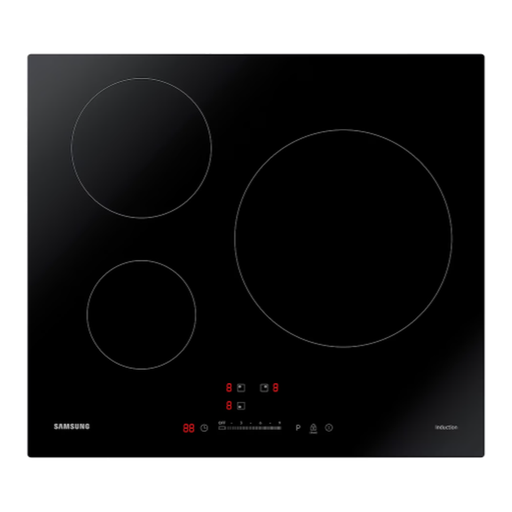 Image unavailable
Samsung NZ63M3707AK 3-zone induction hob
For replacing a built-in electric hob with three zones and high occasional power output.
- Three zones, PowerBoost function and stated total power of 7200 W.
- Cut-out dimensions: 560 × 490 mm.
- Compatible with ferromagnetic cookware.
- For this model, a hard-wired installation on a dedicated 32 A circuit by a qualified electrician is specified.
Joybuy
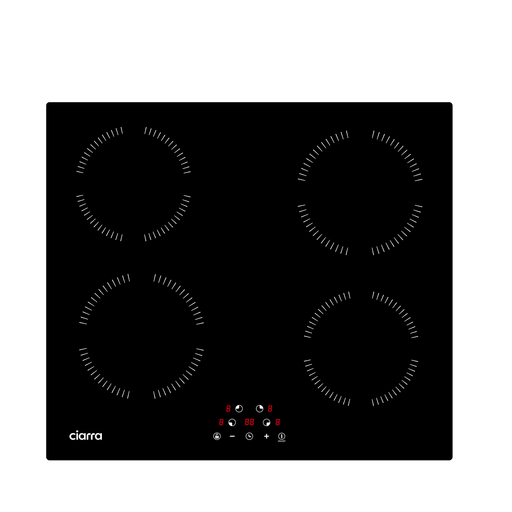 Image unavailable
CIARRA CABBIH4-A 4-zone induction hob
For kitchens that need several cooking zones and separate controls.
- Four zones, nine power levels and individual timers.
- Dimensions: 590 × 520 mm; cut-out: 560 × 490 mm.
- Pan detection and touch controls.
- Check cabinet ventilation, worktop cut-out and 32 A power supply requirements before purchase.
Joybuy
Frequently asked questions
How should you compare an appliance’s energy consumption by category?
Use the label measurement specific to each category: kWh/year for refrigeration, kWh per 100 Eco programme cycles for a dishwasher, and kWh/cycle for an oven. ADEME states that actual consumption also depends on the appliance’s size and usage.
Is the Eco programme the right benchmark for comparing two dishwashers?
Yes, when comparing regulated label values: these include energy per 100 cycles, water per cycle and the duration of the Eco programme. This data does not represent every programme; independent UFC-Que Choisir tests also examine differences in washing, drying and consumption across different modes.
Do electric hobs have a mandatory energy label in France?
No. The European Commission states that hobs are subject to ecodesign requirements, without an energy-labelling requirement. Instead of looking for a supposed A–G rating, check the technical specifications, built-in dimensions and compatibility with your cookware.
Where can you find official information about a model with an energy label?
Scan the QR code on the label or search for the model in EPREL, the European Commission’s public database. It allows you to compare important characteristics of labelled products and may provide performance information and links to repair instructions, depending on the model.


