
Livraison le jour même ou le lendemain

Qualité garantie

Débloquez vos offres de bienvenue: Livraison GRATUITE | Jusqu'à -80 % | 30 jours d'essai gratuits à JoyPlus
Téléchargez l'application
Equipping your kitchen with the right kitchen utensils can quickly become a headache. Between sets that promise the world and gadgets with a sleek design, it's easy to end up with drawers full of useless accessories or, worse, items that ruin your cookware. As a product expert at Joybuy, my mission is to help you see things more clearly and invest wisely.
Before you start shopping, let's review the most common pitfalls that turn a purchase into instant buyer's remorse:
To avoid these disappointments, focus on a few key points. These are the true guarantors of quality and longevity for your future kitchen equipment.
The material of the utensil's head (the part that touches the food) is the number one criterion. It must be perfectly compatible with your pots and pans.
A good utensil must offer a comfortable grip and foolproof safety. Make sure the handle provides good insulation from heat. Solid handles are often a sign of sturdiness compared to more fragile hollow ones. Also, consider the length to keep a safe distance from hot splatters while cooking.
To make your life easier, opt for dishwasher-safe models. Single-piece utensils (with no seam between the head and the handle) are a real bonus: there are no crevices where food residue can hide, ensuring impeccable hygiene.
To move from theory to practice, here are a few products that meet specific needs while avoiding the pitfalls we've discussed.
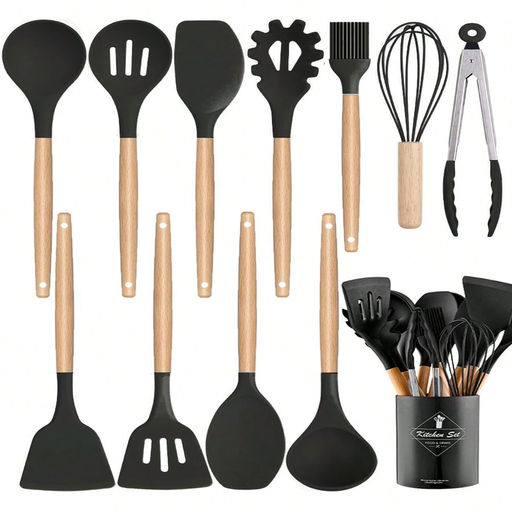
Why it's a great match: Perfect for those moving into a new home or looking to refresh their equipment with a complete, cohesive solution. This kitchen utensil set covers all everyday needs, from the spatula to the whisk, and includes a handy storage container.
Thanks to its silicone heads, you no longer have to worry about scratching non-stick coatings. It's compatible with all your pots and pans, even the most delicate ones.
An all-in-one solution with 12 essential basics. The silicone is heat-resistant, guaranteed BPA-free, and ensures excellent durability.
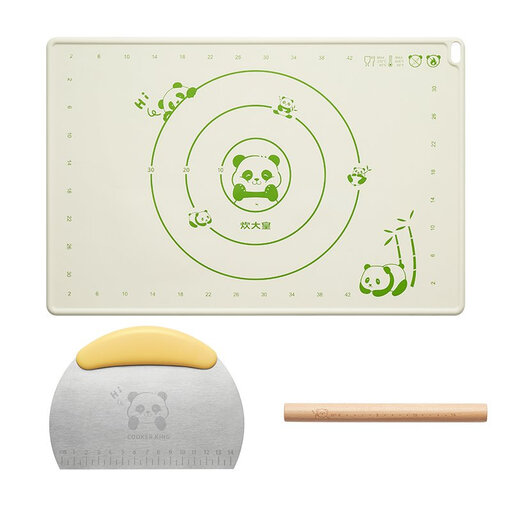
Why it's a great match: For enthusiasts who love working with dough, whether for bread, pizza, or shortbread. This set of baking tools simplifies kneading and guarantees a spotless work surface.
No more dough sticking to the worktop or excess flour drying it out. Its non-stick surface and non-slip base ensure perfect stability and cleanliness.
A large work surface (70x50 cm) with measurement markings. The silicone baking mat is thick, stable, and wipes clean in an instant. The rolling pin and dough scraper are included.
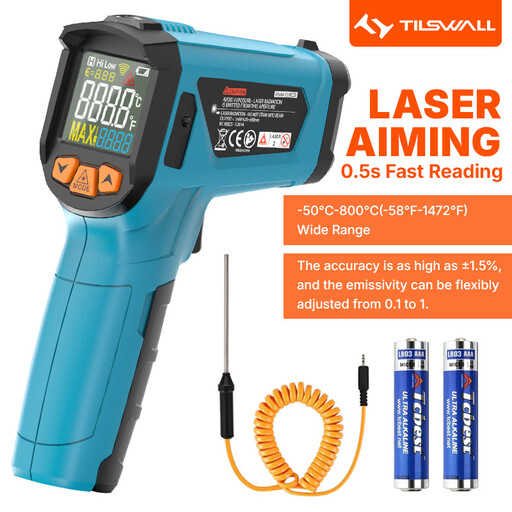
Why it's a great match: For those who want to master cooking with degree-perfect precision: sugar, chocolate, deep-frying, or even the temperature of a pizza stone. This cooking thermometer is the precision tool that changes everything.
It puts an end to guesswork, the main cause of failure in technical recipes. No more burnt caramel or dull chocolate. It gives you total control over the temperature.
Instant (0.5s), precise, non-contact surface measurement. Its wide temperature range (-50°C to 800°C) covers all needs. The included K-type probe also allows for contact measurements.
Discover our full selection of products that meet our quality criteria and European safety standards.
For a truly functional starter kit, five essentials are enough: a good spatula, a skimmer, a ladle, a whisk, and tongs. A well-designed kitchen utensil set is an excellent starting point, as long as you check the quality of the materials.
Silicone is a breeze to maintain: most models are perfectly dishwasher-safe. Wood is trickier: hand-wash with a soft sponge, dry immediately, and occasionally apply a little food-grade mineral oil to nourish it and prevent cracks.
It's a very bad idea. Metal kitchen accessories are guaranteed to scratch a non-stick coating (like Teflon or ceramic). Not only will the pan lose its non-stick properties, but particles from the coating could get into your food. For these pans, it's silicone, nylon, or wood—no exceptions.