
Livraison le jour même ou le lendemain

Qualité garantie

Débloquez vos offres de bienvenue: Livraison GRATUITE | Jusqu'à -80 % | 30 jours d'essai gratuits à JoyPlus
Téléchargez l'application
Equipping your kitchen with the right kitchen utensils can quickly become a daunting task. Between sets that promise the world and gadgets with attractive designs, it's easy to end up with drawers full of impractical tools that break after just a few months. As the Head of Product Curation at Joybuy, my role is to help you cut through the noise and make the right choices for your kitchen.
Before you start shopping, let's review the most common pitfalls so you can avoid them:
To ensure you make the right choice, focus on a few key criteria that guarantee functionality and durability.
The choice of material has a direct impact on the use, durability, and maintenance of your utensils.
Beyond the material, the utensil's design is crucial for user comfort.
To illustrate these criteria, here are a few products that cater to different needs and profiles.
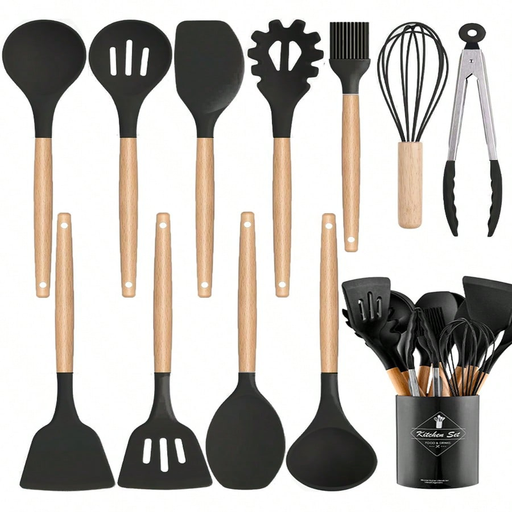
Why we chose it: This set is the perfect solution to get you started. It covers all the basic needs with versatile tools and, as a major plus, its silicone material protects your initial investment in non-stick pots and pans.
It avoids the pitfall of mismatched sets by offering a range of essential tools, all made from a single, safe material suitable for all coatings. The included holder also solves the storage problem.
This kitchen utensil set is truly comprehensive. It brings together the essentials (spatula, ladle, spoon, etc.) and a storage pot, making it a practical and well-designed turnkey solution.
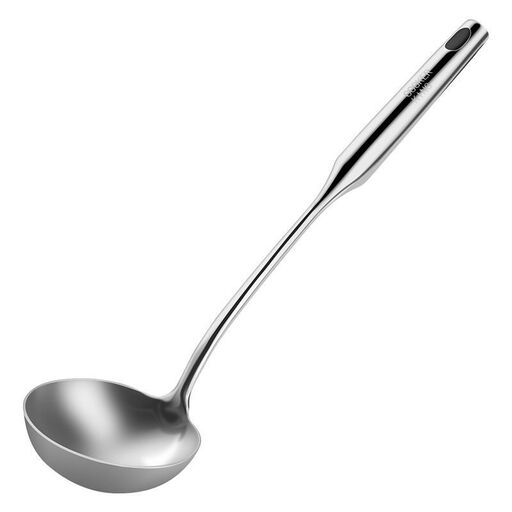
Why we chose it: For enthusiasts who cook daily, it's better to invest in a single, ultra-sturdy centrepiece rather than a complete set of average quality. This ladle is built to last and withstand heavy use.
Its one-piece design in thickened 304 stainless steel is a guarantee of sturdiness: it won't bend, and the handle won't come loose—a common weak point in low-end models.
The food-grade stainless steel ensures perfect hygiene and unbeatable durability. Its robust design is made for daily use and hassle-free cleaning.
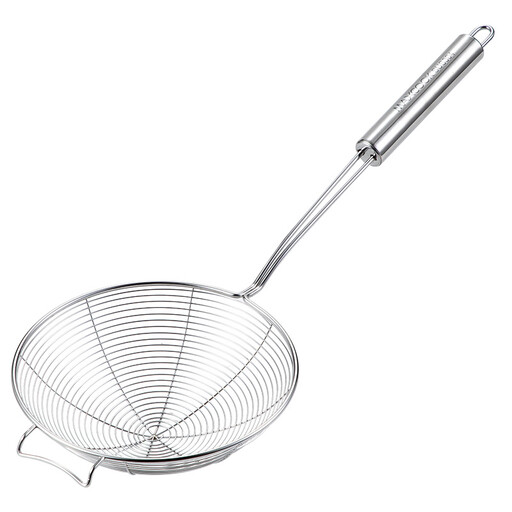
Why we chose it: This is the perfect example of a specialised tool that makes all the difference. For draining chips, doughnuts, or ravioli, a spider strainer is infinitely more effective and safer than a simple skimmer.
Instead of settling for a versatile but mediocre tool, this is an expert solution. Its design is optimised for a specific need, reducing hot oil splatters and handling time.
The clever detail? Its hook, which lets you rest it on the rim of the pot for draining. Meanwhile, its hollow, heat-resistant handle ensures safe and comfortable handling.
The spider strainer is a great example, but there are many utensils designed for draining. If this is your main need, take a look at our dedicated selection.
Discover our full selection of products that meet our strictest quality and safety standards.
The longevity of a silicone utensil depends on its quality and how you use it. High-quality, BPA-free silicone can last for several years. Avoid cutting food with it or exposing it to a direct flame. It's time to replace it if it becomes sticky, cracks, or shows stubborn stains.
Yes, the vast majority of quality stainless steel utensils are dishwasher-safe. It's one of their biggest advantages. However, to preserve their shine over the long term, hand washing followed by immediate drying is ideal to prevent water spots. For utensils with wooden or plastic handles, always check the manufacturer's instructions.
It all depends on your needs and your current equipment. A kitchen utensil set is an excellent and cost-effective starting point for outfitting a first kitchen with a consistent look. On the other hand, if you already have the essentials and want to upgrade, buying high-quality individual pieces (a good spatula, a sturdy ladle, a high-performance spider strainer, etc.) will be a much wiser investment in the long run.