
Livraison le jour même ou le lendemain

Qualité garantie

Débloquez vos offres de bienvenue: Livraison GRATUITE | Jusqu'à -80 % | 30 jours d'essai gratuits à JoyPlus
Téléchargez l'application
The right kitchen utensils can transform your daily cooking experience. But with an overwhelming variety of materials, shapes, and all-in-one kits, it's easy to feel lost. Should you opt for silicone, stainless steel, or wood? Is a complete kitchen utensil kit really a smarter choice than buying items individually?
This guide is here to help you navigate the options. Our mission: to help you make an informed decision that suits your habits and your cookware, without falling for marketing ploys.
Before we get to our top picks, let's review the key criteria for finding the kitchen accessories that are truly right for you.
The choice of material is crucial. It determines the lifespan of your utensils, how easy they are to clean, and their compatibility with your pots and pans.
It all depends on your needs.
Always check two crucial points: compatibility with your cookware and ease of cleaning. Utensils designed for non-stick coatings are essential to avoid scratching your pans. Likewise, dishwasher-safe compatibility is a valuable time-saver in your daily routine.
Here are the products that caught our eye for their design, materials, and versatility.

Why it stands out: This 4-piece set combines the flexibility of food-grade nylon with the sturdiness of a stainless steel core. Its ergonomic handles ensure a comfortable grip. BPA-free, it's perfectly suited for non-stick cookware. The set includes four 7-inch (18 cm) tongs in different colours—a clever feature to stay organised and prevent cross-contamination between raw meat and vegetables, for example.
Pros:
Who is it for? Ideal for those looking for a functional starter kit for daily use with non-stick pans, or to supplement their equipment with versatile tongs.
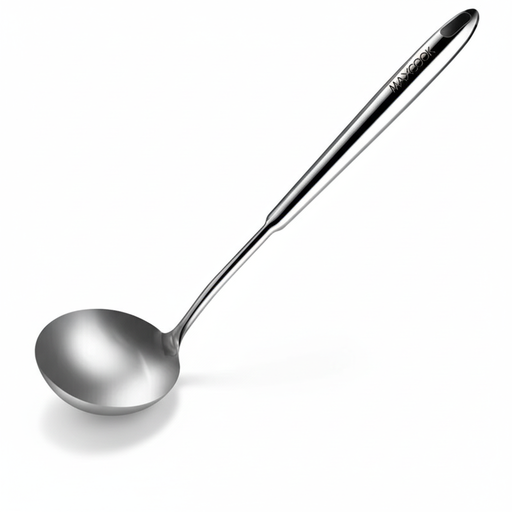
Why it stands out: This ladle is crafted from 304 stainless steel, an alloy renowned for its durability and corrosion resistance. Its standout feature: a hollow handle, a clever design that provides heat insulation and prevents burns when handling very hot dishes. The edges of the spoon are carefully polished to never scratch the surface of your woks and pots.
Pros:
Who is it for? A must-have for those who love making soups, stews, and saucy dishes in large pots or woks and are looking for a reliable, durable tool with a professional aesthetic.
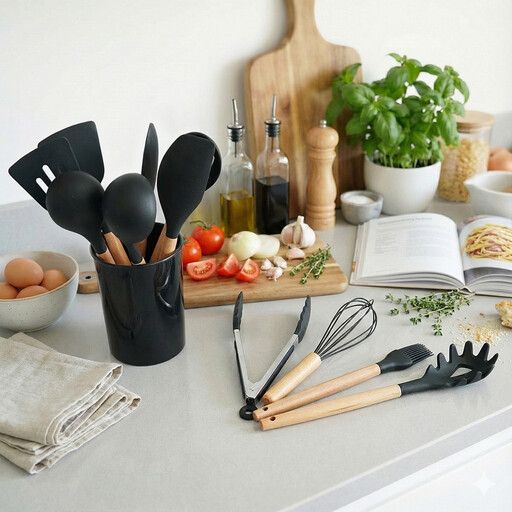
Why it stands out: This 12-piece kitchen utensil set is the ultimate all-in-one solution to get fully equipped. It combines food-grade silicone heads (guaranteed scratch-free) with natural wood handles that offer a pleasant grip and stay cool to the touch. Its simple, modern design, which pairs the black silicone with the warmth of wood, fits beautifully into any kitchen style.
Pros:
Who is it for? The ideal choice for those moving into a new home, wanting to refresh all their equipment with a cohesive set, or for whom visual harmony in the kitchen is a key criterion.
Your kitchen is ready for your greatest culinary creations. But furnishing a home is a never-ending project, where every detail counts in creating a space that reflects you. To find inspiration, from kitchen accessories to decorative items, feel free to browse our other selections.
For example, take a look at our selection of bright pink outdoor chair cushions.
To get started, a basic kit should include at a minimum: a silicone spatula (versatile and safe for non-stick pans), a ladle for soups and sauces, a serving spoon (solid or slotted), and a kitchen tong. A kitchen utensil set is often an excellent starting point to ensure you don't miss anything.
Wooden kitchen utensils require special care. Wash them by hand with warm water and mild soap, then dry them immediately with a cloth. Above all, do not let them soak or put them in the dishwasher, as the wood could swell and crack. To nourish it, you can occasionally apply a thin layer of food-grade mineral oil.
Yes, as long as you choose quality products. Opt for silicone kitchen utensils that are certified food-grade and guaranteed BPA-free (Bisphenol A). This material is stable and inert: it does not react with food and does not release any harmful substances under normal use. Although it can withstand high temperatures, it's always safer to check the manufacturer's recommendations and avoid leaving a utensil in direct, prolonged contact with a heat source.