
Livraison le jour même ou le lendemain

Qualité garantie

Débloquez vos offres de bienvenue: Livraison GRATUITE | Jusqu'à -80 % | 30 jours d'essai gratuits à JoyPlus
Téléchargez l'application
Equipping your kitchen with the right kitchen utensils can often be a headache. Between marketing promises and a jungle of materials, it's easy to end up with accessories that warp at the first sign of heat, scratch your brand-new pans, or simply give out after a few months. As the head of product selection at Joybuy, my mission is to help you see things more clearly and make choices that are both smart and durable.
Before you dive in headfirst, here are 3 common pitfalls that can turn a good investment into a real disappointment:?
To avoid these setbacks, a few simple but crucial technical features are all you need to look for. This is what will make all the difference in the long run.
The material you choose is crucial for the lifespan and usability of your kitchen accessories.
Whether you're looking for a single item or a complete kitchen utensil set, always opt for a one-piece (or unibody) design. This construction eliminates joints and crevices where food loves to get trapped, which greatly simplifies cleaning and strengthens the tool's durability. With a one-piece utensil, there's no risk of the handle separating from the head.
Think about day-to-day practicalities:
Here are a few products that meet specific needs, selected according to our criteria for durability and practicality.
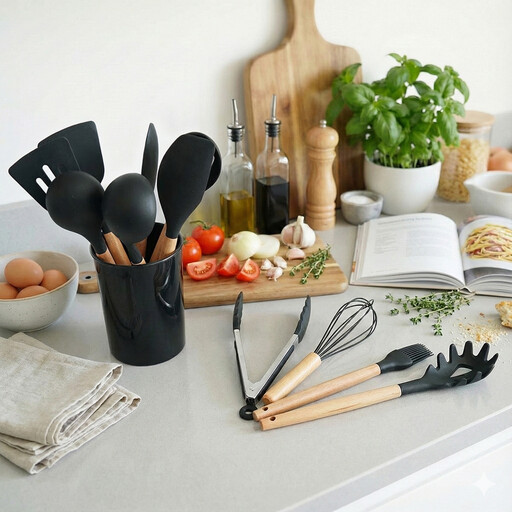
Why we chose it: For a student or a first apartment, this kitchen utensil set is the ultimate turnkey solution. Comprehensive and safe, it covers all the basic needs, from prep to cooking. Its main advantage? The silicone heads are perfectly suited for non-stick pans, which are often a beginner's first piece of equipment.
The food-grade silicone heads are designed to never scratch coatings, which sidesteps the material incompatibility pitfall. The all-in-one set format prevents multiple, often mismatched purchases.
An all-inclusive 12-piece set, holder included. The wooden handles provide a good grip and do not conduct heat.
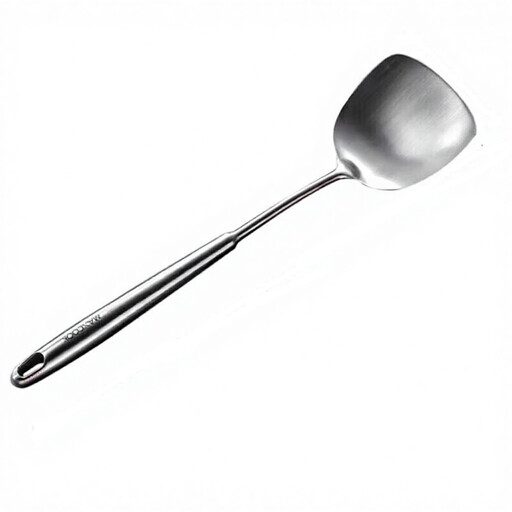
Why we chose it: Wok cooking has its own rules and requires specialised tools. Long and sturdy, this spatula is built for the high temperatures and rapid movements of stir-frying. Its curved shape perfectly hugs the sides of the wok.
Its one-piece 304 stainless steel construction makes it impervious to warping and breaking, even under intense heat. Its hollow handle, cleverly designed to limit heat transfer, avoids the pitfall of a scalding handle.
Ultra-durable material (304 stainless steel) and a safety-focused design (long, hollow handle). Its rounded edges are designed to not damage the wok.
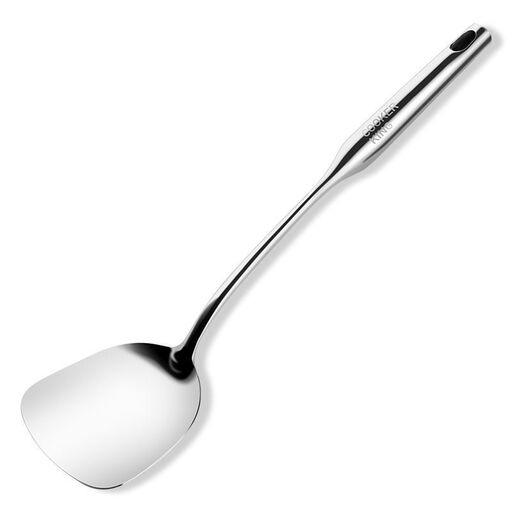
Why we chose it: For those who cook intensively and are looking for tools that can last a lifetime. This spatula is designed for performance and longevity, with no compromises on quality.
Its thickened one-piece construction in food-grade 304 stainless steel eliminates any risk of the handle breaking. It's a tool built to withstand pressure and intensive daily use.
Exceptional sturdiness thanks to the thickened steel and one-piece design. Perfectly hygienic and rust-proof.
We have put together a complete and up-to-date selection of products that meet our strict selection criteria and current standards.
Although stainless steel is highly resistant to corrosion, rust spots can appear with improper care. To prevent this, wash your utensils right after use, dry them immediately and completely with a soft cloth (rather than letting them air-dry), and never use abrasive sponges that could create micro-scratches.
Yes, as long as you choose what is known as "food-grade" silicone. This type of silicone is stable, inert, and does not release any harmful substances into food, even at high temperatures (within the limits specified by the manufacturer). For peace of mind, look for "food-grade" or "BPA-free" labels.
It's a very bad idea. Metal, even with supposedly rounded edges, will inevitably scratch and damage the non-stick coating. Once the coating is damaged, the pan not only loses its effectiveness but can also release unwanted particles into your food. For this type of pan, the golden rule is simple: always opt for silicone, wood, or nylon utensils.