
Livraison le jour même ou le lendemain

Qualité garantie

Débloquez vos offres de bienvenue: Livraison GRATUITE | Jusqu'à -80 % | 30 jours d'essai gratuits à JoyPlus
Téléchargez l'application
A splash of sauce, an overflowing pan or a worktop that needs drying in a hurry: kitchen roll comes in handy for all sorts of everyday mishaps. But comparing pack prices alone can sometimes lead to surprises. A roll with fewer sheets than expected, paper that falls apart as soon as it gets wet or a bulky format can quickly mean you use more than you planned.
Before buying kitchen roll, take a moment to check a few simple details. They’ll help you separate genuinely useful information from marketing claims.
A pack of twelve rolls isn’t necessarily better value than a pack of six. The number of sheets per roll, their size and the number of plies can all make a big difference to how much paper you get. When comparing two offers, check the total number of sheets, rather than just the number of rolls.
Highly absorbent kitchen roll is useful for mopping up spills, provided it doesn’t fall apart as soon as it gets wet. Claims such as ‘strong’ or ‘absorbent’ are more meaningful when you compare them with specific details: 2-ply construction, stated wet strength, sheet size and intended uses.
A sheet that’s too large for a small spill can easily lead you to use more than you need. On the other hand, a compact or perforated roll can be more convenient for everyday use. Half sheets are particularly handy for wiping up a few drops or a small splash.
2-ply kitchen roll is generally suitable for wiping worktops, hands and everyday spills. For wet or repeated use, check whether the packaging specifies how strong the paper is when wet. A more robust sheet can help you avoid reaching for several sheets to do one job.
However, claims such as ‘extra strong’ and ‘ultra-strong’ should be compared against the product details on the packaging. Percentages quoted by a brand are based on its own comparison method, so they aren’t a universal guarantee for every use.
To find economical kitchen roll, compare the price with the total number of sheets. If the sheet dimensions are given, the price per sheet — or even per square metre — offers an even more useful comparison. Maxi rolls mean fewer roll changes, while packs of standard rolls are easier to store and distribute around the home.
A multi-pack of kitchen roll can suit families and households that regularly use paper towels for different tasks. Just keep an eye on how much storage space you have and where you’ll keep it: a large pack is only worthwhile if you can store it somewhere dry.
Cellulose wadding is the most common material in this category. Where it appears on a product, FSC Mix certification indicates that its composition comes from sources controlled in line with the applicable FSC standard. It doesn’t mean that the entire product is made from recycled fibres.
Used kitchen roll shouldn’t be flushed down the toilet. Put it in your household waste, following the instructions shown on the packaging of the products below. Keep paper away from flames, very hot oil and hot surfaces too.
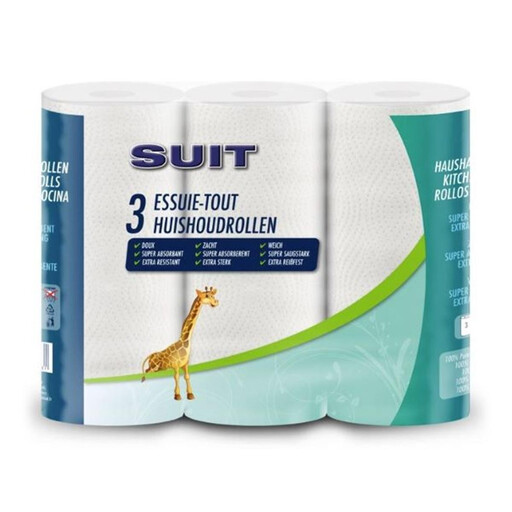
Why it suits this shopper: This pack of three rolls lets you try 2-ply kitchen roll without committing to a large pack. Each roll has 48 sheets for everyday spills and mishaps.
The number of sheets per roll is clearly stated. This makes it easier to compare this pack with other offers, without relying on the number of rolls alone.
3 rolls, 48 sheets per roll and 2-ply construction for everyday tasks.
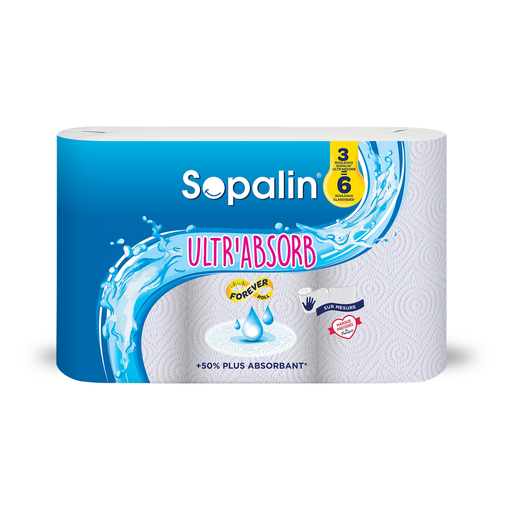
Why it suits this shopper: Maxi rolls and perforated half sheets are ideal if you want to control how much you use. The manufacturer also states that the product is FSC Mix certified.
Half sheets let you match the amount of paper to the task, rather than automatically tearing off a whole sheet to wipe up a few drops.
3 maxi rolls, half sheets and FSC Mix certification listed in the product details.
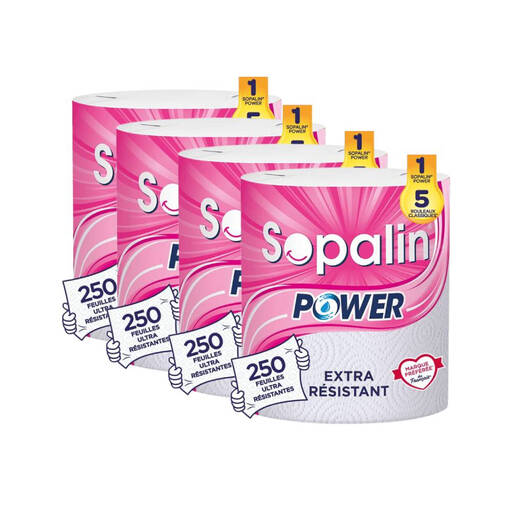
Why it suits this shopper: With 4 maxi rolls of 250 sheets each, this pack is aimed at households that regularly use kitchen roll for cooking, small DIY jobs or pet care.
The total of 1 000 sheets is clearly stated, so you won’t mistake a large roll diameter for a greater quantity of paper.
4 maxi rolls, 250 sheets per roll, 2-ply construction and stated suitability for dry and wet use.
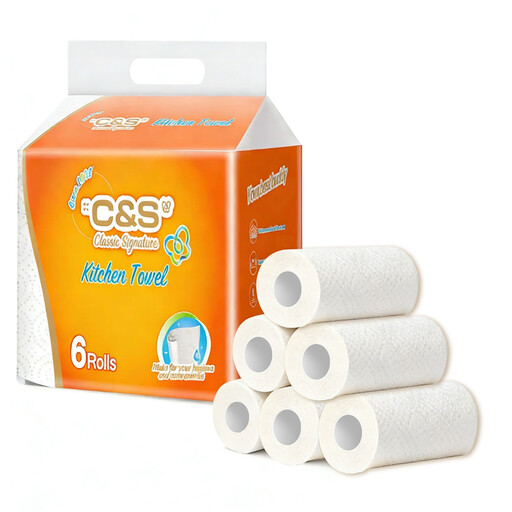
Why it suits this shopper: This pack of 6 rolls, with 390 sheets in total, is a good choice for households looking to stock up for everyday tasks.
The total number of sheets and the 65-sheet count per roll are both stated, so you can see exactly how much you’re buying.
390 sheets in total, 6 rolls and 2-ply construction to absorb liquids and grease, according to the product details.
We’ve put together a comprehensive, regularly updated selection of products that meet these strict criteria, as well as European safety requirements.
Kitchen roll generally doesn’t have a particularly short shelf life. To keep it in good condition, store rolls somewhere dry, clean and away from damp. If you keep your stock near the sink or in a humid room, it may not be as pleasant to use.
A 2-ply option may be suitable for soaking up small amounts of grease from utensils or surfaces that have already cooled down. Never use it with very hot oil, a flame or a hot surface. When comparing two products, also consider the sheet size and the stated wet strength.
Not necessarily. They mean you need to change rolls less often, but whether they offer good value depends on the price, total number of sheets and how much you use. The value of kitchen roll is best measured by the cost per sheet used, taking the risk of tearing and waste into account.