
Livraison le jour même ou le lendemain

Qualité garantie

Débloquez vos offres de bienvenue: Livraison GRATUITE | Jusqu'à -80 % | 30 jours d'essai gratuits à JoyPlus
Téléchargez l'application
A well-organised kitchen isn't just more pleasing to the eye; it's also far more functional. Yet, finding the ideal storage solution can often be a headache. Between marketing promises and real-world use, it's easy to end up with a wobbly shelf or an ill-fitting organiser. Our mission is to help you see things more clearly. Let's break down the common pitfalls to avoid and the essential criteria for a successful purchase.
Before you pull out your credit card, it's crucial to know the design flaws that can turn a good idea into a purchase you'll regret.
To avoid these disappointments, here are the technical points to inspect closely.
The choice of material is crucial. For a metal kitchen shelf, opt for stainless steel or carbon steel with a quality protective coating (epoxy paint, chrome plating). These treatments form a genuine barrier against moisture. A key detail to check: does the manufacturer specify if the anti-corrosion treatment is applied to all surfaces, including the inside of the tubes?
For a dish drainer, plastic (polypropylene) is a practical and easy-to-clean option, often dishwasher-safe. Stainless steel ensures superior durability but requires regular maintenance to prevent limescale marks.
Every centimetre counts. An effective storage solution must adapt to your needs and your kitchen, not the other way around.
Every kitchen is unique. Here is our selection of tried-and-tested solutions for different needs and budgets.
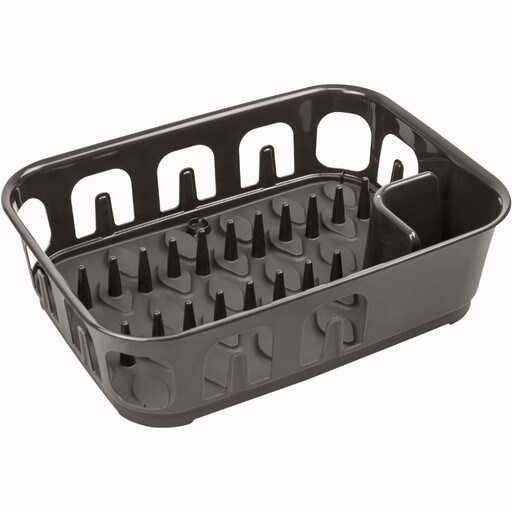
Why we chose it: Perfect for studios, small flats, or couples. Its compact footprint fits neatly beside the sink without sacrificing worktop space, while still being large enough for daily dishwashing.
It avoids the "universal design" trap by embracing its specialisation: small spaces. There are no frills here, just formidable efficiency.
Its secret? Polypropylene. It's lightweight, impervious to rust, and dishwasher-safe. The integrated cutlery holder is the cherry on top.
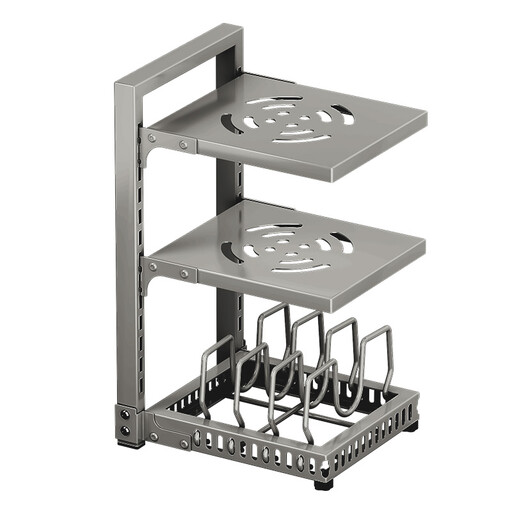
Why we chose it: Tired of playing Tetris with clashing pots and lids? This vertical system brings order to your cupboards or deep drawers. Every item has its place, access is instant, and non-stick coatings are protected from scratches.
It ticks both critical boxes: stability and modularity. Its carbon steel frame can easily handle the weight of cast iron pots, and its tiers are fully adjustable.
Its strength is its flexibility. The dividers can be adjusted to accommodate everything from a small saucepan to a large sauté pan, making use of every cubic centimetre in your cupboards.
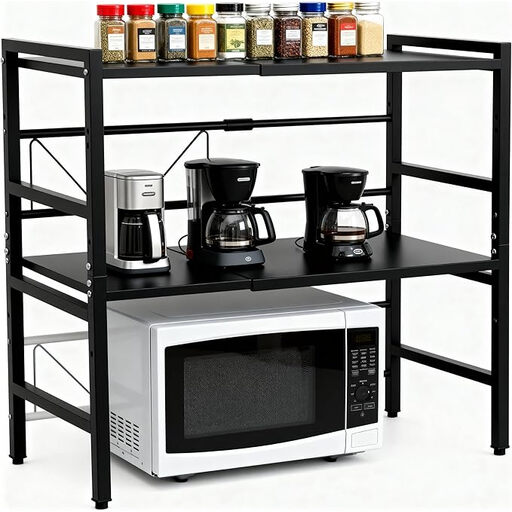
Why we chose it: The ultimate solution for decluttering your worktop. By elevating the microwave, it frees up valuable space above and below, perfect for spices, mugs, or a kettle.
It sidesteps the fixed-format trap with its extendable width (40-60 cm) and adjustable tiers. Its sturdy steel construction is certified to hold up to 36 kg, giving you plenty of capacity.
It's a true Swiss Army knife. More than just a microwave stand, it transforms into a complete storage station with its shelves and removable hooks.
Our editors have selected other products that meet our demanding specifications for quality and safety.
How do I maintain a metal kitchen shelf to prevent rust? The secret? Regular cleaning with a damp cloth and a neutral detergent, followed by immediate drying. Never let water pool on the surface. For painted models, be careful of impacts: any chip in the paint is an open door for moisture and rust.
Is a storage rack really stable enough for a microwave? Absolutely, provided you choose the right model. The number one criterion is the maximum load capacity stated by the manufacturer (e.g., 25 kg, 36 kg). Also, ensure the frame is made of thick metal (carbon steel or stainless steel) and that it is assembled on a perfectly flat surface.
What's the difference between a plastic and a stainless steel dish drainer?Plastic (like polypropylene) is the budget-friendly and practical option: lightweight and colourful, it never rusts but can eventually become stained. Stainless steel is the choice for durability and design. It's more premium and resists everything, but it will require a regular wipe-down to remove limescale marks and maintain its shine.