
Livraison le jour même ou le lendemain

Qualité garantie

Débloquez vos offres de bienvenue: Livraison GRATUITE | Jusqu'à -80 % | 30 jours d'essai gratuits à JoyPlus
Téléchargez l'application
A well-organised kitchen isn't just about aesthetics. It's the promise of saving time every day, reducing food waste, and, most importantly, enjoying more peace of mind when preparing meals. However, the kitchen storage market is saturated with products that make tempting promises but often prove disappointing in practice. Before you invest, it's crucial to know how to avoid the common traps that turn good intentions into a cupboard full of useless gadgets.
As the Head of Product Recommendations at Joybuy, my mission is to bring you clarity. Let's cut through the marketing speak and focus on what truly matters. Here are the most frequent mistakes to avoid, along with our expert advice.
To make an informed choice, simply focus on a few key criteria. These are what determine the durability, safety, and practicality of your future storage solutions.
The choice of material has a direct impact on the product's use and lifespan.
The effectiveness of a set of airtight containers rests entirely on its lid. The most reliable systems combine two elements:
This type of closure is essential for maintaining freshness, preventing leaks, and protecting dry goods from moisture as part of your pantry organisation.
For true kitchen space optimisation, favour square or rectangular shapes. They fit together in cupboards and the refrigerator with no wasted space, unlike round containers. Also, check that their design allows for stable stacking when full and perfect nesting when empty. A storage tower with drawers can also be a smart solution to utilise the vertical space on a worktop or shelf.
Every household has different needs. Here are a few options we recommend, paired with typical user profiles to help you find the solution that's truly right for you.

Why we chose it: This set is the versatile ally for anyone who preps meals in advance or stores leftovers. The glass allows you to reheat dishes directly in the oven or microwave, which greatly simplifies the daily routine.
Borosilicate glass is non-reactive: it doesn't warp, stain, or absorb any odours, unlike poor-quality plastics. The clip-on lids ensure a reliable seal.
Its total versatility (freezer, oven, microwave, dishwasher) and healthy material. The 10-piece set, with two different sizes, covers most needs.
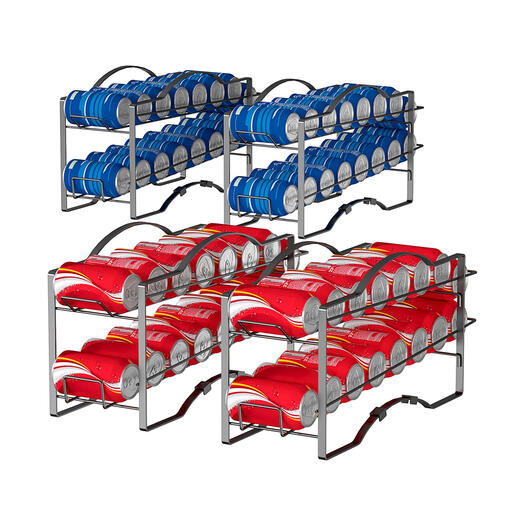
Why we chose it: Perfect for those short on space in their cupboards or on their worktop. This structure utilises vertical space to organise cans, jars, and bottles, making every item visible and accessible at a glance.
It directly solves the problem of unstable stacking. No more precarious piles of cans! This rack provides a sturdy and stable structure entirely dedicated to this purpose.
A significant vertical space saving. The wireframe structure is durable, and its tiers are adjustable to accommodate different container sizes.

Why we chose it: For those seeking a durable alternative to plastic that's lighter than glass. Stainless steel is unbreakable, making it perfect for packed lunches, picnics, or long-term storage.
This set bypasses the trap of degrading materials. 316 stainless steel is a food-grade material, renowned for its durability and resistance to both rust and food acids.
Durability and lightness. These containers are designed to last for years without degrading. The set of three different sizes offers excellent flexibility.
We have compiled a complete selection of products that meet our quality criteria and current safety standards.
The lifespan depends entirely on the material. A borosilicate glass or stainless steel container can last a lifetime if well-maintained. For plastic containers, even high-quality ones, it is advisable to replace them as soon as they show deep scratches, stubborn stains, or warping, as this can compromise their hygiene and seal.
For glass or stainless steel, a simple wash with hot, soapy water or a run through the dishwasher is sufficient. For plastic, if an odour persists (especially after a saucy dish), here's a simple trick: fill the container with a mixture of hot water and baking soda (or white vinegar), let it sit for several hours, then rinse. Afterwards, let it air dry without its lid.
The "BPA-free" label means the product does not contain Bisphenol A, a chemical compound whose use is highly regulated for food containers in Europe due to potential health risks. Choosing BPA-free products is therefore an essential precaution for food contact. It ensures that the product complies with current safety standards for this purpose. However, it remains crucial to follow the manufacturer's instructions, particularly regarding microwave use.