
Livraison le jour même ou le lendemain

Qualité garantie

Débloquez vos offres de bienvenue: Livraison GRATUITE | Jusqu'à -80 % | 30 jours d'essai gratuits à JoyPlus
Téléchargez l'application
A well-organised kitchen isn’t just about how many cupboards you have. A kitchen storage basket can clear your worktop, keep utensils together, and make fruit, vegetables or everyday essentials easy to reach. But you need to choose a model that works with the real demands of a kitchen: humidity, limited space, frequent cleaning and sometimes heavy loads.
Before you place an order, there are three common pitfalls to watch out for.
A basket can look compact in a photo, then turn out to be bulky once you place it near the sink. Measure the width, depth and height you have available, and don’t forget to account for how drawers and cupboard doors open.
In a narrow cabinet, a foldable or stackable basket can be especially handy. On the other hand, a hanging basket needs to be attached to a support that’s strong enough to hold the weight of its contents.
Baskets made from fibres, wood or composite materials add a warm touch, but they aren’t always designed for wet produce or for being submerged. It’s important to tell the difference between a decorative storage piece and an accessory meant for washing or draining fruit and vegetables.
A metal basket also needs to be dried thoroughly after washing. When the manufacturer specifies it, 304 stainless steel is generally chosen for its corrosion resistance and declared food-safe use. That doesn’t mean you can skip checking the care instructions.
A fruit basket isn’t necessarily stable enough for storing bottles. A lightweight basket with handles might work for small items, but it will struggle with heavy utensils. Similarly, an expandable dish drying rack needs to be installed on a sink that’s compatible with its adjustable width.
So the right question isn’t “how many uses are claimed?” but rather: what is the main daily use I need to cover?
For fruit and vegetables, go for an openwork structure that stops moisture building up. A metal fruit basket helps air circulate and makes it easy to spot produce that needs eating.
For closed or semi-closed storage, check the actual height available. Baskets that are 12 to 14 cm deep often work well on shelves and in shallow drawers. Larger models are better suited to laundry, cleaning products or bulky items.
A storage basket with handles makes it easier to move spices, accessories or cleaning products around. Check how the handles are fixed, how rigid the base is, and the maximum load it’s designed for. A structure that buckles under weight quickly becomes awkward to handle.
For heavy use, a basket made from stainless steel or food-grade plastic that’s described as durable can be simpler to maintain than a non-washable fabric model.
A fruit and vegetable colander should let water drain away quickly and be easy to rinse. Fine mesh traps more small debris, while wider openings speed up draining.
If the product isn’t explicitly described as suitable for food contact, use it for packaged items or general storage instead. This is especially important with decorative baskets and fibre models.
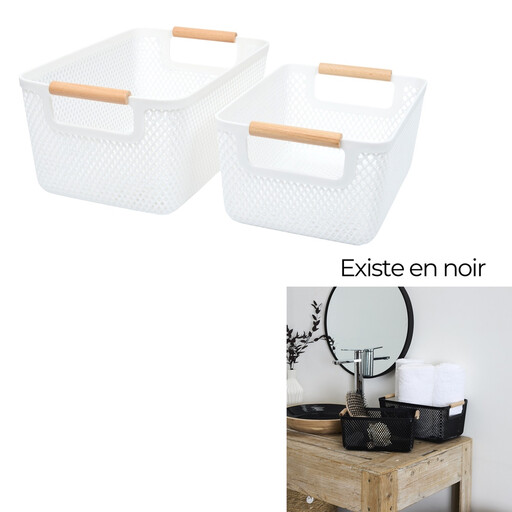
Why this suits this profile: This set of two baskets lets you start organising your kitchen by zone, with one measuring 23 × 16 × 12 cm and a second at 28 × 17 × 14 cm. Their nesting design makes them easy to store away when not in use.
The dimensions are clearly stated and the integrated handles make them easy to move. As the material isn’t described as suitable for direct food contact, it’s best to use these for packaged items or small objects.
Two complementary sizes, side handles and easy cleaning with a damp cloth. The manufacturer advises against submerging the baskets.
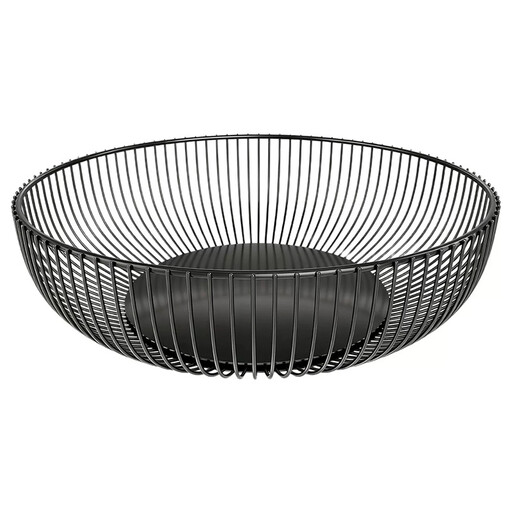
Why this suits this profile: This metal fruit basket, measuring 28 × 15.5 × 7.5 cm, sits neatly on a table, trolley or worktop without adding unnecessary height.
Its openwork design avoids the closed-box effect and lets you see the contents at a glance. Do check its stability on your surface before filling it.
A compact horizontal format and wire construction, well suited to displaying fruit and small snacks.
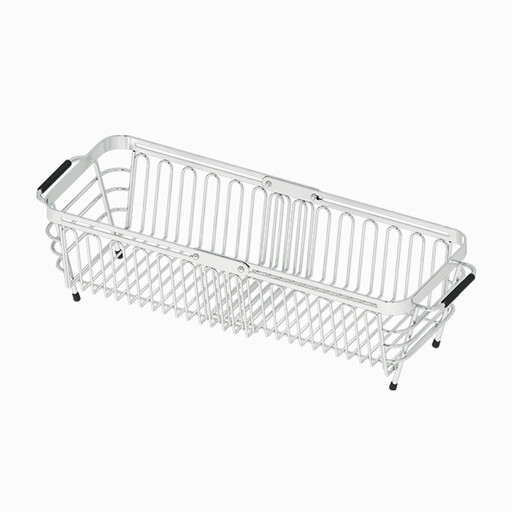
Why this suits this profile: This expandable dish drying rack is ideal for kitchens where every centimetre of worktop counts. Its length adjusts from 29 to 44 cm so it can sit over the sink.
The extension range is clearly stated, so you can compare it with your sink width. Make sure you install it on a flat surface and avoid overloading it.
304 stainless steel described as suitable for food contact, adjustable width and dual use as a drying rack or colander.
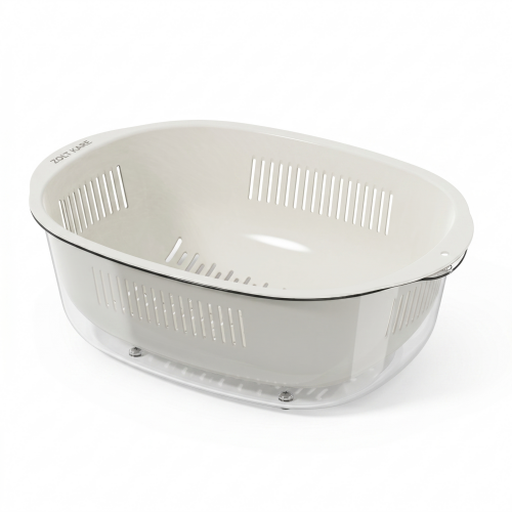
Why this suits this profile: This double-layer drain basket is designed for anyone who regularly rinses rice, fruit, vegetables or pasta and wants to catch the water in a separate container.
The double structure separates the perforated section from the collection container. This means water is less likely to spill onto the worktop during preparation.
An outer collection basin, a perforated inner colander and handles designed for easy handling, even when wet.
We’ve put together a full, regularly updated selection of products that meet these criteria and European safety standards.
A stackable, foldable or expandable model helps you make the most of the space you have. For the sink, measure its internal width before choosing an adjustable drying rack. On the worktop, a shallow, openwork basket makes it easier to move around the preparation area.
Avoid overloading it, letting water sit in it, or using abrasive cleaners. Follow the manufacturer’s instructions and separate food uses from household uses when the material isn’t clearly intended for food contact.
A colander is designed for rinsing and draining, whereas a storage basket is mainly for grouping items together. Some versatile models can do both jobs, but check their stability, capacity and care requirements before you buy.