
Livraison le jour même ou le lendemain

Qualité garantie

Débloquez vos offres de bienvenue: Livraison GRATUITE | Jusqu'à -80 % | 30 jours d'essai gratuits à JoyPlus
Téléchargez l'application
A cluttered sink can quickly make everyday tasks more difficult: sponges sit in water, washing-up liquid takes up space by the tap, dishes dry on the worktop and there’s nowhere to drain your vegetables. Kitchen sink organisation accessories can free up space, as long as you choose a style that suits your kitchen layout.
Before you place an order, watch out for three common pitfalls: misjudging the dimensions, choosing materials that don’t cope well with moisture, and picking a fixing system that isn’t compatible with the surface available. Here are the key things to check, followed by a selection to suit different needs.
An expandable over-sink dish rack may seem versatile, but its minimum length and width need to match your sink bowl. If it’s too short, it may slip; if it’s too wide, it may not sit securely on the worktop.
Measure the inside width of the sink, the distance between its edges and the space around the tap. Remember to take handles, the plughole and the depth of the bowl into account too.
Accessories exposed to splashes and household cleaning products should be easy to rinse and dry. The term 304 stainless steel refers to a grade commonly used in the home for its resistance to corrosion. However, it still needs regular care: limescale and standing water can leave marks on any surface.
Be wary of descriptions that simply say “stainless steel finish” without specifying the main material. If you’re buying a 304 stainless steel sink organiser, check the product details and stated dimensions carefully.
A no-drill suction-cup soap holder isn’t suitable for every surface. Suction cups generally grip best on smooth tiles, glass, metal or acrylic. Grout lines, textured walls, porous surfaces and uneven paintwork can all reduce their hold.
To help prevent it falling, clean and dry the surface before installation, then stick to the manufacturer’s stated maximum load. A no-drill fixing is convenient, but it’s worth checking regularly.
For everyday use, choose an accessory with a clearly stated material. 304 stainless steel is a good choice for sponge holders, draining racks and sink strainers. Clean it with a soft sponge and a mild detergent, then dry it after rinsing.
Avoid abrasive products, which can scratch the surface. To reduce white marks, empty any standing water regularly and wipe down areas with poor airflow.
A sponge holder with a washing-up liquid dispenser should be compact while still having room for your essentials. The size, separation between compartments and presence of a perforated base all affect how well it dries.
For vegetables, cutlery or a few plates, an expandable stainless steel sink strainer can replace several accessories. Be sure to check its usable width and how stable it is when loaded.
A good space-saving sink organiser should prevent water from collecting around sponges or soap. Perforated holders let water drain into the sink, while an over-sink draining rack helps prevent puddles on the worktop.
In a small kitchen, remember to consider the space around the tap too. A kitchen cup holder or wall-mounted rack shouldn’t get in the way of opening a cupboard or using the taps.
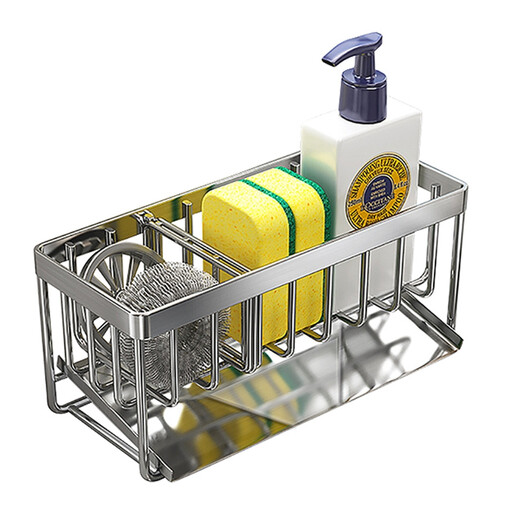
Why it suits this shopper: At around 21 × 8.2 × 10 cm, its compact design is ideal if you want to organise your sink essentials without fitting anything to the wall.
The material is specified as 304 stainless steel. Simply place the organiser beside the sink – no drilling or complicated assembly required.
Compartments for a sponge, brush and washing-up liquid; care instructions recommend wiping with a damp cloth and mild detergent.
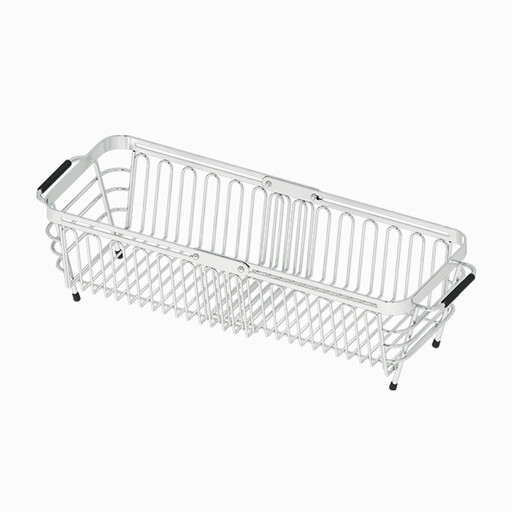
Why it suits this shopper: Its expandable design adapts to kitchens where the available space varies, whether you’re washing up or rinsing fresh produce.
Its length adjusts from 29 to 44 cm, so you can fit it to the actual width of your sink instead of choosing a fixed-size rack.
304 stainless steel, with stated dimensions of 29–44 × 15.5 × 10.5 cm and both draining rack and strainer functions.
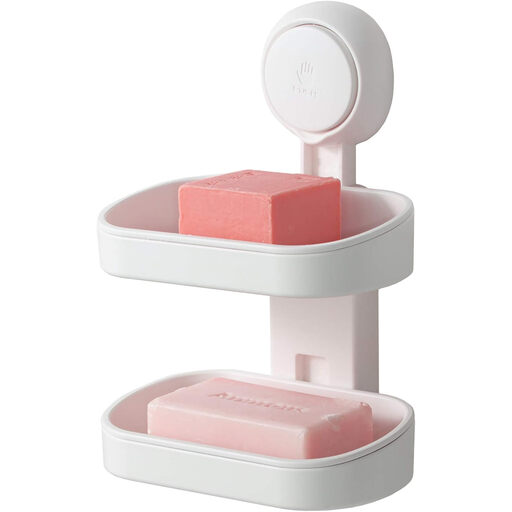
Why it suits this shopper: This removable holder is a good choice if you want to keep soap in the kitchen or bathroom without drilling into the wall.
The product details specify that it must be fitted to a smooth, non-porous surface, with a stated maximum load of 3 kg. These conditions must be followed.
Two compartments, drainage holes and a removable tray for easy cleaning.
We’ve selected a comprehensive range, updated in real time, of products that meet these demanding criteria and European safety rules.
Start by cleaning the surface with a degreasing product, then dry it thoroughly. For a suction cup, apply even pressure to remove the air. Wait a few moments before placing soap or a sponge on it. Uneven surfaces, grout lines and porous materials are generally less suitable.
Its lifespan depends on the quality of the construction, how often it’s cleaned and how much it’s exposed to standing water. Regular rinsing, thorough drying and avoiding abrasive products all help preserve the finish. Check the welds, feet and removable parts from time to time.
Accessories that don’t need electricity won’t add to your energy use. They generally need no more than water, mild detergent and a cloth for cleaning. A model that drains water properly can also mean less worktop cleaning, as long as you empty out any residue and don’t overload the compartments.