
Livraison le jour même ou le lendemain

Qualité garantie

Débloquez vos offres de bienvenue: Livraison GRATUITE | Jusqu'à -80 % | 30 jours d'essai gratuits à JoyPlus
Téléchargez l'application
Far more than a simple storage unit, the modern kitchen sideboard has become the multifunctional heart of our homes: serving as a coffee station, a counter for small appliances, or even an impromptu mini-bar. But with an overwhelming number of options, how do you make the right choice? While some models look great on paper, they can turn into sore disappointments after just a few months of use.
As the Head of Product Curation at Joybuy, I'm here to guide you. Together, let's break down the pitfalls to avoid and the criteria that truly matter so you can choose a piece of furniture that will last, far from the hype of marketing.
Before we even talk about features, let's review the deal-breakers that can turn a promising purchase into a major regret.
To make an informed choice, focus on the technical aspects that guarantee the functionality and durability of your kitchen storage cabinet.
The presence of electrical outlets and USB ports transforms a simple piece of furniture into a truly functional station. However, be sure to check these points:
The composition of your sideboard will determine its longevity.
A good sideboard should adapt to your belongings, not the other way around.
Every household has different needs. Here are a few options that cater to distinct user profiles, taking into account the quality criteria we've just discussed.
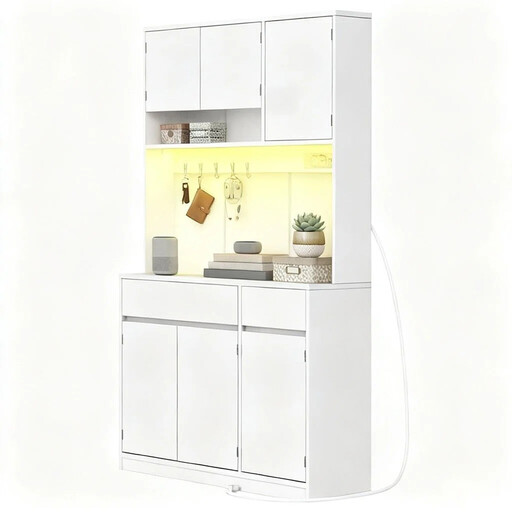
Why it's a great choice: Perfect for centralising your coffee machine, toaster, and other appliances. Its large worktop, integrated outlets, and lighting make it an ultra-functional prep station.
The connectivity is well-designed (2 AC outlets, 2 USB ports) with discreet wiring. Far from a gimmick, the LED lighting offers 25 ambient modes. The variety of storage options (hutch, drawers, cabinets) makes use of every inch of space.
A complete power station (outlets + USB) and customisable ambient lighting. Adjustable internal shelves provide maximum modularity.
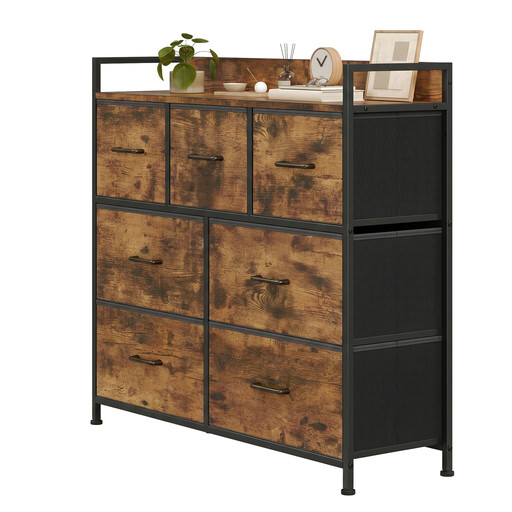
Why it's a great choice: For those who prioritise a large, simple, and versatile amount of storage. It's equally at home in the dining room for dishes or in a bedroom for clothes.
This model gets straight to the point: maximum storage without unnecessary gimmicks. Its steel frame and sturdy top ensure excellent stability, while its seven drawers of different sizes allow for customised organisation.
Very large storage capacity thanks to its 7 drawers. Versatile design suitable for the kitchen, living room, or dining room. Anti-tip kit included for enhanced safety.
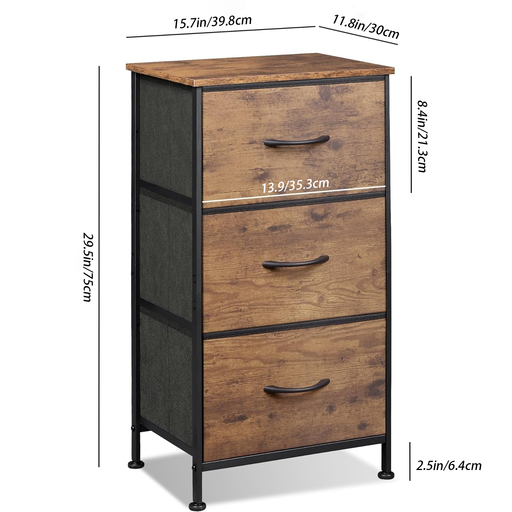
Why it's a great choice: Designed for small kitchens, entryways, or as a clever accent cabinet. Its tall, compact design provides valuable storage without taking up floor space.
It avoids the low-quality material trap with its solid steel frame and water-resistant MDF top. Its strength lies in its simplicity: effective storage without complex features that might not age well.
Robust steel frame and a durable wood top. Lightweight, removable, and foldable fabric drawers for added versatility. Adjustable feet ensure perfect stability, even on uneven floors.
We have curated a complete selection of products that meet our quality criteria and current safety standards.
For melamine or MDF surfaces, a soft, slightly damp cloth followed by immediate drying is ideal. Avoid abrasive cleaning products. For metal, a simple dusting is sufficient. The number one rule: wipe up any spills immediately to prevent the wood from swelling.
Yes, provided it complies with safety standards. Insist on the CE marking, which guarantees compliance with European safety regulations. A well-designed model will also include surge protection and neat, insulated wiring kept away from liquids.
It all depends on your space and how you plan to use it. A low sideboard (between 75 and 90 cm) aligns with the height of a standard countertop, offering a very practical surface. A tall white sideboard or a hutch (over 120 cm) optimises vertical storage, which is ideal for smaller rooms. The golden rule is ergonomics: keep everyday items within easy reach.