
Livraison le jour même ou le lendemain

Qualité garantie

Débloquez vos offres de bienvenue: Livraison GRATUITE | Jusqu'à -80 % | 30 jours d'essai gratuits à JoyPlus
Téléchargez l'application
A leak, a grease stain or a table that needs wiping quickly: kitchen roll is an essential in many French households. However, an attractive price or the words “maxi roll” do not necessarily guarantee good value. The number of sheets, resistance when wet and perforation format all have a direct impact on how much you actually use.
Here are the criteria to consider when comparing absorbent paper, seeing through vague marketing claims and choosing a product suited to your daily routine.
A maxi kitchen roll may contain more sheets without necessarily costing less to use. Instead, compare the total number of sheets, the number of plies and the amount needed for each task. A longer roll only offers genuine value if its sheets remain sufficiently strong and their size helps to minimise waste.
The phrase ultra-absorbent kitchen roll is appealing, but it needs to be considered in context. Absorption depends on factors including the paper’s thickness, structure and the moisture on the surface. For a small splash, a thin sheet may be perfectly adequate. However, when dealing with a knocked-over saucepan or a very wet surface, strength when wet is more important.
You do not need a whole sheet for every chore. Half-sheet kitchen roll makes it easier to control how much you use to dry your hands, wipe a mug or pick up a few crumbs. Larger sheets are better suited to spilled liquids and cleaning larger surfaces.
A two- or three-ply roll generally offers a stronger structure than single-ply paper. However, thickness should not be your only indicator. Also check the information about how well the paper holds up when wet, especially if you intend to use it for cleaning the worktop, cold hobs or kitchen appliances.
Some manufacturers state a percentage for strength or absorption. These figures should be treated as information specific to the product listing, rather than as a guarantee that applies in every situation.
In particular, check:
A maxi kitchen roll can mean fewer replacements, but it may require a sufficiently wide and stable kitchen roll holder. Before ordering, measure the space available on the worktop or in the cupboard.
The term FSC kitchen roll refers to certification associated with fibres from sources managed according to the criteria of the FSC system. Nevertheless, check the exact wording — FSC Mix, for example — as well as the details shown on the packaging.
Compostable kitchen roll may be described as suitable for composting under certain conditions. Check your local and the manufacturer’s instructions: compostable does not mean that the paper can be flushed down the toilet. Used kitchen roll should generally go into the appropriate waste stream, depending on how dirty it is and the rules in your local area.
To reduce waste, you can also alternate with washable, reusable kitchen roll. However, this option requires regular washing and does not always replace absorbent paper when dealing with grease, very dirty liquids or certain hygiene-related tasks.
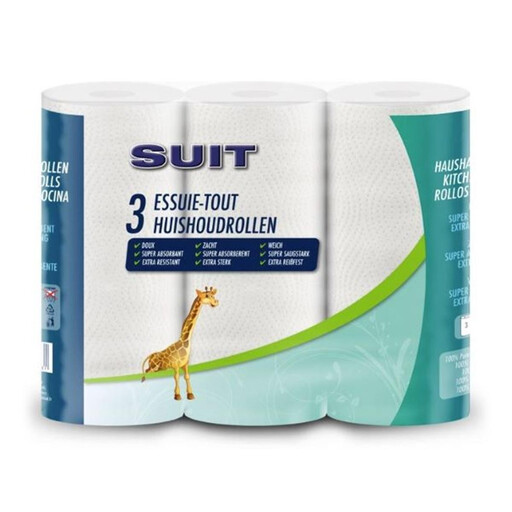
Why this choice suits this profile : This pack of three two-ply rolls is suitable for students, small kitchens and households looking for a straightforward format for everyday tasks.
The product listing clearly states the number of rolls, sheets and plies, making it easier to compare with other products.
Three rolls, 48 sheets per roll and two-ply paper for splashes, drying hands and cleaning surfaces.
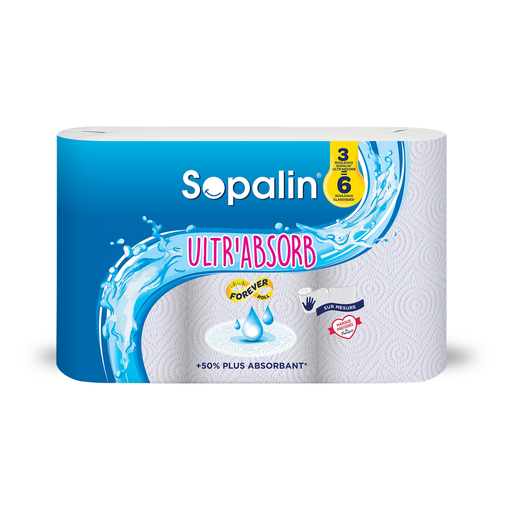
Why this choice suits this profile : Families and people who cook frequently will appreciate the maxi format, perforations and FSC Mix certification stated in the product listing.
The half-sheet format prevents you from using a whole sheet for small tasks, while the three maxi rolls give you a clear idea of the quantity purchased.
Cellulose wadding, three maxi rolls, perforated sheets and FSC Mix certification mentioned in the description.
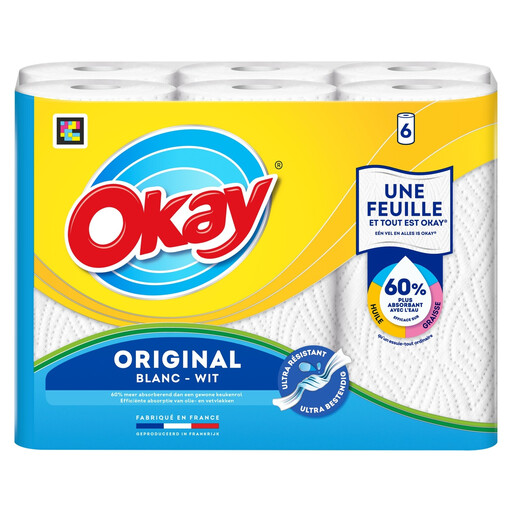
Why this choice suits this profile : This pack of six rolls is designed for households that regularly use absorbent paper for cooking and everyday cleaning.
The claim of 60 % greater absorption is presented as a feature of the product listing; it should be compared with other products using the same testing method.
Six rolls, cellulose fibres and sheets described as compostable where local facilities and guidance allow.
We have put together a complete, real-time updated list of products that fully meet these strict selection criteria and European safety regulations.
A kitchen roll holder stops the roll from slipping or unrolling on the worktop. A freestanding model is practical if you do not want to drill into the wall. Check that it is compatible with the roll’s diameter and width, and make sure its base is stable.
A wall-mounted or freestanding kitchen roll dispenser can be useful in busy kitchens. Multi-level models allow you to store several rolls, but they need a stable surface and sufficient space. Clean metal with a damp cloth and avoid abrasive products, which could damage the coating.
Personal hygiene needs are not always the same as those met by kitchen roll. For travelling, a workout or time spent outdoors, a disposable face towel may be more convenient.
The YIJINCHAN compressed travel towel in a tube contains 10 individually wrapped units. For a more generous size, the version containing five compressed towels unfolds into a compact bath towel. After use, follow the manufacturer’s disposal instructions.
Choose a thick or multi-ply sheet with clearly stated resistance when wet. A maxi roll with perforations can also mean fewer replacements, but focus on comparing the number of sheets rather than simply the pack’s apparent size.
No. The product listings featured recommend not flushing kitchen roll down the toilet, as it can cause or worsen blockages. Put it in the bin, or follow local guidance where compostability is stated.
Use a half-sheet for small marks, save larger sheets for spilled liquids and store rolls in a dry place. For less messy tasks, alternating with washable, reusable kitchen roll can also reduce paper consumption.