
Livraison le jour même ou le lendemain

Qualité garantie

Débloquez vos offres de bienvenue: Livraison GRATUITE | Jusqu'à -80 % | 30 jours d'essai gratuits à JoyPlus
Téléchargez l'application
A milk spill, a splattered frying pan or a surface that needs wiping in a hurry: kitchen roll remains an essential in many French households. However, not all rolls are created equal. Paper that is too thin may tear, a maxi roll can be awkward in a small cupboard, and misunderstanding an environmental claim can lead to disposing of it incorrectly.
Before buying kitchen roll, a few criteria can help you compare products more confidently and choose a format that genuinely suits your habits.
A pack of six rolls is not necessarily better value than a pack of two. Instead, look at the number of sheets per roll, their size and, where available, the total number of sheets. A kitchen roll made up of larger sheets may run out more quickly if you only use a small section each time.
The half-sheet kitchen roll offers a simple solution: it lets you tear off just a small portion for a splash, a crumb or quickly drying your hands.
Absorbency depends on several factors: the thickness of the paper, its embossing, its composition and its ability to remain intact when wet. A sheet that absorbs liquid immediately but disintegrates on the first wipe may ultimately encourage you to use more of it.
Claims such as ‘50%’ or ‘60% more absorbent’ should be treated as product-specific claims based on the comparison method used. The product description, packaging and measurement conditions are the sources to consult in order to interpret them correctly.
Compostable kitchen roll should never be flushed down the toilet. Even when biodegradable, its fibres can cause blockages. What is more, the term ‘compostable’ may depend on the facilities available and local guidelines. Always check the information on the packaging and the instructions provided by your local authority.
An FSC logo, meanwhile, provides information about the origin or management of the fibres according to the rules of that certification. It does not automatically mean that the entire product, its packaging or its use has the same environmental impact.
To mop up a spilt liquid, choose a product description that specifies the level of absorbency or the paper structure. For cleaning a table, a cold hob or a worktop, strong kitchen roll that remains durable when wet can help reduce the number of sheets needed.
The number of plies is also worth considering. 2-ply paper is generally sufficient for small everyday tasks, while a 3-ply model provides more material per sheet. However, this information does not replace the manufacturing details or the manufacturer’s specifications.
A maxi-roll kitchen roll may suit households that clean frequently or want to replace the roll less often. It does, however, take up more space in a cupboard and may be less convenient to handle on a small dispenser.
Perforated half-sheets make it possible to adjust the amount used to suit the task. To compare two products, consider all of the following together:
Most of the products featured here are made from cellulose or cellulose wadding. For products with FSC certification, check the exact scope of the certification on the packaging. As for compostable products, follow their usage instructions and do not use them for personal hygiene.
Multi-purpose kitchen roll can be used to soak up sauce, clean a surface or quickly dry your hands. For everyday cleaning, microfibre cloths and wipes, along with a washable kitchen tea towel, can complement paper and reduce disposable use.
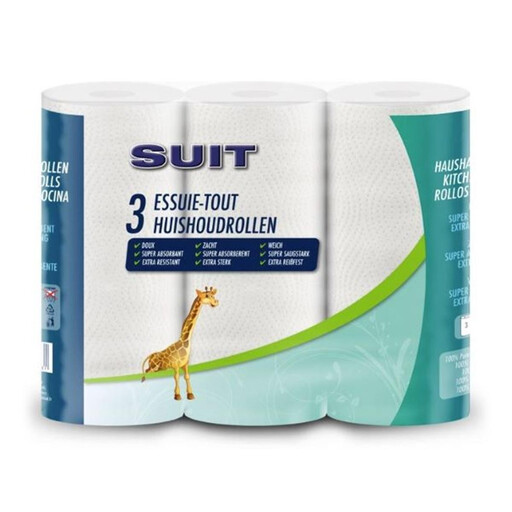
Why this product suits this profile : This pack of three 2-ply rolls with 48 sheets per roll is suitable for everyday use and offers an easy-to-compare format for those just getting started.
The number of sheets and plies is clearly stated, making it easier to compare with a roll marketed simply as economical.
Three rolls, 48 sheets per roll, 2-ply paper and intended uses including splashes, surfaces and drying hands.
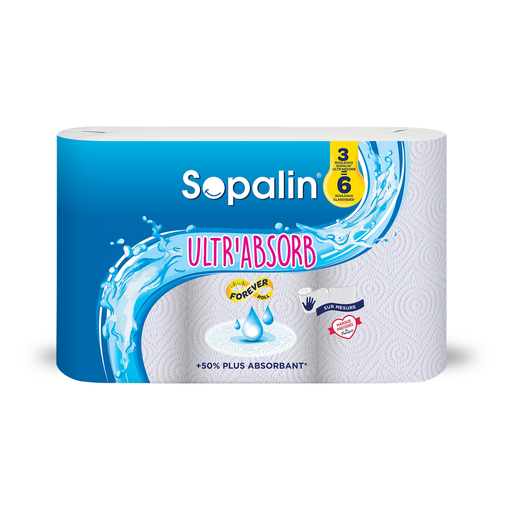
Why this product suits this profile : These three maxi rolls combine perforated half-sheets with FSC Mix certification stated in the product description.
The half-sheet format helps avoid using a whole sheet for small tasks, while the stated certification can be checked on the packaging.
Three maxi rolls, full sheets or half-sheets, and packaging stated to be recyclable paper.
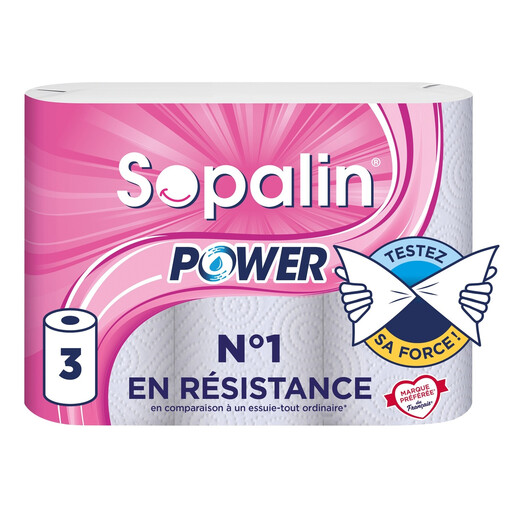
Why this product suits this profile : This household paper roll is designed for repeated tasks, including wet cleaning, different surfaces and a range of household jobs.
The product description claims up to 78 % greater wet strength than standard paper, according to the stated comparison, and indicates that it can be used wet or dry.
White 2-ply paper, 45 sheets per roll, 135 sheets per pack and stated versatile use.
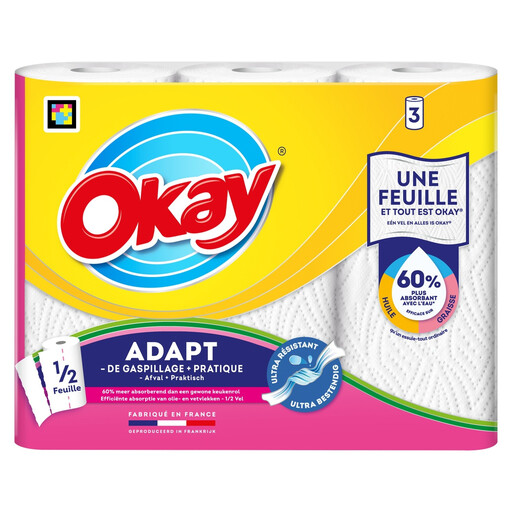
Why this product suits this profile : The half-sheet format suits families who alternate between quick touch-ups and more substantial cleaning.
The perforations let you adjust the amount used. The product description also mentions a 3-ply structure and compostable certification, which should be checked against local guidelines.
Three rolls, cellulose, half-sheets, manufactured in France as stated, and suitable for soaking up spills or cleaning.
We have put together a complete, real-time updated list of products that fully meet these strict selection criteria and European safety regulations.
For dust, marks on furniture or everyday cleaning, a washable microfibre cloth can reduce sheet consumption. The Spontex products included in the selection can be washed up to 500 times, according to their usage information. To preserve their absorbency, wash them in accordance with the recommendations, particularly without fabric softener.
A cotton or linen-cotton tea towel is better suited to drying dishes and glasses. Save kitchen roll for spilt liquids, grease or tasks that require a disposable solution, then choose a reusable alternative for repetitive jobs.
Look at the thickness, number of plies, embossing and information about absorbency. For frequent use, a roll marketed as wet-strength may be more practical than very thin paper. Also remember to compare the total number of sheets in each pack.
Keep it in a dry place, away from moisture and direct light. In suitable conditions, it can remain usable for a long time. However, check the packaging for batch information and any storage instructions.
No. Even when described as compostable, kitchen roll should not be flushed down the toilet. Dispose of it through the waste stream specified by your local authority and check whether home or communal composting is permitted for that particular product.