
Livraison le jour même ou le lendemain

Qualité garantie

Débloquez vos offres de bienvenue: Livraison GRATUITE | Jusqu'à -80 % | 30 jours d'essai gratuits à JoyPlus
Téléchargez l'application
A leak near the sink, an oil splash or a table that needs cleaning in a hurry: kitchen roll is one of those everyday products whose quality you only discover when you really need it. However, a rock-bottom price or promise of record absorption does not necessarily guarantee the right choice.
Here are the main pitfalls to avoid and the criteria to consider before buying kitchen paper towels, whether for a flat, a house or a family.
A pack of three rolls may contain fewer sheets than a single compact roll with 500 sheets. To compare offers fairly, look at:
The cheapest kitchen roll is therefore not necessarily the one with the lowest price on the shelf.
Highly absorbent kitchen roll can quickly soak up water or oil, but may tear as soon as it gets wet. By contrast, kitchen paper with good wet strength is often better suited to cleaning a worktop, hob or greasy surface.
The claims ‘absorbent’, ‘strong’ and ‘reusable’ do not all mean the same thing. Check the intended use and the information on the packaging before making your decision.
A product described as compostable kitchen roll must be used in accordance with local waste-treatment instructions. Compostability may depend on the facilities available and the type of dirt involved. Kitchen roll that has absorbed cleaning products or a large quantity of oil should not automatically be put in a home compost bin.
When mentioned, FSC Mix certification relates to the responsible sourcing of certain fibres. It does not mean that the product is reusable or compostable. Similarly, recyclable packaging does not make the sheet itself recyclable after use.
2-ply kitchen roll is generally suitable for splashes, drying hands and everyday cleaning. 3-ply kitchen roll provides more material per sheet and feels stronger, but the number of plies alone is not enough to assess a roll’s performance.
For wet applications, look for a specific statement about wet strength. Some product specifications give a percentage of strength compared with standard paper. This figure is specific to the manufacturer’s testing method and is not a universal measurement for comparing all brands.
Half-sheets let you use just a small section for a drop of water or a few crumbs, rather than wasting a whole sheet. Over time, this small detail can significantly reduce consumption. Maxi formats and rolls containing a large number of sheets also mean fewer replacements, but check that their diameter is compatible with your dispenser.
Cellulose wadding is the most common material used in kitchen rolls. For indirect contact with food, always check the compatibility statement provided by the manufacturer. When absorbing hot oil, working near a flame or cleaning a surface that is still very hot, caution is essential: kitchen roll is not intended to replace a heat-resistant accessory.
After use, never flush sheets down the toilet. They can contribute to blocked pipes. Follow your local authority’s waste-sorting and collection instructions.
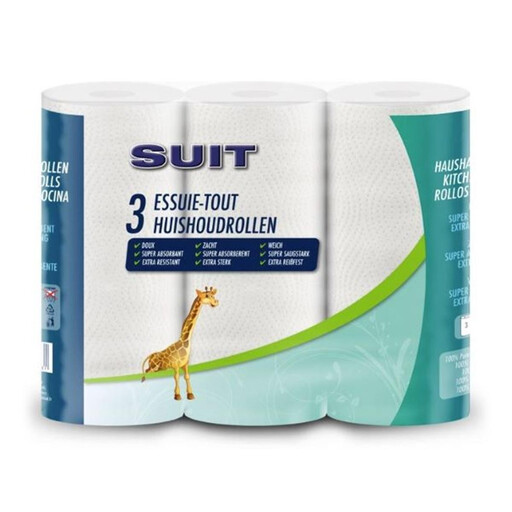
Why this choice suits this profile : Its pack of three 2-ply rolls covers everyday needs without adding lots of difficult-to-compare features.
The number of rolls and sheets is clearly stated, so you can work out the price for 144 sheets in total.
Three rolls, two plies and versatile use for surfaces, splashes and drying hands.
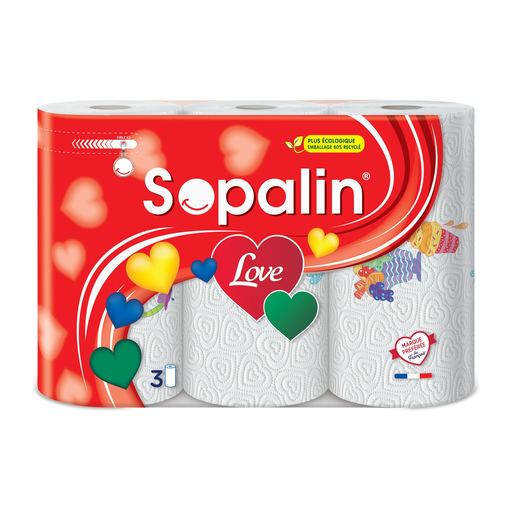
Why this choice suits this profile : Its three plies, colourful pattern and FSC Mix certification will appeal to households that care about presentation as well as the stated specifications.
The certification and cellulose-wadding composition are stated clearly, without confusing FSC Mix with a promise of compostability.
A 3-ply structure, heart-shaped texture, three rolls and manufacturing stated as taking place in France.
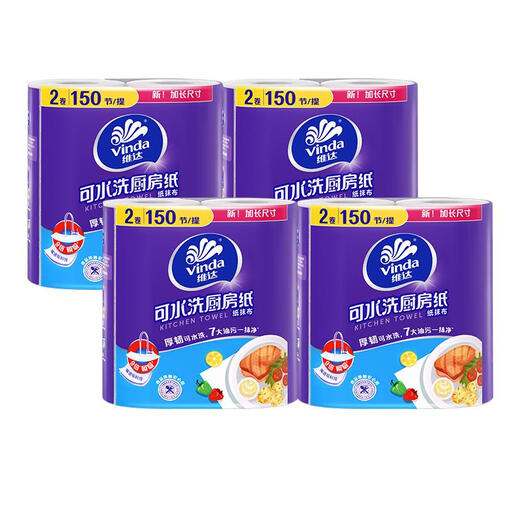
Why this choice suits this profile : The carton pack is practical for a family, a holiday home or frequent use in several rooms.
The number of rolls and sheets per roll is specified, making it easier to estimate the amount of stock available.
Eight rolls of 75 sheets, with product specifications stating high absorbency and good strength for wet applications.
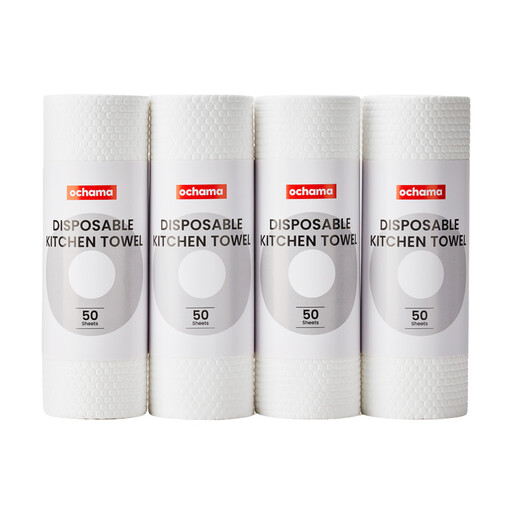
Why this choice suits this profile : With 200 sheets spread across four rolls, this product may suit those who want to alternate between dry and wet use.
The specifications state the format, the high stated grammage and suitability for dry or wet use. However, check the packaging for instructions on reuse and disposal.
A large format, thicker sheets and stated suitability for both water and oil.
2-ply is suitable for simple tasks and often helps keep the price per sheet down. 3-ply is better suited to larger spills or tasks that require greater strength. Also remember to compare the number of sheets and their size: these two factors have a direct impact on consumption.
Not always. Some models are designed to be dampened and reused occasionally, while others are still intended for single use despite commercial wording that may suggest otherwise. Check the manufacturer’s instructions, particularly those covering washing, drying and length of use.
Choose a pack size suited to your consumption, use half-sheets when the roll offers them and avoid taking a whole sheet for a small mark. To compare two products, calculate the price per sheet and check the wet strength: paper that tears easily often means having to wipe the same area several times.