
Livraison le jour même ou le lendemain

Qualité garantie

Débloquez vos offres de bienvenue: Livraison GRATUITE | Jusqu'à -80 % | 30 jours d'essai gratuits à JoyPlus
Téléchargez l'application
Kitchen roll is a staple in our kitchens. Yet, who hasn't cursed a roll that tears apart at the slightest contact with water, or a "jumbo" size that vanishes in two days? Faced with an aisle saturated with marketing claims, making the right choice can feel like a real challenge. This guide is here to help you see things more clearly and find the kitchen roll that truly meets your needs, while avoiding the most common pitfalls.
Kitchen roll marketing focuses heavily on quantity and unverifiable claims of absorbency. To avoid throwing your money down the drain, here are three things to watch out for.
kitchen roll isn't necessarily more economical. Manufacturers often compensate for the extra length with thinner, weaker, or less absorbent sheets. The result: you end up using two or three sheets where one would have sufficed, and the expected savings disappear.absorbent kitchen roll must be able to hold liquid without instantly turning to mush.kitchen roll multipack or bulk kitchen roll seems like a smart move for your wallet. However, if the quality is poor, your consumption will skyrocket. Ultimately, the cost-per-use will exceed that of a higher-quality product, even if it's purchased in smaller quantities.To stop choosing at random, focus on a few simple criteria that make all the difference in a product's real-world performance.
This is the first and simplest indicator for judging the quality of a kitchen paper.
More and more brands are offering clever formats to help reduce waste.
Okay kitchen roll and its Adapt' range. Ideal for small mishaps (a drop of coffee, a fingerprint), it allows you to use only what you need and limit waste.A jumbo kitchen roll is only a good deal if it combines length with quality. To judge this, don't just rely on the sheet count. Remember to check the ply count and the brand's reputation. A poor-quality jumbo roll won't last any longer than a high-performance standard roll.
To guide you, we've selected a few proven products, each tailored to a specific need.
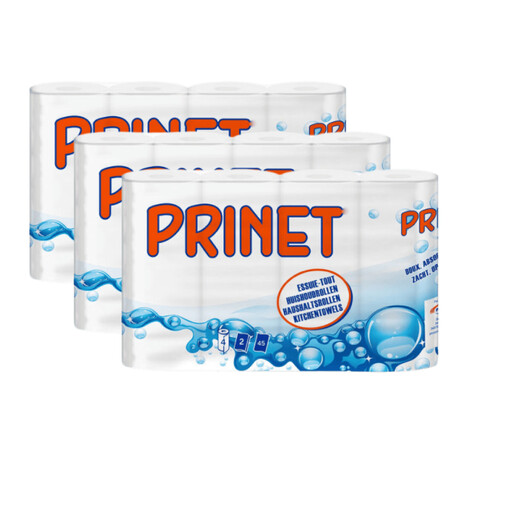
Why we chose it: This bulk format is ideal for families who want to stock up on a reliable basic without breaking the bank. It's the practical solution for everyday needs, from the kitchen to the playroom.
It sidesteps the "false-economy multipack" trap by offering consistent and reliable 2-ply quality. No unpleasant surprises: you know what you're buying, which helps you control your budget and consumption.
An excellent quantity-to-price ratio for regular family use. Buying a 12-roll multipack provides peace of mind for a good while.
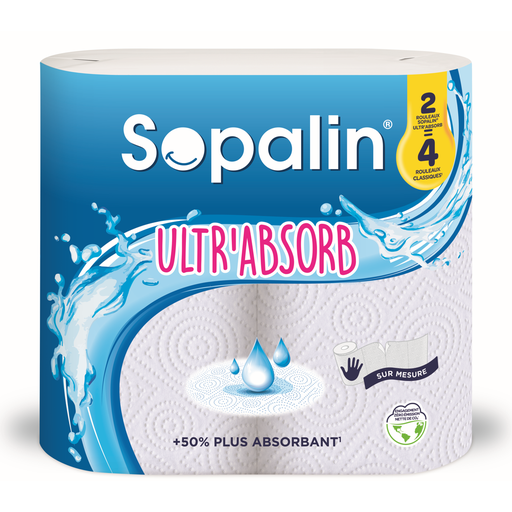
Why we chose it: For those who make no compromises on performance. The Sopalin name is a guarantee in itself, and this product is engineered for the toughest jobs where maximum absorbency is non-negotiable.
It counters the "unverifiable absorbency" trap by leveraging the reputation of a legacy brand. Here, the jumbo roll format truly means longevity, because every single sheet is ultra-effective.
Unmatched absorbency and strength, combined with the half-sheet format for controlled consumption. Perfect for soaking up major spills.
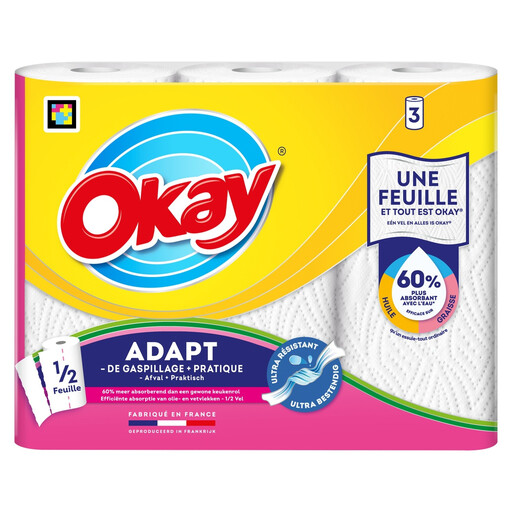
Why we chose it: The perfect ally for those mindful of their consumption and the environment. The half-sheet format lets you use just the right amount of paper every time.
It directly tackles the waste associated with standard rolls thanks to its flexibility. No more using a large sheet for a small task: each roll lasts longer.
The half-sheet format for customised use and less waste. Its manufacturer, Essity, claims it has 60% more absorbency than an ordinary kitchen roll.
Explore our complete, up-to-date selection of products that meet our quality criteria and current standards.
The difference mainly comes down to strength and absorbency. A 2-ply kitchen roll is sufficient for most everyday tasks. The thicker and stronger 3-ply version absorbs significantly more liquid. This makes it more effective for big messes or cleaning greasy surfaces, but it is also logically more expensive.
Not always. The value of a kitchen roll multipack depends on the balance between price, quantity, and quality. A cheap but poor-quality pack will force you to use more sheets for the same task, cancelling out any initial savings. It's best to compare the cost per roll (or per sheet) while considering the product's actual performance.
Absolutely not! You should never flush kitchen paper down the toilet. Unlike toilet paper, it is designed to be strong and not dissolve in water. Flushing it can cause very expensive blockages in your pipes and in the public sewage system. It belongs in the bin, and nowhere else.