
Livraison le jour même ou le lendemain

Qualité garantie

Débloquez vos offres de bienvenue: Livraison GRATUITE | Jusqu'à -80 % | 30 jours d'essai gratuits à JoyPlus
Téléchargez l'application
Kitchen roll is an essential in any kitchen. It seems like a simple purchase, but it can quickly lead to disappointment. A roll that runs out in the blink of an eye, paper that tears at the slightest drop of water... does that sound familiar? This is often the result of clever marketing ploys. Before you fill your shopping cart, let's take a moment to debunk the common pitfalls that test your budget and your patience.
The two most common mistakes are relying solely on the number of rolls in a pack or the ply count displayed on the packaging. A budget-friendly kitchen roll pack might hide rolls with very few sheets, while a three-ply paper isn't always stronger than a good-quality two-ply one. The goal is to find the right balance between absorbency, strength, and cost-per-use.
To make an informed choice, don't just look at the sticker price; pay attention to a few technical specifications. These are the details that make all the difference between an effective absorbent paper and a disappointing product.
The ply count (usually two or three) indicates the number of paper layers that make up a single sheet. While a three-ply kitchen roll is often thicker, its actual performance depends primarily on the quality of the raw material: cellulose wadding. High-quality wadding, even in a two-ply format, can offer far superior absorbency and strength than a low-end three-ply product. Pay more attention to the description of the texture and composition than to the ply count alone.
Comparing a standard kitchen roll to a jumbo kitchen roll can be misleading. The real basis for comparison is the cost per sheet or, even better, the cost per square metre. To calculate this, check two pieces of information:
A compact 500-sheet roll, for example, can prove to be much more economical in the long run than a pack of six standard rolls.
For environmentally conscious consumers, an eco-friendly kitchen roll is a wise choice. Look for labels like the FSC (Forest Stewardship Council), which guarantees that the paper comes from sustainably managed forests. Some brands go even further by offering recycled plastic packaging or compostable sheets.
Finally, aesthetics also have a say. A decorated kitchen roll can add a welcome splash of colour to your kitchen. Just make sure the patterns don't compromise absorbency and that the inks are certified for food contact.
To help you see things more clearly, we've selected products that meet specific needs, all analysed based on the criteria we've just discussed.
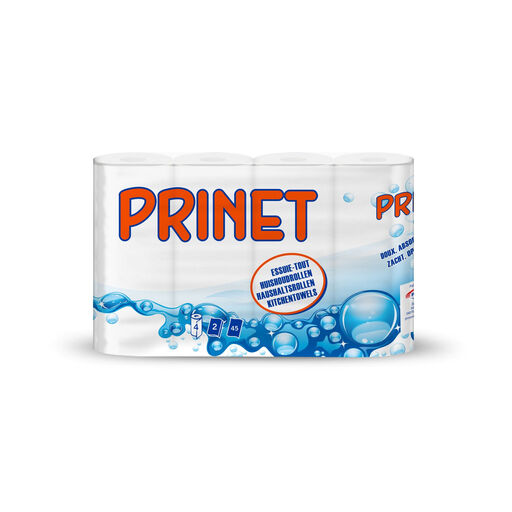
Why we chose it: Perfect for everyday household tasks, like wiping a countertop or soaking up small spills. This pack is a simple and functional solution for those who prioritise efficiency above all else.
This product doesn't rely on a high ply count, but on a dependable 2-ply design for everyday use. The 4-roll pack focuses on a well-managed price-to-quantity ratio.
An economical option made in France that provides effective absorption for everyday kitchen needs.
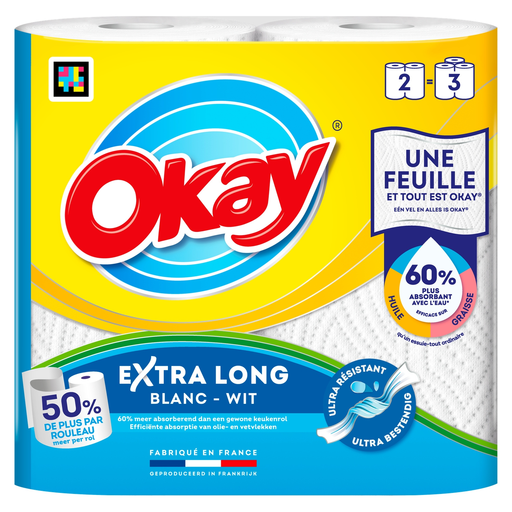
Why we chose it: Perfect for large families or intensive clean-ups. Its XXL absorption capacity can handle major spills with a single sheet, making it very economical to use.
Here, it's all about raw performance. According to the manufacturer, Essity, it is 60% more absorbent than an ordinary kitchen roll: proof that wadding quality trumps ply count.
Each roll contains 50% more sheets than a standard roll from the brand, offering excellent longevity. Another key benefit: the sheets are compostable.
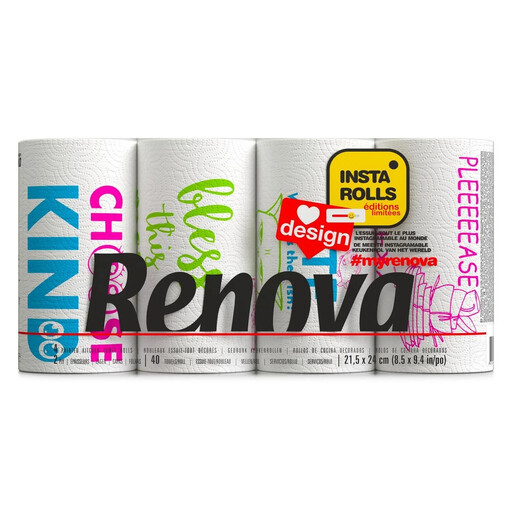
Why we chose it: For those who believe that even an everyday product can have style. This kitchen roll transforms a functional item into a genuine decorative accessory for the kitchen.
Style, yes, but without sacrificing quality. Made from pure virgin cellulose wadding and FSC Mix certified, it combines original design with absorbency and strength.
The patterns vary randomly, making each roll a little surprise. The product is safe for food contact and, to top it off, it's made in France.
We've compiled a comprehensive list of products that meet our demanding selection criteria.
The difference lies in the number of paper layers. A 3-ply kitchen roll is generally thicker and perceived as more absorbent. However, a 2-ply kitchen roll made with high-quality cellulose wadding and a good embossing technique can be just as effective, and even stronger, than a low-end 3-ply one.
Yes, most kitchen rolls are compostable, especially if they are white and unpatterned. Sheets soiled with organic materials (food scraps, coffee) can be added to your home composter. Check the information on the packaging, as some products, like those from the OKAY brand, explicitly mention this. Just avoid composting sheets soaked in chemical cleaning products.
For a reliable comparison, don't rely on the pack price. Divide the total price by the total number of sheets in the pack to get the cost per sheet. To be even more precise, you can calculate the cost per square metre using the sheet dimensions provided on the packaging. This is the only way to get an accurate idea of the true value for money of each option.