
Livraison le jour même ou le lendemain

Qualité garantie

Débloquez vos offres de bienvenue: Livraison GRATUITE | Jusqu'à -80 % | 30 jours d'essai gratuits à JoyPlus
Téléchargez l'application
Kitchen roll, or paper towel, is a cornerstone of our kitchens. But when faced with overflowing shelves, how do you find your way? Between marketing promises and deceptive packaging, choosing the right roll can be a real headache. Who hasn't cursed at a paper towel that tears at the slightest drop of water or a "maxi roll" that disappears in the blink of an eye? This guide is here to arm you with the right criteria and help you avoid the most common pitfalls.
Before comparing products, it's helpful to know the two most common mistakes that lead to a disappointing purchase.
The "Maxi Roll" Mirage?: Don't be fooled by a roll that looks enormous?— it's no guarantee of longevity. Some manufacturers wind the paper more loosely to artificially inflate the volume. The only true basis for comparison is the number of sheets. An economy pack might seem like a good deal, but a simple calculation of the cost per sheet often tells a very different story.
Vague Absorption Claims?: Terms like "ultra-absorbent" or "superior absorption" are plastered all over packaging, but they often mean nothing without hard numbers to back them up. True effectiveness depends on real technical criteria: the ply count and the quality of the wadding. A low-performance paper that disintegrates on contact will force you to use two or three sheets where a single, higher-quality one would have sufficed.
To make an informed choice, focus on these three objective characteristics.
This is the number one criterion. The thickness, defined by the number of plies, directly determines the paper's strength and absorbency.
kitchen roll is sufficient for wiping up a splash, drying your hands, or cleaning a lightly soiled surface.ultra-absorbent kitchen roll with three plies is much more resistant to tearing and soaks up large amounts of liquid. Ultimately, it's often more economical for major accidents, as you use fewer sheets.The raw material makes all the difference. Pure cellulose wadding remains the gold standard for its softness and absorption efficiency. For consumers conscious of their environmental impact, several labels are worth looking out for?:
This is the simplest and most reliable calculation for assessing value for money. Forget the number of rolls in the pack?— it's a distraction. A kitchen roll multipack of 4 rolls with 50 sheets each (200 sheets) is a much worse deal than a pack of 2 rolls with 140 sheets each (280 sheets total).
Because every household is unique, here is our selection of products that meet specific needs, analysed based on our criteria.
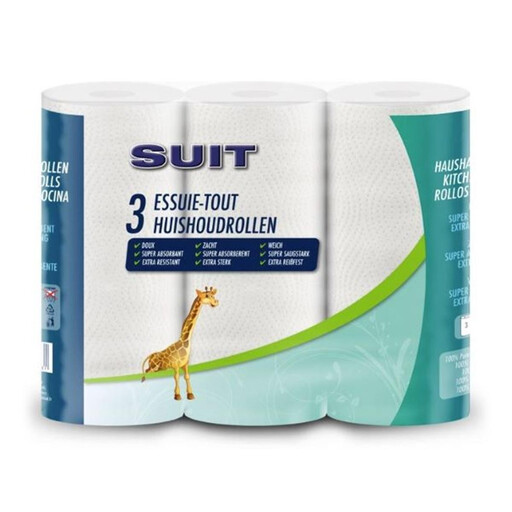
Why we chose it : Perfect for those looking for a simple, budget-friendly solution for everyday little accidents. This pack gets straight to the point : an effective, no-frills kitchen roll.
No deceptive volume here. The promise is clear and quantified : 3 rolls of 48 sheets each. You know exactly what you're buying, which makes comparison easy and honest.
Its unbeatable quantity-to-price ratio makes it a great ally for frequent use. Its 2-ply structure is perfectly calibrated for common kitchen needs.
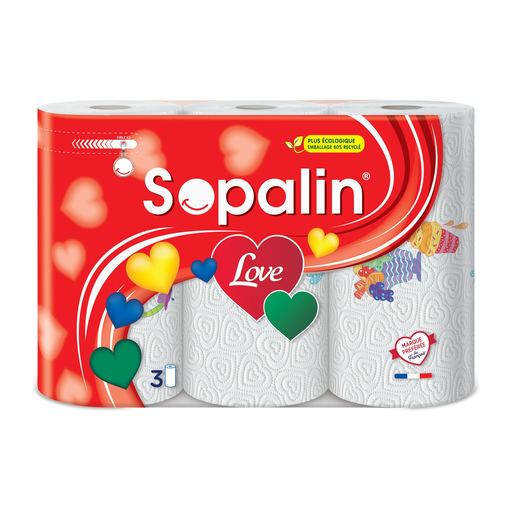
Why we chose it : For those who demand maximum efficiency and refuse to compromise. The goal : for a single sheet to be enough to handle everyday disasters, from a spilled glass of orange juice to grease splatters.
Here, the promise of absorption isn't just a slogan. It's based on a tangible technical fact : a 3-ply structure. This triple layer is the guarantee of truly superior strength and absorbency.
The 3-ply quality guarantees formidable performance, which helps reduce the number of sheets used. As a bonus, it's FSC Mix certified and its packaging is made with 80% recycled plastic.
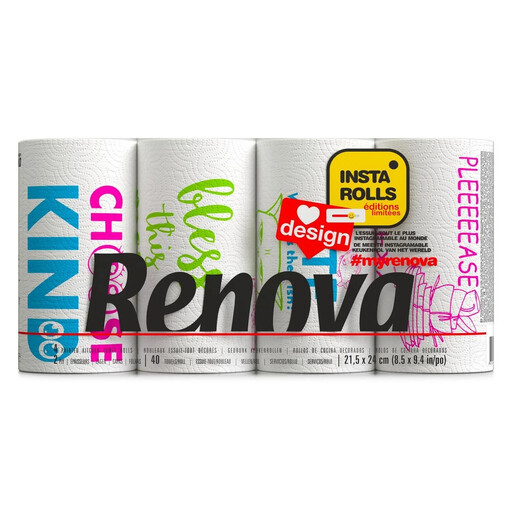
Why we chose it : For those who believe kitchen aesthetics are all in the details. This `decorated kitchen roll` transforms an everyday object into a stylish accessory.
Style, yes, but not at the expense of performance. The spec sheet is transparent : 2-ply, a generous format of 140 sheets per roll, and a 100% pure cellulose wadding composition.
Its masterstroke : it adds a unique decorative touch. FSC Mix certified, Made in France, and safe for food contact, it's a choice that ticks all the boxes : stylish, local, and responsible.
A 2-ply kitchen roll is the standard model, perfect for everyday use. It offers a good balance between price and effectiveness for small messes. The 3-ply, on the other hand, plays in the big leagues?: thicker, stronger, and much more absorbent, it's perfect for large spills or cleaning greasy surfaces. Since you use fewer sheets, it can even prove to be more economical in the long run.
Not necessarily! The price can be inflated by marketing, branding, decorative patterns, or specific labels. To judge absorbency, stick to the facts?: the ply count (a 3-ply will almost always be more effective than a 2-ply) and the composition (pure cellulose wadding is a mark of quality). And don't forget to calculate the cost per sheet to know the true price of your roll.
Definitely not down the toilet! Unlike toilet paper, kitchen roll is designed to resist water and does not break down. Flushing it is the surest way to clog your pipes. As for compost, it's possible if the product is certified "compostable" (check the packaging). Be careful, though?: it must not have come into contact with chemical products (bleach, detergent, etc.). Also, be sure to check your local council's recycling guidelines, as rules can vary.