
Livraison le jour même ou le lendemain

Qualité garantie

Débloquez vos offres de bienvenue: Livraison GRATUITE | Jusqu'à -80 % | 30 jours d'essai gratuits à JoyPlus
Téléchargez l'application
Kitchen roll, or paper towel, seems like one of the most mundane purchases. Yet, once you're in the aisle, faced with a wall of marketing claims, the choice becomes complicated. Who hasn't cursed a roll that tears at the first touch of water or disappears in no time?
Before you fill your cart, let's break down the two most common pitfalls that could make you regret your purchase:
To navigate the jungle of options, focus on a few technical indicators that truly define the quality of a kitchen roll.
The ability of an absorbent kitchen paper to soak up liquids is its primary purpose. This performance is directly linked to its thickness, often indicated by the number of plies.
kitchen roll offers an ideal balance between absorption and economy.Some brands, like Okay, highlight enhanced absorption capacity thanks to a specific weaving technology of the cellulose fibres.
The format has a direct impact on your roll's lifespan and on waste.
For consumers mindful of their impact, several options exist. An eco-friendly kitchen roll can be identified by its composition and its labels.
To illustrate how these criteria apply in practice, here are a few recommended products, each suited to a different user profile.
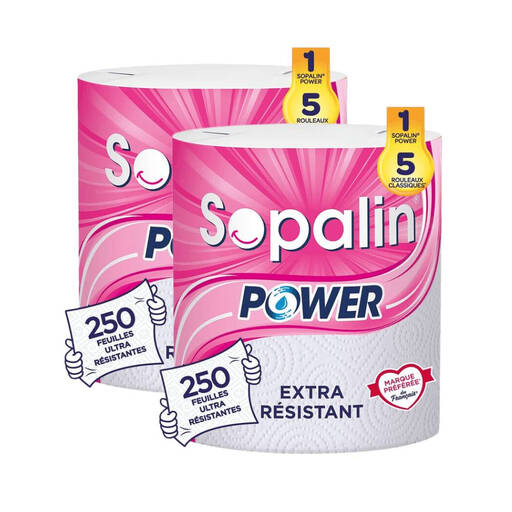
Why we chose it: This pack is built to last. With two jumbo rolls equivalent to ten standard rolls, it's perfect for large families or anyone looking to make fewer shopping trips with an economical kitchen roll bundle.
It sidesteps the "more sheets" trap by offering a jumbo kitchen roll format with a clearly stated equivalency, ensuring genuine long-term savings.
Its 2-ply structure ensures good strength, even when wet. This makes it versatile for all daily tasks, from a quick wipe-down to more intensive cleaning.
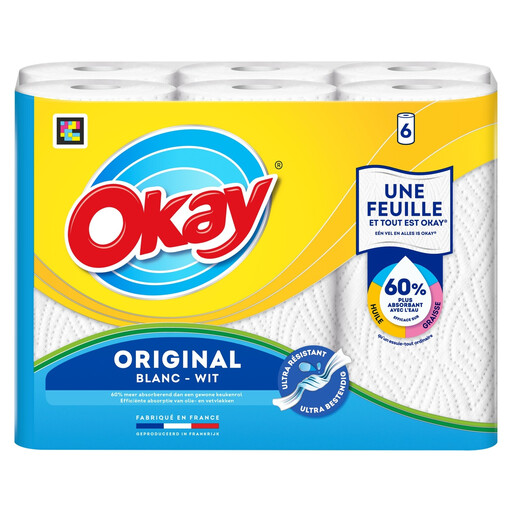
Why we chose it: For those who want a flawless result in a single wipe. This absorbent kitchen roll is designed for clean-ups where one sheet is all you need.
It tackles the "misleading strength" trap by focusing entirely on absorption. According to the manufacturer Essity, it is 60% more absorbent than a standard kitchen roll, allowing it to perform well even with large spills.
Its high absorption capacity means you use less paper. A significant bonus is that its sheets are compostable, a real plus for reducing your environmental impact.
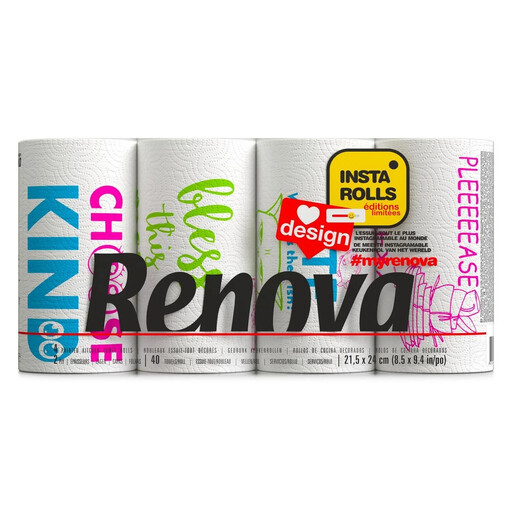
Why we chose it: For those who believe everyday items can also be decorative accessories. This decorated kitchen roll brings a welcome pop of colour and originality to the kitchen.
It doesn't sacrifice performance for design. Made from 2-ply cellulose wadding and certified FSC Mix, it combines style with efficiency for everyday tasks.
The patterns are randomly assorted, making each roll a little surprise. Importantly, it is safe for food contact, ensuring risk-free use in the kitchen.
We've curated a complete, up-to-date selection of products that meet our selection criteria and current regulations.
Yes, most of the time. If your kitchen roll is 100% pure cellulose pulp and hasn't been used to wipe up grease, oils, or chemical cleaning products, it can go in your composter. Brands like Okay explicitly state this on their packaging. A quick look at the package will confirm it.
A jumbo kitchen roll contains significantly more paper than a standard roll, often the equivalent of 2 to 5 classic rolls. The advantage is twofold: it's generally more economical on a cost-per-sheet basis, and it means you change the roll less often, all while reducing packaging waste.
Generally, yes. Major brands ensure that the inks used for the patterns are safe for indirect food contact (for example, wiping a surface where food will be placed). For absolute certainty, check for a "safe for food contact" statement on the packaging. This is notably the case for Renova Design rolls.