
Livraison le jour même ou le lendemain

Qualité garantie

Débloquez vos offres de bienvenue: Livraison GRATUITE | Jusqu'à -80 % | 30 jours d'essai gratuits à JoyPlus
Téléchargez l'application
Sorting your waste is an essential habit, but integrating it seamlessly into your kitchen is often a challenge. Between a lack of space, odours, and a growing number of bins, finding a solution that is both practical and stylish can quickly become a headache.
As a product selection expert at Joybuy, my mission is to decode the market for you. This guide has one simple goal: to help you choose THE kitchen recycling bin that is perfectly suited to your space and habits, all without the marketing fluff.
Before you dive in, let's review the key criteria that will make all the difference and ensure your choice remains relevant for the long term.
The layout of your kitchen is, naturally, the starting point.
The volume and number of bins should align with your household size and, of course, your local council's recycling guidelines.
A good waste sorting system must be practical for daily use, both for disposal and cleaning. Check that the inner bins are removable and have handles to make them easy to carry and wash. For slide-out models, the smoothness and sturdiness of the runners are points that should not be overlooked. A well-sealed lid is also a powerful ally in controlling odours, especially for the food waste bin.
We have selected three products that cater to very different needs and kitchen layouts.
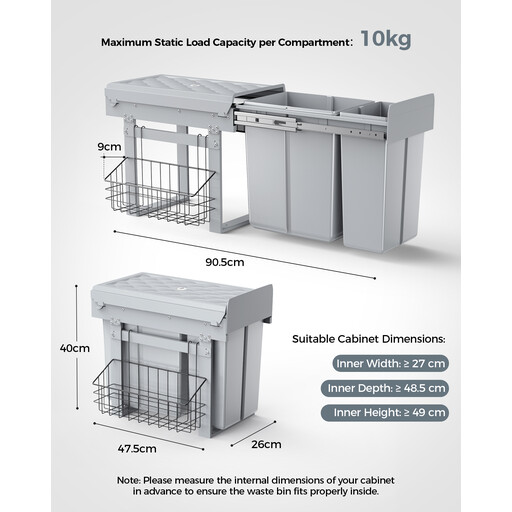
What sets it apart?: A fully integrated solution that optimises space, even in narrow kitchen cabinets, thanks to its slide-out system and clever storage features.
Highlights?:
Who is it for? Ideal for those renovating their kitchen or looking for a 100% invisible and functional sorting solution without sacrificing any storage space.
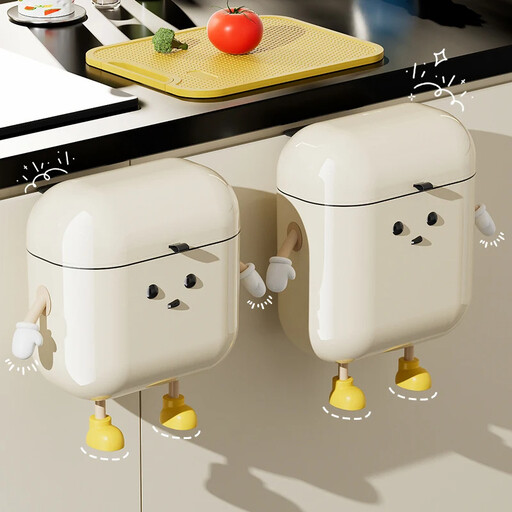
What sets it apart?: Its versatile installation and compact design, specially created for collecting food waste.
Highlights?:
Who is it for? Perfect for those who want a simple, budget-friendly solution for sorting food waste at the source. It's the ideal companion to a main sorting system.
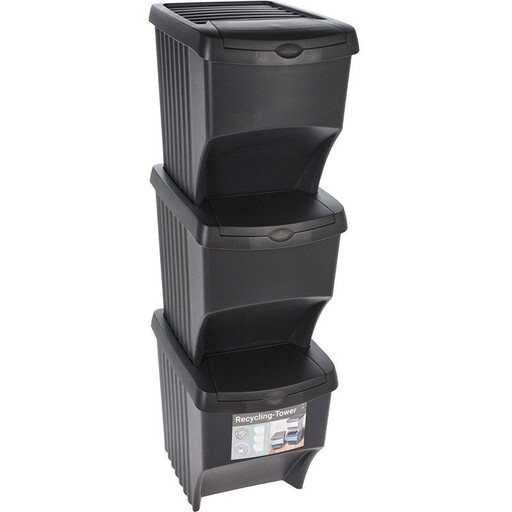
What sets it apart?: A complete and modular sorting station that utilises vertical space for a minimal footprint.
Highlights?:
Who is it for? For families or households that generate a significant amount of waste. A particularly well-designed solution for a pantry, utility room, or garage.
View this set of stackable bins
The world of kitchen sorting doesn't stop here, of course. If built-in models have caught your eye, feel free to explore other configurations and sizes in our dedicated selection.
Discover our full range of integrated kitchen door bins
For a family of four, a total capacity of 40 to 60?litres is ideal. A classic setup consists of a 2-compartment bin with 20?L for general waste and 20?L for recycling, supplemented by a small 10?L caddy for food waste.
Ideally, you should clean the bins once a week with hot, soapy water or a multi-purpose cleaner. To neutralise stubborn odours, a great tip is to sprinkle a little baking soda in the bottom of the bin once it's empty and dry. Be sure to dry the bins thoroughly before putting in a new liner.
In a small kitchen, every centimetre counts, so optimisation is key. The built-in bin under the sink remains the most discreet solution. A cabinet door bin is another excellent option to free up floor space. Finally, stackable bins are perfect for utilising the vertical space in a corner or nook.