
Livraison le jour même ou le lendemain

Qualité garantie

Débloquez vos offres de bienvenue: Livraison GRATUITE | Jusqu'à -80 % | 30 jours d'essai gratuits à JoyPlus
Téléchargez l'application
Waste sorting has become a common practice, if not a requirement, in most households. But juggling various bags and bins can quickly turn your kitchen into an unsightly mess. The solution? A well-designed kitchen recycling bin that combines eco-friendliness, impeccable hygiene, and a sleek design.
With an overwhelming number of options available, it's not always easy to find the right one. This guide is here to break down the key features and introduce you to a selection of proven models. Our goal: to help you make the right choice, without the marketing fluff.
To find the bin that will fit your kitchen and your lifestyle, there are several key points to scrutinise.
The first question to ask is about volume. This depends directly on the size of your household and your habits.
The number of bins is just as strategic. A 2-compartment bin is the classic choice, perfect for separating general waste from recyclables. For more detailed sorting (glass, paper, etc.), a 3-compartment bin allows for impeccable organisation right from the source.
The material directly impacts the bin's lifespan and ease of maintenance. Stainless steel remains the top choice: it's durable, corrosion-resistant, and its modern look fits into almost any kitchen. Many models now feature an anti-fingerprint coating, a real everyday bonus.
When it comes to hygiene, a pedal bin is a must-have. It allows for "hands-free" opening, limiting the spread of bacteria. Just make sure the pedals seem sturdy, as they will be put to the test.
Finally, don't underestimate ease of use. A soft-close mechanism that prevents loud slamming is a game-changing detail, especially in an open-plan kitchen. The presence of removable inner buckets, sometimes called recycling bins, radically simplifies emptying and cleaning.
We've selected a few models that stand out for their design, practicality, and value for money.
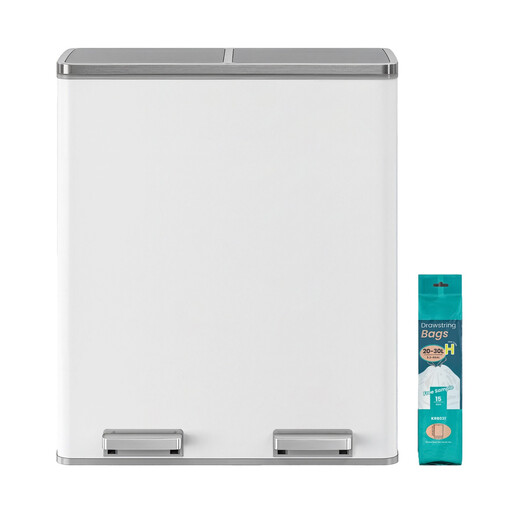
What makes it stand out
This model combines a very large 60L capacity with a simple two-tone design (white and grey) that fits easily into a contemporary kitchen. Its rectangular shape is designed to sit flush against a wall, optimising space.
Key features:
Who is it for? For families or those who generate a large amount of waste and are looking for a high-capacity, simple, and effective solution for standard recycling (general waste / recyclables).
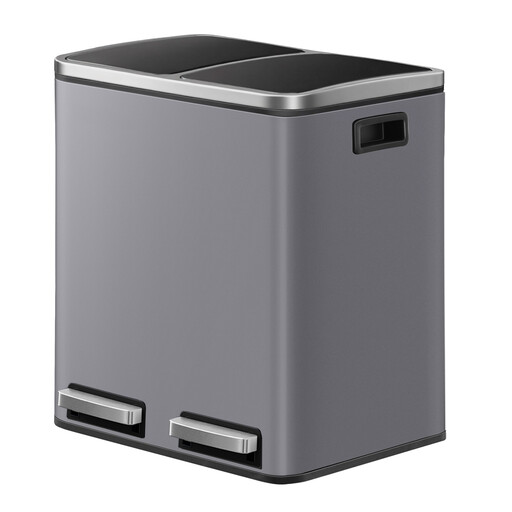
What makes it stand out
More compact, this 2-compartment bin is designed for kitchens where every square inch counts. Its elegant grey steel design and side handles make it as discreet as it is easy to move.
Key features:
Who is it for? The smart choice for couples, small families, or anyone living in a limited space. An efficient sorting solution that doesn't take up precious square footage.
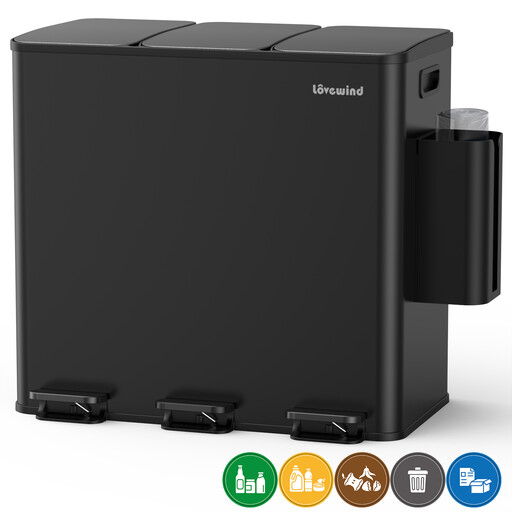
What makes it stand out
This model takes it to the next level with its 3 independent compartments for ultra-precise sorting. Its black stainless steel finish and thoughtful features make it a very comprehensive solution for meticulous sorters.
Key features:
Who is it for? For sorting champions who want an all-in-one solution and have the space for it. A perfect choice for large families or recycling enthusiasts.
Our selection highlights versatile models, but the market is full of other gems. If you want to explore other designs, materials, or capacities, especially dual-pedal models, many other options await.
Discover our full collection of dual-pedal bins to find the model that will integrate perfectly into your kitchen.
1. What size recycling bin should I choose for a family of 4? For a family of four, a total capacity of 50 to 60 litres is a good starting point. This prevents you from having to empty the bins every day. A 60L bin (with two or three compartments) is often the most suitable format.
2. How do I clean a stainless steel recycling bin? To maintain your stainless steel bin, a damp microfibre cloth with a drop of washing-up liquid or white vinegar is sufficient. Then, dry with a dry cloth to prevent limescale marks. Never use the abrasive side of a sponge or bleach-based products, as they could scratch or damage the stainless steel. The plastic buckets can be simply washed with warm, soapy water.
3. Are pedal bins really more hygienic? Absolutely. A pedal bin is a real plus for hygiene. By opening the lid with your foot, you avoid any hand contact with the bin, which can be a hotbed for germs, especially in a kitchen. It's a simple step for a healthier environment day to day.