
Livraison le jour même ou le lendemain

Qualité garantie

Débloquez vos offres de bienvenue: Livraison GRATUITE | Jusqu'à -80 % | 30 jours d'essai gratuits à JoyPlus
Téléchargez l'application
Waste separation is a well-established habit, but without the right equipment, it can quickly turn your kitchen into a logistical nightmare. Between packaging, glass, organic waste, and general rubbish, finding a solution that is practical, hygienic, and stylish isn't always easy.
This guide is here to help you make sense of it all. We'll review the essential criteria and present a selection of kitchen recycling bins to help you make the right choice and simplify your daily routine.
Before you settle on a model, a few key points deserve your attention to ensure efficient and hassle-free daily sorting.
This is the first and most obvious question: how many compartments do you really need?
The total capacity, in litres, should be suited to the size of your household and how often your bins are collected. The needs of a single person are obviously not the same as those of a family of four.
The material is also important, both for the product's longevity and its appearance:
Certain details can make all the difference in day-to-day use:
To help you choose, here are the models that caught our eye for their practicality, design, and value for money.
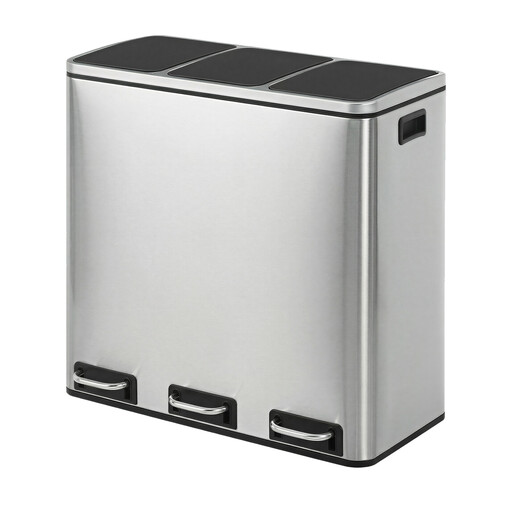
Why it stands out
This model combines three waste streams into a single unit. With its three 18-litre bins, it makes separating recyclables, general waste, and organic waste effortless. Its steel body and black lids give it a sleek, contemporary style.
Advantages
Who is it for?
Ideal for households looking for an all-in-one solution to manage recycling without cluttering the kitchen with multiple bins. Its total capacity of 54 litres is perfect for couples or small families.
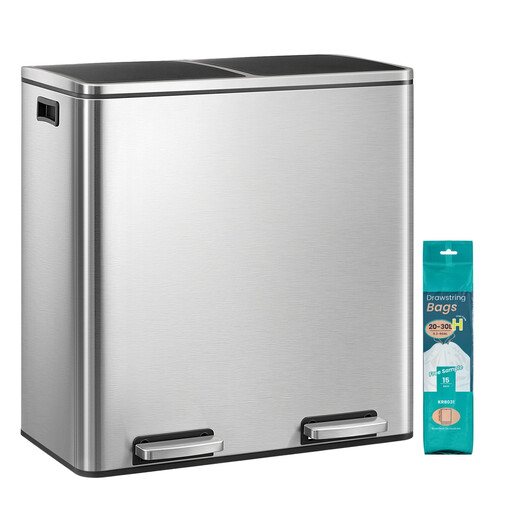
Why it stands out
With its generous 60-litre capacity (2 x 30 L), this bin is aimed at households that generate a larger volume of waste. Its elegant brushed stainless steel design fits perfectly into modern kitchens.
Advantages
Who is it for?
Families or households that produce a large amount of waste. It's a robust, high-capacity option for easily managing the separation of recyclables and general waste.
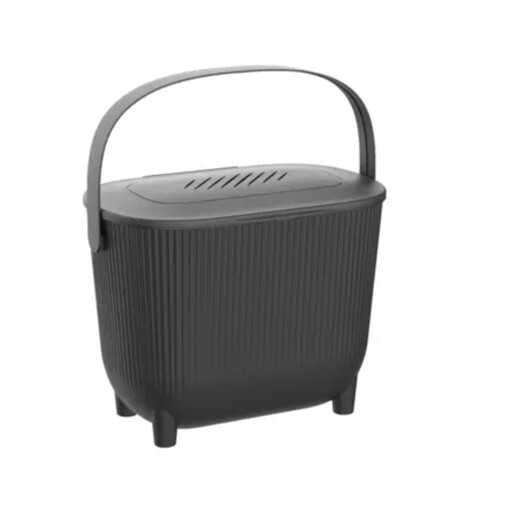
Why it stands out
Specifically designed for organic waste, this kitchen compost caddy is a compact and clever solution. Made in France from recycled polypropylene, it includes a charcoal filter in its lid to neutralise odours.
Advantages
Who is it for?
For anyone who already composts or wants to get started. It can be used on its own for organic waste or as a complement to a main recycling bin.
Not sold on metal? Looking for a more compact solution or a different design? There are plenty of alternatives.
Discover our full range of plastic bins to find the model that suits your space and budget.
The ideal capacity depends on the number of people in your household and the frequency of waste collection in your area. Here are some general guidelines:
To control odours, especially from organic waste, choose a model with a well-sealed lid. Bins equipped with a charcoal filter are incredibly effective. Also, remember to empty the relevant compartment regularly and clean it (a little white vinegar works wonders).
Ideally, it should be placed where it's most useful: near your worktop or sink. Pedal bins are placed on the floor, while a more compact kitchen compost caddy can easily find a spot on the worktop or in the cabinet under the sink.