
Livraison le jour même ou le lendemain

Qualité garantie

Débloquez vos offres de bienvenue: Livraison GRATUITE | Jusqu'à -80 % | 30 jours d'essai gratuits à JoyPlus
Téléchargez l'application
A well-organised kitchen is the key to a clearer mind. Yet, finding THE right storage solution is often a real headache. Faced with a jungle of options and marketing promises, we quickly end up with cupboards cluttered with boxes that are as pretty as they are useless. To avoid regrettable purchases, let's review the most common pitfalls.
The false promise of an airtight seal: Be careful, a lid that clicks shut doesn't necessarily mean optimal preservation. Many containers claim to be "?airtight?" but hide low-quality seals or closures that warp in the dishwasher. The result: air and moisture seep in, ruining your dry goods.
Design over practicality: Beware of jars with an irresistible design that turn out to be a nightmare to use. Awkward shapes that are impossible to stack, materials that absorb every tomato sauce stain, untreated wooden lids that grow mould... These flaws quickly turn a beautiful object into dead weight in your cupboards.
For a pantry organisation system that lasts, forget the marketing and focus on what matters: the technical specifications.
The choice of material is crucial for preservation and hygiene.
airtight glass jar is the champion of dry food storage for items like pasta, rice, or legumes.The entire effectiveness of a food storage container rests on its seal. The most reliable systems combine a removable silicone seal (essential for a perfect clean) and a clip-on or screw-top lid. This duo ensures uniform pressure and a foolproof seal against both air and liquids.
To optimise every square inch of your cupboards or your countertop storage, shape is crucial. Square or rectangular containers fit together and line up perfectly, eliminating the wasted space of round models. Modularity and the ability to stack containers stably are the keys to a truly effective kitchen organiser.
Because every kitchen is unique, here is our selection of solutions tailored to different needs.
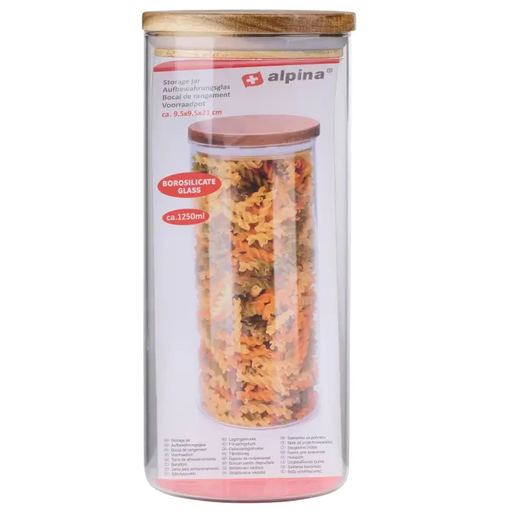
Why we chose it: Perfect for those who want to combine aesthetics with utility. The marriage of glass and an acacia wood lid brings a warm, contemporary touch, whether on the countertop or in the pantry.
This jar doesn't fall into the trap of design over function. Its square shape ensures optimal alignment and stacking, without the wasted space typical of round items.
Its wooden lid includes a silicone seal, guaranteeing a truly airtight closure to protect your dry goods.

Why we chose it: The ultimate solution for meal prep enthusiasts. The ultra-durable and hygienic stainless steel retains no odours or stains, making it perfect for storing any dish, from Indian curry to a mixed salad.
This set sidesteps the trap of the irrelevant "all-in-one" bundle. It offers three genuinely useful everyday sizes (600 ml, 1100 ml, 2200 ml), whether for a single serving, a family-sized meal, or bulk ingredients.
Made from food-grade 316 stainless steel, it's freezer and dishwasher safe. A guarantee of versatility and longevity.
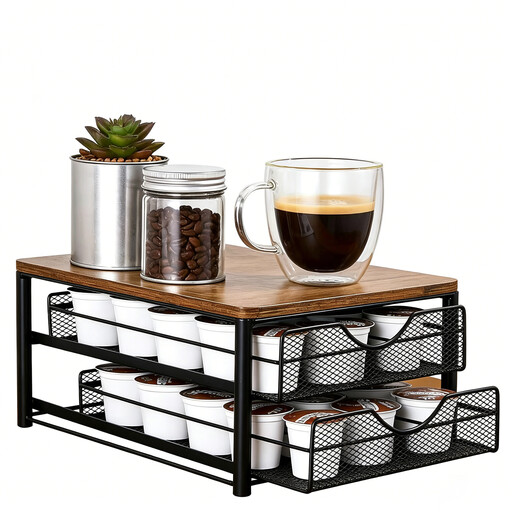
Why we chose it: The dedicated solution for coffee lovers who want an immaculate countertop. It allows you to sort capsules by flavour and access them in a single motion, all while making use of vertical space.
Unlike a simple coffee caddy or a catch-all jar, this organiser is specifically designed for capsules. It ensures stable support and perfect visibility, banishing morning chaos.
Its two-tier structure optimises storage on a minimal footprint. Its non-slip base provides excellent stability, even when fully loaded.
Explore our full selection of products that meet our quality criteria and current standards.
1. How should I clean jars with wooden lids? Most importantly, never submerge wooden lids or put them in the dishwasher: the wood could swell or crack. A simple wipe with a damp cloth and a touch of mild soap is sufficient. Dry them immediately and thoroughly before closing the jar.
2. Are BPA-free plastic containers truly safe for food? Yes, plastics certified as BPA-free are recognised as safe for food contact by European health authorities. Bisphenol A (BPA) is a chemical compound that has been progressively banned from food containers due to health risks. Opting for BPA-free is therefore an essential precaution.
3. Is it better to choose round or square containers to optimise space? Without a doubt: square or rectangular containers. They line up and stack without leaving a single square inch unused, unlike round containers which create wasted space. If maximising space is your priority for your pantry organisation, angular shapes are your best allies.