
Livraison le jour même ou le lendemain

Qualité garantie

Débloquez vos offres de bienvenue: Livraison GRATUITE | Jusqu'à -80 % | 30 jours d'essai gratuits à JoyPlus
Téléchargez l'application
A well-organised kitchen isn't just about aesthetics; it's the promise of a simpler, more serene daily life. However, the kitchen organisation market is saturated with products that look great in photos but prove disappointing in practice. As the Head of Product Recommendations at Joybuy, my mission is to help you find truly functional solutions and avoid the common pitfalls that clutter your cabinets rather than optimising them.
Before you start shopping, be aware of these common design flaws that can turn a great idea into a regrettable purchase.
To make an informed choice, focus on a few technical specifications that make all the difference.
The choice of material is crucial for the durability of your kitchen organiser.
Don't rely on photos alone. Before buying, precisely measure your available space: the width of your drawer, the height under your cabinets, or the free area next to your sink. Favour a kitchen shelf or organiser with clearly listed dimensions. Models with removable dividers, stackable components, or adjustable widths provide invaluable flexibility to adapt to your needs, both today and tomorrow.
Here are a few products that meet specific user needs, selected based on our strict criteria for functionality and durability.
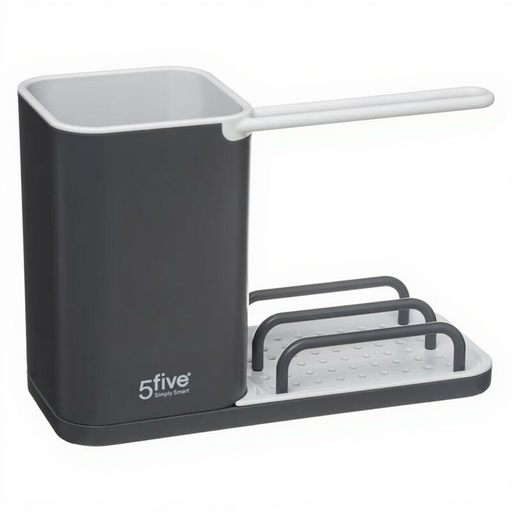
Why we love it: Perfect for centralising all your sink-side accessories. It combines a dish drainer, cutlery holder, sponge compartment, and soap dispenser into a single compact unit.
Designed with durable, corrosion-resistant materials, it's built for the wet environment of a sink and won't degrade prematurely.
An all-in-one solution that optimises space and hygiene: the components are separate and elevated for quick drying.
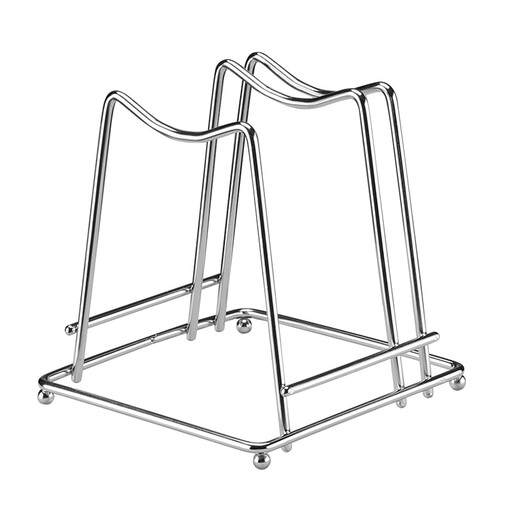
Why we love it: Perfect for keeping lids and cutting boards within easy reach. Its open design allows for easy access while you're in the middle of cooking.
Made from food-grade 304 stainless steel with a thick 4 mm frame, it is resistant to both rust and warping. Its steel ball-joint feet protect the worktop and ensure perfect stability.
Sturdy and versatile. Its U-shaped slots securely hold lids of all sizes, while its wide spacing also allows for storing thick cutting boards.
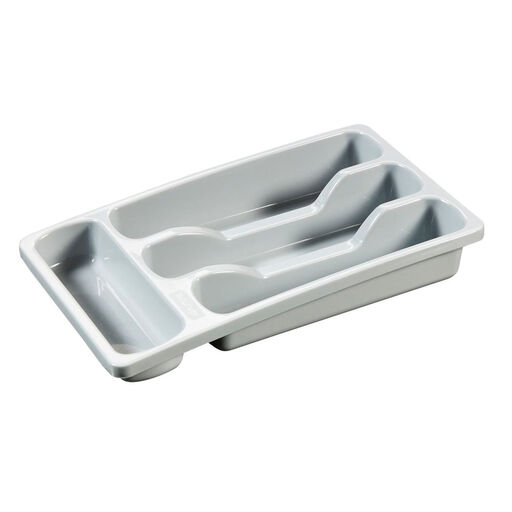
Why we love it: The simple and effective solution for tidying up your drawers, especially in small kitchens where every centimetre counts.
Its compact dimensions (33 x 20 cm) are clearly stated to fit small drawers. This avoids the "universal" product trap, which ultimately fits nowhere.
Instant organisation thanks to 4 fixed compartments for separating forks, knives, and spoons. A pragmatic, no-nonsense solution.
Discover our complete, up-to-date selection of products that meet our strict selection criteria and safety standards.
The choice of material is your best defence against rust. For areas in contact with water, such as a sink caddy, prioritise 304 stainless steel or silicone. For shelving, carbon steel with a high-quality powder-coated finish is a good alternative, provided the coating is intact. Steer clear of basic chrome-plated metal.
No, rarely. It is essential to measure the internal dimensions (width, depth, height) of your drawer before buying. Many models are available in various sizes. To eliminate any risk, choose an expandable or modular drawer organiser that will adjust perfectly to your space.
Regular cleaning is essential. At least once a week, empty the rack and clean it with soapy water or a mild household cleaner. Rinse thoroughly and dry it completely before putting it back into use. Opt for well-ventilated models with a good drainage system to prevent stagnant water, the primary cause of limescale and mould.