
Livraison le jour même ou le lendemain

Qualité garantie

Débloquez vos offres de bienvenue: Livraison GRATUITE | Jusqu'à -80 % | 30 jours d'essai gratuits à JoyPlus
Téléchargez l'application
A well-organised kitchen isn't just about aesthetics: it's a more functional and pleasant space for everyday life. Yet, finding the right kitchen organisation solution often feels like an uphill battle. Caught between tempting marketing promises and harsh reality, we quickly end up with accessories that create more clutter than they solve.
As a product expert for this publication, my mission is to help you see things more clearly. Let's skip the technical jargon and get straight to the point. Here are the traps to avoid and the essential criteria to check before pulling out your credit card.
Investing in organisation solutions can quickly turn into a nightmare if you're not careful. Here are the most common mistakes to avoid:
For truly successful kitchen space optimisation, three criteria must be scrutinised.
The choice of material is crucial for the durability of your kitchen organisation accessory.
A beautiful design is good. A smart design is better. For a kitchen organiser, functionality must always come first.
Before you confirm your basket, follow one golden rule: the tape measure. Measure the width, depth, and height of the space you're organising (drawer, cupboard, worktop). Compare your measurements with the product's, and don't forget to account for the small details that can change everything: a lip, a handle, or a hinge.
Because every kitchen is unique, here are a few solutions that caught our eye. They meet specific needs while respecting our criteria for quality and practicality.
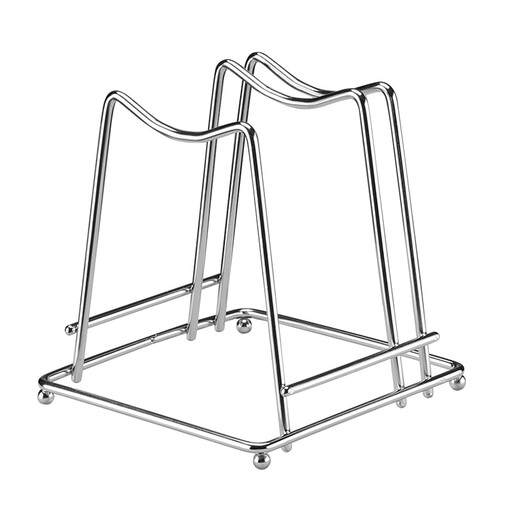
Why we chose it: Because it tackles a universal and annoying problem: the chaos of lids and cutting boards, precariously stacked at the back of a cupboard.
Its 304 stainless steel construction makes it rust-proof. Its thick 4 mm frame and U-shaped slots guarantee unwavering stability, even with cast iron lids. No more tipping racks!
A robust design and a safe material for long-lasting storage of lids and boards, without fear of moisture near the sink.
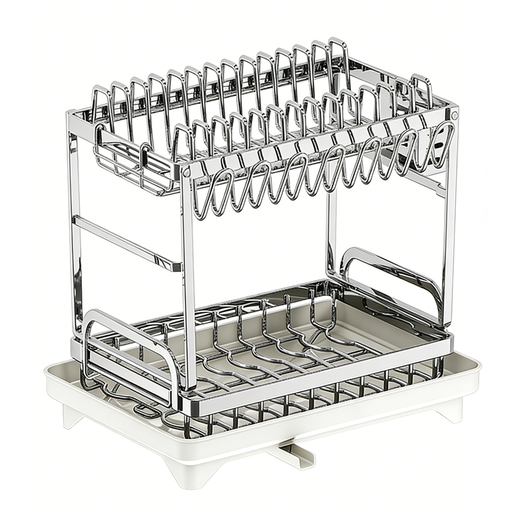
Why we chose it: When there are a lot of you, the dishes pile up at lightning speed. This dish rack cleverly uses vertical space to offer maximum drying capacity without taking over the entire worktop.
The combination of stainless steel and polypropylene makes it impervious to water and rust. Most importantly, its adjustable spout drains water directly into the sink. Goodbye to stagnant water and limescale stains—the bane of classic dish racks.
A large, two-tier capacity and an active drainage system for a worktop that finally stays clean and dry.
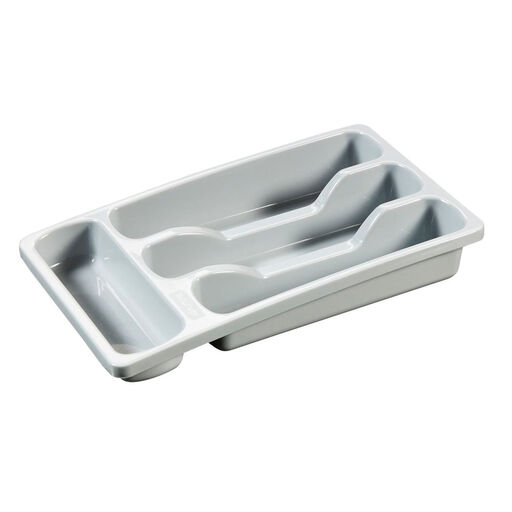
Why we chose it: A simple, effective, and affordable solution to finally bring order to the cutlery drawer. An essential for kitchenettes or modestly sized drawers.
Made from durable polypropylene, it's tough and cleans with a simple wipe. Its fixed dimensions (33 x 20 cm) are a guarantee of simplicity: if you've measured your drawer correctly, there are no nasty surprises.
Immediate, hassle-free organisation for everyday cutlery, in a versatile format that fits even the smallest drawers.
Discover our complete selection of products that meet our strictest quality and safety criteria.
It all depends on its future location and use. For wet areas like the sink, opt for 304 stainless steel or a quality plastic (PP, ABS). For dry cupboards, coated carbon steel is a solid and economical option. In drawers, plastic or bamboo are perfect for not damaging your cutlery.
The classic mistake is to only measure the width. You must measure all three dimensions: width, depth, AND height. For a drawer, always leave a small margin of a few millimetres to be able to insert and remove it without forcing it. In a cupboard, watch out for hidden obstacles: hinges, pipes, etc., that could block the installation.
Absolutely, if it's a low-quality stainless steel. You should know that not all "stainless" steels are created equal. The gold standard is 304 stainless steel (also known as 18/8 or 18/10). Its chromium and nickel content provides excellent protection against rust and corrosion. Cheaper steels, on the other hand, will eventually show rust spots, especially if they are constantly exposed to hard water and detergent residue.